
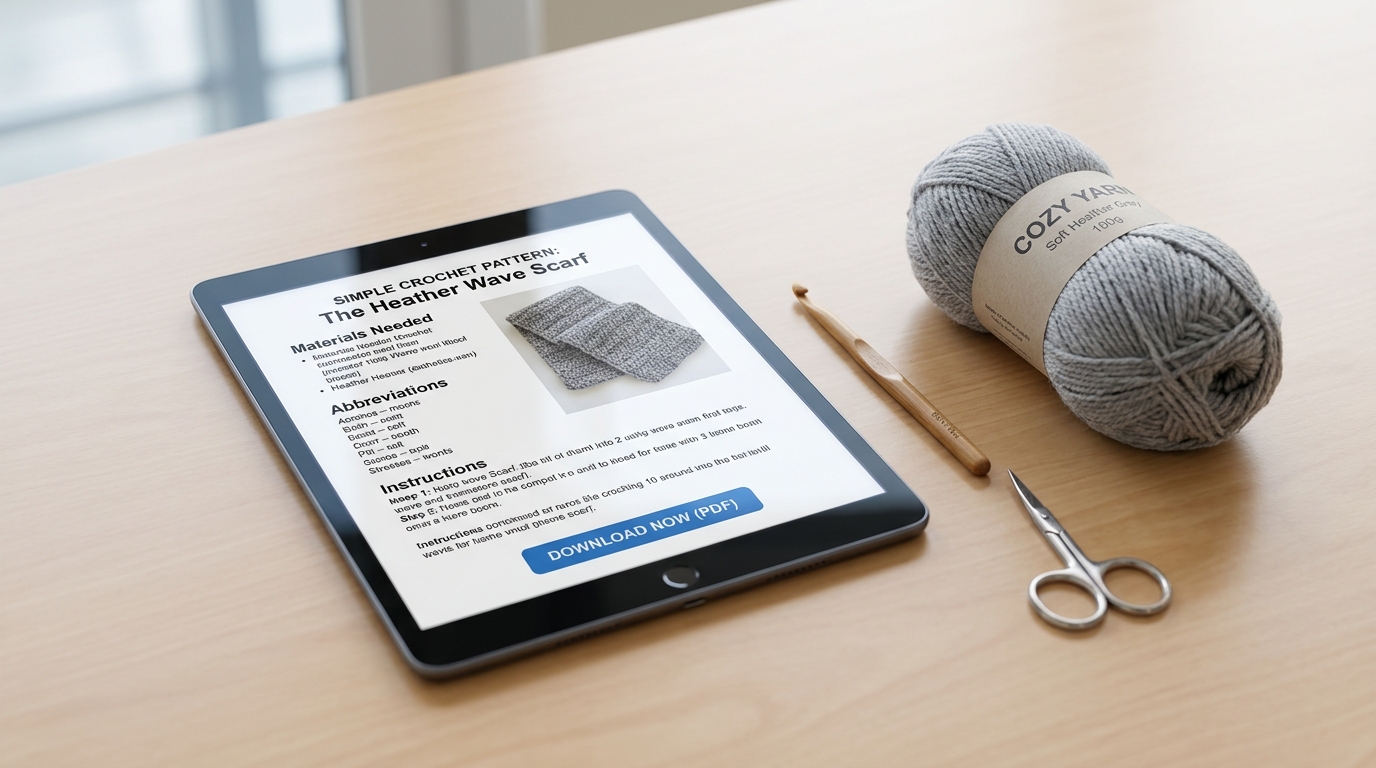
There is something truly magical about picking up a crochet hook and a ball of yarn. For many of us, crochet is more than just a hobby; it is a creative escape, a way to slow down, and a beautiful opportunity to craft something meaningful with our own two hands. Whether you are dreaming of a cozy blanket to drape over your sofa, a soft hat for a chilly autumn day, or a thoughtful handmade gift for a loved one, the world of crochet offers endless possibilities.
If you are just starting your journey, you might feel a little overwhelmed by the vast array of patterns available. It can be tempting to search for complicated, intricate designs, but the truth is that some of the most elegant and timeless projects are built on the simplest foundations. Discovering easy, free designs allows you to build your skills without the pressure of complex instructions or a high price tag. In this guide, we will explore how you can find, understand, and create beautiful crochet projects without spending a dime, helping you gain the confidence to create pieces you will be proud to display or share.
Quick Overview
This guide is designed for anyone looking to simplify their creative process. Whether you are a brand-new beginner or a crocheter looking to return to the basics, you will learn how to source high-quality, free crochet patterns and what to look for when choosing your first few projects. We will cover the essential tools you need to get started, how to interpret simple crochet instructions, and how to enjoy the process of making something special starting today. Our focus is on accessibility, joy, and the satisfaction of finishing a project from start to finish.
Essential Tools to Get Started
You do not need a mountain of expensive supplies to begin your crochet journey. In fact, keeping your kit simple is often the best way to learn without distraction.
- Crochet Hook: For beginners, a medium-sized hook, such as a 5.0mm (Size H-8), is a fantastic starting point. It works well with most standard worsted weight yarns and is comfortable to hold.
- Yarn: Opt for a smooth, light-colored acrylic or a cotton-blend yarn in a medium (worsted) weight. Light colors make it much easier to see your stitches as you work, which is vital when you are learning.
- Stitch Markers: These little tools are lifesavers. They help you keep track of your starting stitches and corner points so you don’t lose your place.
- Tapestry Needle: You will need a blunt-ended needle to weave in your yarn ends once your project is complete.
- Scissors: Any sharp pair of scissors will do to snip your yarn when you are finished.
Understanding Crochet Terms and Stitches
Before diving into a pattern, familiarize yourself with standard U.S. terminology. Patterns often use abbreviations, and knowing these will help you feel like a pro in no time.
- Chain (ch): The foundation of almost every project.
- Single Crochet (sc): A short, dense stitch perfect for solid fabrics.
- Half Double Crochet (hdc): A slightly taller, softer stitch that works up quickly.
- Double Crochet (dc): A taller stitch that creates a nice drape, ideal for clothing and scarves.
- Slip Stitch (sl st): Typically used to join rounds or move across a piece without adding height.
- Gauge: This refers to the number of stitches and rows in a specific area (usually 4×4 inches). It ensures your project ends up the right size.
Helpful Notes Before You Start
When looking for free patterns, it is easy to get lost in the sheer volume of options. To find the best ones, look for patterns that describe their difficulty level clearly. Websites and blogs that offer free, high-quality content are wonderful resources. Always read through the entire pattern before picking up your hook. Check the “Notes” section, as designers often include vital information about how to turn your work at the end of a row or how to count your stitches accurately. If a pattern looks too complicated, there is absolutely no shame in setting it aside and choosing a “beginner-friendly” option instead. Embroidery and crochet are arts that thrive on patience, not perfection.
The Art of Finding Great Patterns
Finding free crochet inspiration is a skill in itself. Start by searching for specific project types in your favorite search engines, such as “free simple crochet scarf pattern” or “beginner-friendly crochet dishcloth tutorial.” Many designers offer free versions of their work on their personal blogs to help new crocheters learn.
When evaluating a pattern, look for clear, step-by-step photos or embedded video tutorials. Visual learners often find that seeing a loop being pulled through a stitch makes all the difference in the world. Additionally, ensure the pattern is written in standard U.S. terminology. If you see terms like “treble crochet” in a British context, they might refer to a different stitch height than what you are used to in the U.S.
Common Mistakes to Avoid
Even the most experienced crocheters were once beginners who struggled with tight tension or dropped stitches. Here are a few things to watch for:
- Tension Troubles: If your crochet feels stiff and hard, you are likely gripping the hook too tightly or pulling your yarn too hard. Try to relax your shoulders and hold the yarn loosely.
- Counting Stitches: Forgetting to count your stitches is the most common reason for uneven edges. Use a stitch marker in the first and last stitch of every row to keep your work straight.
- The Twisted Chain: When working in a round, it is easy for your starting chain to twist. Take a moment to ensure it is lying flat before you join it with a slip stitch.
- Ignoring Gauge: If you are making something that needs to fit, such as a hat or a garment, never skip the gauge swatch. A tiny difference in how you crochet can lead to a hat that is either too small or way too large.
Pro Tips for a Better Result
To elevate your crochet projects from “homemade” to “handmade with love,” focus on the finishing touches. When you finish a row, take a moment to look at your work. If you notice a mistake, don’t be afraid to pull it out—”frogging” (as we call it in the crochet world) is just part of the process of learning.
Blocking is another pro tip that can transform your work. By gently steaming your finished item or pinning it down while damp, you can smooth out uneven stitches and give your project a professional, polished finish. Always pay attention to your yarn labels, which will have specific care instructions for that material.
Personalization Ideas
The beauty of a simple, free pattern is that it serves as a blank canvas. Once you master the basic stitch, try changing the color every few rows to create a striped effect. You can add texture by using a variegated yarn, which changes colors as you go, or add decorative elements like wooden buttons, tassels, or pom-poms to personalize your gifts. Simple projects are the perfect base for experimentation, so don’t be afraid to try different yarn weights. A pattern written for a worsted weight yarn might look entirely different—and beautiful—when worked in a chunky, soft wool.
Care and Long-Term Storage
Once your project is finished, you want it to last as long as possible. Most acrylic yarns are machine washable, which makes them perfect for blankets, washcloths, or baby items. However, if you have used wool or hand-dyed yarns, they will likely require gentle hand washing in cool water with a mild detergent that doesn’t contain brighteners. Always lay your crochet items flat to dry on a clean towel; hanging wet crochet can cause it to stretch out of shape and lose its beautiful structural integrity. When storing your pieces, try to keep them in a cool, dry place away from direct sunlight, which can fade vibrant colors over time.
FAQ
How can I tell if a crochet pattern is for beginners?
Look for patterns that emphasize “basic stitches” like the chain, single, and double crochet. A good beginner pattern will avoid complex techniques like bobbles, post stitches, or intricate lace, and instead provide clear descriptions of every step.
Do I really need to follow a gauge?
If you are making a flat item like a blanket or a scarf, gauge is less important because the exact size doesn’t need to be precise. If you are making a hat, a sweater, or anything that needs to fit a specific body part, gauge is absolutely essential.
Why do my edges look crooked?
Crooked edges usually happen because you are accidentally adding or skipping stitches at the end of your rows. Use a stitch marker to mark the first stitch of every row so you know exactly where to insert your hook when you come back around.
What is the best yarn for a first project?
Look for a medium weight (worsted) acrylic yarn. It’s affordable, durable, comes in a huge variety of colors, and is forgiving if you need to pull your stitches out and restart a section.
How do I join a new ball of yarn without a knot?
There are several methods, but the most popular for beginners is to simply start the very next stitch with the new ball of yarn, leaving a longer tail to weave in securely with your tapestry needle later. Avoiding knots keeps your work feeling smooth and professional.
Conclusion
Embarking on your crochet journey is a wonderful act of self-care. It invites you to step away from the busy nature of daily life and settle into a space of quiet, rhythmic creation. By utilizing free resources and sticking to simple, elegant designs, you are building a foundation of confidence and skill that will serve you for years to come. Remember, every stitch you make is progress, and every piece you finish—whether it is your first washcloth or your tenth blanket—is a testament to your creativity and patience. Keep your hooks busy, your yarn stash cozy, and most importantly, remember to enjoy the process of making. There is a whole community of makers waiting to support you, and we are so glad you have decided to join us in this beautiful craft. Happy crocheting!