
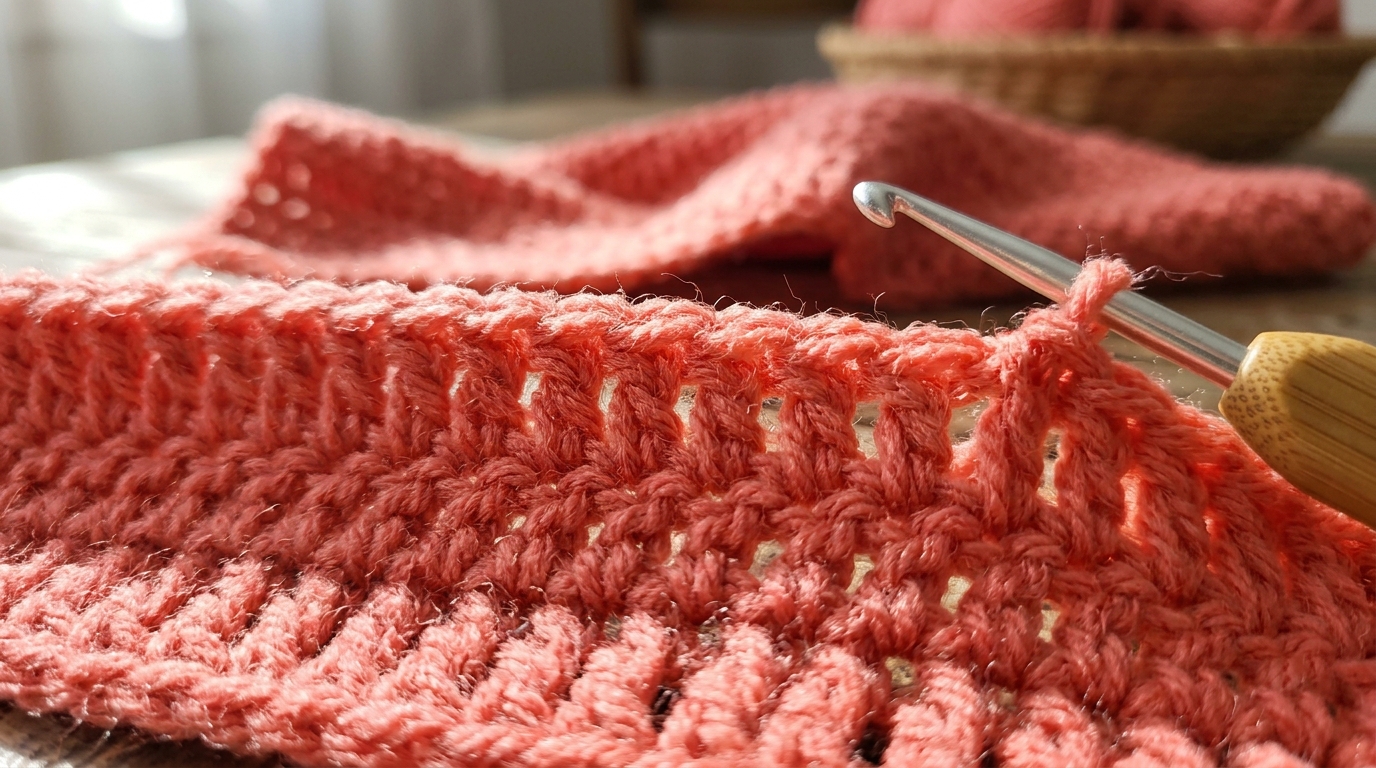
There is something profoundly soothing about the rhythm of a crochet hook gliding through yarn. Whether you are settling in for a quiet evening on the sofa or looking to create a thoughtful handmade gift, crochet possesses a unique ability to ease the mind and color our world with softness. If you have mastered the basics of the chain and the single crochet, you are standing on the threshold of a wonderful new chapter in your crafting journey: the double crochet stitch.
This stitch is a foundational pillar of crochet, yet it offers so much more than just a step up in height. It is the secret to creating blankets that drape beautifully, garments that move with your body, and home decor items that work up quickly. Many beginners find themselves sticking to single crochet because it feels safe, but once you learn to master the double crochet, you unlock a world of flexibility and speed. We will walk through the steps together, focusing on how this stitch can change the way you approach your blanket projects, ensuring your work remains comfortable, even, and professional.
Quick Overview
In this guide, you will learn the mechanics behind the U.S. double crochet stitch, why it is the superior choice for many blanket patterns, and how to troubleshoot common issues like uneven edges or inconsistent tension. This guide is tailored for both the brand-new beginner who is ready to branch out from single crochet and the intermediate maker looking for ways to maximize their efficiency and improve their stitch definition. You will walk away with the confidence to start your next larger-scale project with a stitch that provides both height and drape.
Tools You Will Need
To practice the double crochet stitch effectively, you don’t need anything fancy. In fact, using simple, standard tools is best when you are learning a new technique.
- A skein of light to medium-colored worsted weight yarn: Choose a smooth, non-fuzzy acrylic or cotton blend. Light colors are much easier for your eyes as you learn to identify the “v” of the stitch.
- An H/8 (5.0 mm) crochet hook: This is a versatile hook size that works well with most standard worsted weight yarns.
- Stitch markers: These are essential for beginners. They help you keep track of your first and last stitches, which is the most common place where errors happen.
- Scissors and a yarn needle: For fastening off and weaving in your ends once you have completed your practice swatch.
Understanding the Double Crochet Stitch
The double crochet (abbreviated as “dc”) is essentially taller and “looser” than a single crochet. Because the stitch requires a yarn-over before you insert the hook, it creates a looser fabric that breathes better and drapes over your knees in a blanket much more naturally than a dense single crochet fabric would.
When you read a pattern, you will see “dc” followed by instructions on where to place it. Because of its height, it is often used in ripple patterns, granny squares, and simple, cozy afghans. It is the bridge between the short, stout single crochet and the tall, airy treble crochet.
Helpful Notes Before You Start
Before you pick up your hook, take a moment to consider your tension. Tension is the measure of how tightly you hold your yarn. If you find your swatch curling, you might be crocheting too tightly. If your stitches look like they are gaping or falling over, you might be too loose.
A quick note on the “turning chain”: When working with double crochet, you will typically chain 3 at the beginning of a row. This chain-3 acts as your first stitch in most patterns. It can be tricky to know which stitch to work into at the end of the next row; this is where those stitch markers come in handy! Place a marker in the top of that starting chain-3, and you will never wonder where to place your final stitch again.
Developing Your Double Crochet Technique
Learning the double crochet is a process of getting comfortable with the “yarn-over.” Follow these steps to build your confidence.
The Foundation
Start by making a slip knot and chaining 20. This is just for practice, so don’t worry about being perfect. Once you have your chain, yarn over your hook from back to front. This is your first move.
Inserting the Hook
Skip the first three chains of your foundation. You will insert your hook into the fourth chain from your hook. Yarn over again and pull up a loop through that chain stitch. You should now have three loops on your hook.
Completing the Stitch
Yarn over again and pull through the first two loops on your hook. You will have two loops remaining. Yarn over one last time and pull through both of those final two loops. You have officially completed one double crochet! Repeat this across the row, placing one double crochet in each chain.
Turning the Row
At the end of the row, chain 3. This chain-3 counts as your first double crochet for the next row. Turn your work clockwise, and begin your next double crochet in the second stitch of the previous row (since your chain-3 accounts for the first one).
Step-by-Step for Success
To get the most out of this stitch, follow this logical progression:
- Preparation: Spend time chaining. A consistent starting chain makes every subsequent row easier.
- The Yarn-Over Rhythm: Practice bringing the yarn over the hook consistently. It is a fluid motion. Don’t rush; feel the hook catch the yarn.
- The Pull-Through: When you pull the yarn through the loops, keep your hook level. If you tilt it, you might accidentally catch other fibers or make your stitch uneven.
- Counting: Every time you finish a row, pause and count your stitches. If you started with 20 stitches, you must end with 20.
Common Mistakes to Avoid
The most frequent frustration for beginners is the “disappearing stitch.” Because the double crochet is somewhat tall, the edge—where your chain-3 is located—can look a bit messy. Beginners often skip the last stitch of the row, causing their blanket to slowly shrink in width as they work. This is why using a stitch marker in that top chain is mandatory for your first few practice blocks!
Another common issue is “gapping” at the beginning of a row. If your chain-3 feels too loose or creates an ugly hole, you can try a “chainless double crochet” technique, but for now, sticking to the standard chain-3 is the best way to build your muscle memory.
Pro Tips for a Better Result
If you want your blanket to look like it came from a high-end boutique, attention to detail is key. First, consider the size of your hook. If your fabric feels like a stiff board, go up one hook size. The double crochet stitch loves to breathe; give it the space it needs to shine.
Second, think about your ends. The fastest way to finish a project professionally is to weave your ends in as you go, or at least leave enough yarn tail to weave them in securely once the piece is finished. A sharp embroidery needle is a much better tool for this than your crochet hook.
Finally, blocking is your best friend. Once your blanket or swatch is finished, gently soaking it in lukewarm water, pressing out the excess, and pinning it to shape on a towel will allow the double crochet stitches to settle into their final, beautiful position.
Variations and Creative Ideas
The beauty of the double crochet is its versatility. You can use it for so much more than rows of straight fabric.
- V-Stitch: By working a double crochet, a chain, and another double crochet into the same space, you create a beautiful “V” shape. This is perfect for airy, summer-weight blankets.
- Shell Stitch: Working several double crochets into one space creates a rounded “shell” look that is stunning for blanket borders.
- Color Blocking: Because double crochet works up so quickly, it is the perfect stitch for trying out color blocking. Change your yarn color every five or ten rows to create bold stripes.
- Yarn Choices: Switch from a worsted weight acrylic to a chunky wool or a light cotton blend. The same stitch will look completely different depending on the fiber you choose.
Care and Next Steps
Once your blanket is complete, keep it clean and cozy. Most modern yarns are machine washable, but if you have chosen a delicate wool, a gentle hand wash is best. Always dry your crochet items flat; hanging a heavy, wet blanket can cause it to stretch out of shape.
Now that you have mastered the double crochet, where should you go next? Consider trying a “granny square,” which uses double crochet clusters to create a classic, timeless look. Or, try a “ripple” or “chevron” pattern, which uses clever increases and decreases to create waves of double crochet. Your confidence will grow with every single stitch.
FAQ
Why is my double crochet row slanted or wavy?
This often happens if your tension is inconsistent or if you are accidentally adding or skipping stitches at the end of your rows. Use a stitch marker to secure the first and last stitches of every row to keep your edges perfectly straight.
How do I know how many chains to start with?
If you are working a standard double crochet row, your pattern will usually tell you how many chains to start with. A good rule of thumb is to calculate the desired width, chain that length, then add 3 extra chains to act as your first stitch for the first row.
Is double crochet the same as the treble crochet?
No, they are different. A double crochet involves one yarn-over before inserting the hook, while a treble crochet involves two yarn-overs. This makes the treble crochet much taller and “lacker” than the double crochet.
Can I use double crochet for baby blankets?
Absolutely! Double crochet is a wonderful choice for baby blankets because it creates a soft, flexible fabric that provides warmth without being too heavy or restrictive for a little one.
Should I always use a chain-3 at the start of a row?
Usually, yes, as it counts as your first stitch. However, some advanced patterns may suggest a “chainless double crochet” to make the edges look even neater. Don’t worry about those for now; stick with the chain-3 until you feel completely comfortable.
Conclusion
You have just taken a significant step forward in your crochet education. By learning the double crochet, you have essentially unlocked the ability to create almost any project that calls for speed, drape, and comfort. Remember, crochet is not a race. It is a creative practice meant to bring you joy, peace, and a sense of accomplishment.
If your stitches don’t look perfect the first time, don’t be discouraged. Every expert crocheter you see once started with a messy ball of yarn and a hook they weren’t quite sure how to hold. Keep your practice swatch nearby, keep that stitch marker in your row-end, and most importantly, keep enjoying the process. Your hands are creating something truly special, one double crochet at a time. I cannot wait to see the beautiful blankets you create.