
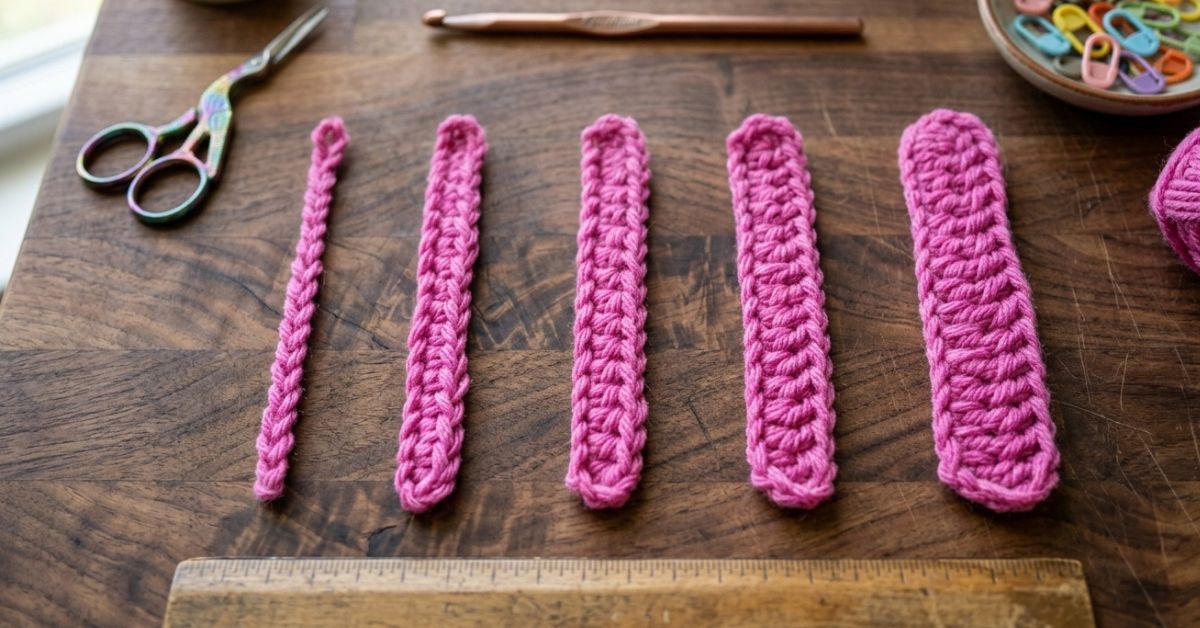
Crochet is one of the most accessible and relaxing creative skills you can learn, especially when you start with the basic crochet stitches that form the foundation of every project. If you’ve ever wanted to make scarves, bags, blankets, or clothing, this is exactly where it begins. This guide breaks everything down so you can start immediately, even if you’ve never held a hook before.
Most beginners struggle not because crochet is difficult, but because they don’t clearly understand the first few stitches. Once those are mastered, everything else becomes significantly easier and more intuitive.
You can start crocheting today with just a few essential stitches
At its core, crochet is simply the art of looping yarn using a hook to create fabric. The entire craft is built on a small set of basic crochet stitches that repeat in different combinations.
Instead of overloading you with theory, here is what you actually need to focus on first:
The foundation stitches include:
- Chain stitch (CH)
- Single crochet (SC)
- Half double crochet (HDC)
- Double crochet (DC)
- Slip stitch (SL ST)
Once you understand these, you can already follow most beginner patterns.
Materials you need (simple and affordable)
Before starting, gather these essentials:
- A medium-weight yarn (preferably light colors for visibility)
- A crochet hook (size 4mm–6mm is ideal for beginners)
- Scissors
- A yarn needle (for finishing)
- Optional: stitch markers
You don’t need expensive tools. The goal is practice and muscle memory.
Understanding the foundation: why stitches matter
Every crochet project is built from repeating combinations of basic crochet stitches. Think of them as letters in a language—once you learn them, you can form words, sentences, and entire stories.
The video tutorial here is especially helpful for visual learners:
👉 https://www.youtube.com/watch?v=0gHmLDR2QLY
Watching the hand movements while reading this guide will accelerate your learning process.
1. The Chain Stitch (CH) — your starting point
This is the first stitch in almost every project.
How it works:
- Make a slip knot on your hook
- Yarn over and pull through the loop
- Repeat to form a chain
The chain stitch creates the base row for everything else.
2. Single Crochet (SC) — the most essential stitch
The single crochet is tight, simple, and widely used.
Steps:
- Insert hook into a stitch
- Yarn over and pull through
- Yarn over again and pull through both loops
This stitch creates dense, sturdy fabric.
3. Half Double Crochet (HDC) — balanced and flexible
This stitch sits between single and double crochet.
Steps:
- Yarn over before inserting hook
- Insert hook into stitch
- Yarn over, pull through
- Yarn over, pull through all three loops
It’s perfect for scarves and soft textures.
4. Double Crochet (DC) — taller and faster progress
This stitch builds height quickly.
Steps:
- Yarn over
- Insert hook into stitch
- Yarn over, pull through
- Yarn over, pull through two loops
- Yarn over, pull through final two loops
It creates loose, airy fabric.
5. Slip Stitch (SL ST) — for joining and finishing
This is the simplest stitch used for connecting pieces.
Steps:
- Insert hook into stitch
- Yarn over and pull through both loops at once
It is mainly used for edges, circles, and finishing touches.
Why beginners should start with these stitches only
Trying to learn too many techniques at once often causes confusion. These basic crochet stitches are enough to complete 80% of beginner patterns found online.
Once you master them, you can easily transition into:
- Granny squares
- Simple blankets
- Beginner bags
- Basic clothing items
Common beginner mistakes (and how to avoid them)
Many learners face the same challenges:
- Making stitches too tight → relax your grip
- Losing stitch count → use markers
- Uneven edges → always count your rows
- Confusion between stitches → practice one stitch at a time
Consistency matters more than speed.
Practice routine for fast improvement
To progress quickly, follow this simple daily routine:
- 10 minutes: chain stitch practice
- 15 minutes: single crochet rows
- 10 minutes: switching between stitches
- 5 minutes: reviewing mistakes
Within a few days, your hand coordination improves significantly.
How this tutorial helps you learn faster
The YouTube video linked above is designed for visual repetition, which is crucial for crochet beginners. Watching hand positioning while following along helps your brain connect motion with technique.
Combine:
- This written guide (logic)
- Video tutorial (visual learning)
- Daily practice (muscle memory)
This combination accelerates mastery of basic crochet stitches.
Why crochet is trending again
Crochet has recently surged in popularity due to:
- Relaxing, stress-reducing effects
- TikTok and Pinterest craft trends
- Affordable DIY fashion movement
- Increased interest in handmade products
It’s no longer just a hobby—it’s becoming a creative lifestyle skill.