
Introduction
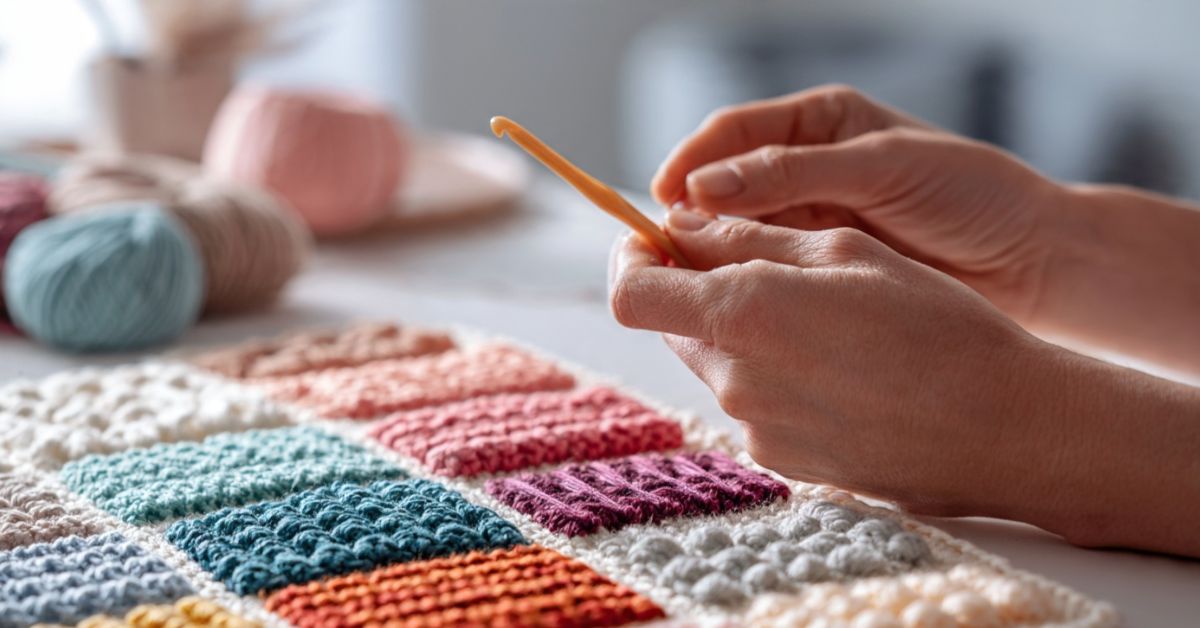
There is something truly magical about the way a single strand of yarn and a crochet hook can transform into something beautiful, functional, and deeply personal. Whether you are picking up your first crochet hook to start a hobby that feels like a warm hug, or you are an experienced maker looking to refine your technique, understanding the visual language of crochet stitches is your golden ticket to creative freedom. For many of us, reading written pattern abbreviations can feel like deciphering a foreign language. That is exactly why visualizing these movements is so essential.
When you can see exactly how a stitch is formed—where the hook enters the fabric, how the yarn is pulled through, and how the loops settle—the frustration of “not getting it” melts away. This guide is designed to be your visual companion. We are going to walk through the essential building blocks of crochet, breaking down those complex-looking stitch abbreviations into simple, graceful motions. You don’t need to be an expert to master these movements; you just need a bit of patience and a willingness to enjoy the rhythm of the yarn. Let’s embark on this creative journey together, turning those technical symbols into fluid, rhythmic stitches that will soon become second nature to your fingers.
Quick Overview
This guide is intended for anyone who wants to demystify the core stitches that make up the vast majority of crochet patterns. Whether you are a total beginner feeling overwhelmed by a classic “how-to” book or an intermediate maker curious about improving your stitch consistency, this resource is for you. You will learn the mechanics behind the chain, single crochet, half double crochet, and double crochet. We will focus on the anatomy of the stitch, why we count them, and how to achieve that polished, uniform look that makes handmade items look professionally crafted. No complicated jargon here—just clear, step-by-step imagery descriptions and logic to help you gain confidence with every loop.
Materials to Have on Hand
To practice these stitches, you don’t need anything fancy. In fact, keeping things simple is the best way to learn.
- Yarn: Choose a light-colored, smooth worsted weight (Category 4) yarn. Light colors (like cream, mint, or soft lavender) make it much easier to see the definition of your stitches compared to darker shades, where the “V” shapes can disappear.
- Crochet Hook: A size H/8 (5.0 mm) hook is a perfect “Goldilocks” size—not too small, not too big—and is recommended on most yarn labels for beginners.
- Stitch Markers: These are your best friends. They help you keep track of the first and last stitches of a row, which is the most common place beginners accidentally add or lose stitches.
- A Comfortable Space: Good lighting and a cozy chair make all the difference. Crochet is meant to be a relaxing practice, not a source of physical strain!
Understanding Crochet Terms and Symbols
In the United States, we use a specific set of terminology. Before diving into the stitches, take a moment to familiarize yourself with the abbreviations you will see in almost every pattern.
- Ch (Chain): The foundation of almost every piece.
- Sc (Single Crochet): A short, sturdy, and tight stitch.
- Hdc (Half Double Crochet): The “in-between” stitch that is slightly taller than a single crochet but shorter than a double.
- Dc (Double Crochet): A taller, faster-working stitch that produces a beautiful drape.
- Sl St (Slip Stitch): Used for joining rounds or creating decorative edgings.
The most important thing to internalize is the “loop.” In every stitch, you are essentially pulling a loop of yarn through an existing loop. Once you view crochet as a series of consistent, repeating loops, the complexity vanishes.
Helpful Notes Before You Start
Crochet is a tactile art. Your tension—how tightly or loosely you hold the yarn—will naturally improve over time. Don’t get discouraged if your first row looks a bit “wobbly” or uneven. This is perfectly normal!
The Importance of Turning Your Work
When working flat (in rows), you will find that at the end of each row, you must “turn” your work to begin the next. Visualize this as turning the page of a book. Always turn in the same direction (e.g., clockwise) to keep your edges neat.
Understanding the “V”
Look at your work from the top. Do you see the row of “V” shapes? Those are the tops of your stitches. When a pattern says to work “into the stitch,” you are usually inserting your hook under both loops of that “V.”
Counting Stitches
The most common mistake is losing stitches at the edges. Using a stitch marker in the very first and very last stitch of your row will save you from frustration and ensure your fabric stays perfectly square.
Visualizing the Essential Stitches
Let’s break down the movements. Imagine your hook is a needle, and your yarn is a thread. The goal is to move the hook into space, catch the yarn, and pull it back out.
The Foundation Chain
The chain is your starting line.
- Hold the slip knot on your hook.
- Yarn over (bring the yarn over the hook from back to front).
- Use the hook to pull that yarn through the loop currently on your hook.
- You have created one chain. Repeat this to create a row of loops that look like a braided chain. Keep your tension consistent—if it’s too tight, you won’t be able to insert your hook into them later.
Single Crochet (sc)
This is the workhorse of the crochet world.
- Insert your hook into the next chain or stitch space.
- Yarn over and pull up one loop. You should now have two loops on your hook.
- Yarn over again and pull through both loops on the hook.
- One single crochet is complete. You will see a small, dense “V” sitting on top.
Half Double Crochet (hdc)
This stitch adds a bit of height and is often used for hats and textured blankets.
- Yarn over before you insert the hook into the stitch.
- Insert your hook, yarn over, and pull up a loop. You now have three loops on the hook.
- Yarn over and pull through all three loops at once. It feels like a “one-step” closure, which is why it’s so smooth to work.
Double Crochet (dc)
This is the most common stitch for garments and light home decor.
- Yarn over before inserting the hook.
- Insert the hook, yarn over, and pull up a loop. (Three loops on the hook).
- Yarn over and pull through the first two loops only. (Two loops remain).
- Yarn over again and pull through the final two loops. This process leaves you with a taller, more flexible stitch.
Step-by-Step Learning Stages
To master these, don’t try to make a blanket immediately. Focus on “swatching.”
- Stage 1: The Practice Swatch. Chain 15. Work 15 rows of single crochet. Do not worry about perfection. Just focus on making every stitch look like its neighbor.
- Stage 2: The Stitch Change. Practice working 5 rows of single crochet, then 5 rows of half double, then 5 rows of double. You will immediately see how the height of the fabric changes with each stitch type.
- Stage 3: Edge Check. At the end of each row, count your stitches. If you started with 15 chains, you should have 14 single crochets in your first row (as one chain is usually for height). Keeping this count consistent is the “secret” of professional-looking crochet.
Common Mistakes to Avoid
Even seasoned crocheters stumble sometimes! Here is how to keep your work looking clean.
- The “Tight-Stitch” Trap: If you find it impossible to insert your hook into the next stitch, your tension is too tight. Try using a hook one size larger, or consciously loosen your grip on the yarn as you move the hook through the loops.
- Skipping the Turning Chain: Beginners often forget the “turning chain” at the start of a row, which adds height so your work doesn’t shrink. Always count your turning chain as part of your stitch pattern if your instructions indicate it.
- The Twisted Chain: When you join a starting chain into a round, it is incredibly easy for the chain to twist. Lay it flat on a table like a necklace, ensuring the “V”s are all facing the same direction, before joining it into a circle.
- Confusing Stitch Heights: It is easy to accidentally turn a double crochet into a half double because the rhythm feels similar. Always pause and look at your stitch: does it have three loops to close, or two?
Pro Tips for a Better Result
Quality finishings are what elevate a project from “homemade” to “handmade with love.”
- Consistent Tension: If your work looks wavy, your tension is likely inconsistent. Practice is the only cure, but you can also try holding your yarn differently to find the path that creates the least resistance for your fingers.
- Blocking: If your finished project looks a little “crunchy” or uneven, blocking is your best friend. A simple steam press or pinning your project to a foam mat and lightly misting it with water can make your stitches bloom and settle into total uniformity.
- Weaving in Ends: Never just knot your yarn and cut it! Use a tapestry needle to weave your tail in and out of the back of your stitches for at least two inches. This ensures your hard work doesn’t unravel in the wash.
- Hook Ergonomics: If your hands hurt, you are likely gripping the hook with a “death grip.” Experiment with different hook styles—some have cushioned silicone handles designed specifically to reduce hand strain.
Variations and Personalization
Once you master these four core stitches, the variations are endless!
- The Ribbing Effect: By working into only the “back loop” of the stitches (the half of the “V” furthest away from you), you create a gorgeous, elastic ribbed texture perfect for cuffs and collars.
- Color Transitions: To change colors smoothly, finish the last pull-through of your current stitch with the new color. It makes the transition invisible.
- Texture Play: Try alternating rows of single and double crochet to create a fabric that is both sturdy and drapey—wonderful for making reusable market bags.
Care and Next Steps
Your crochet journey has just begun. Once you are comfortable with these stitches, you can confidently pick up almost any beginner pattern. Remember that your stitches reflect your time and heart.
- Washing: Always check the yarn label. Most acrylics are machine washable, but wool or cotton blends usually prefer a gentle hand wash in lukewarm water with mild soap. Lay your pieces flat to dry on a towel—never hang them, as the weight of the water can cause the stitches to stretch and distort.
- Storage: Keep your projects in mesh bags to allow them to “breathe,” and keep them away from direct sunlight to prevent fiber fading over time.
- Keep Learning: Your next step is mastering “increases” and “decreases.” These are the magical stitches that allow you to turn flat fabric into spheres (for amigurumi) or shaped clothing (like sweaters).
FAQ
How do I know if I’m using the right hook size?
The yarn label is your guide! Every yarn manufacturer suggests a hook size range. If your fabric is too stiff, go up a hook size. If it has big, gaping holes, go down a hook size.
Why does my square look like a trapezoid?
This is caused by adding or skipping stitches at the end of every row. Use a stitch marker in the first and last stitch of each row to ensure you are maintaining the same number of stitches from start to finish.
Is it normal for my yarn to split?
Yes, especially if the yarn is a “plied” yarn. If the tip of your hook keeps catching the ply, try a hook with a smoother, more tapered throat. Sometimes, switching to a different yarn brand can also make a world of difference.
What is the difference between U.S. and U.K. terms?
They are often named the same, but the U.K. terms are effectively “one size up.” For example, a U.S. single crochet is a U.K. double crochet. Always check the “key” or “abbreviations” section of any pattern you download to see which terminology is being used.
How do I choose the best yarn for my very first project?
Look for a “smooth” yarn. Avoid novelty yarns, mohair, or yarns with “halo” (fuzz), as they make it impossible to see where your hook should enter the stitch. A solid-colored, worsted-weight acrylic or wool blend is the gold standard for learners.
Conclusion
Crochet is more than just a craft; it is a way to slow down, practice mindfulness, and create something durable and beautiful for yourself or someone you love. By taking the time to visualize the movement of these stitches, you are building a foundation of knowledge that will serve you for years to come. Don’t be afraid to pull out your stitches and try again—every “mistake” is actually just a lesson in how the yarn behaves. We all started exactly where you are right now, and the joy of finishing that very first piece is a feeling you will cherish forever. Keep your hook handy, your yarn nearby, and most importantly, enjoy every single loop. You are doing a wonderful job.