
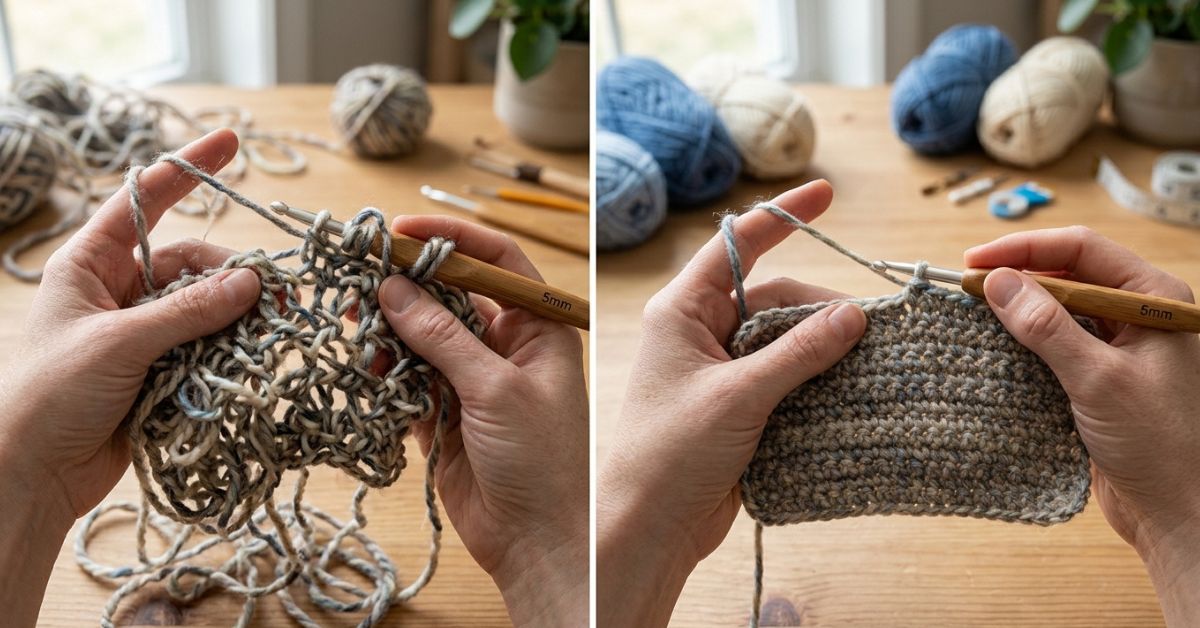
There is something profoundly peaceful about the rhythm of a crochet hook dancing with a soft strand of yarn. If you have ever felt intimidated by the idea of starting your first project, you are certainly not alone. Many of us began our journey with tangled yarn, wonky edges, and a little bit of frustration. But here is the secret: crochet is not about perfection; it is about the gentle joy of creating something beautiful with your own two hands. Whether you are looking to craft a cozy piece for your home or a thoughtful handmade gift for someone special, the process should be as relaxing as the result is rewarding.
This guide is designed to walk you through the absolute basics, helping you avoid those common “beginner traps” that often make new crocheters want to put their hook away for good. We are going to focus on building your confidence, mastering the fundamentals, and creating a lovely, textured project that will leave you feeling proud of what you have accomplished. You are capable of making something stunning, and I am so honored to be your guide through these very first stitches.
Quick Project Overview
For this tutorial, we will be making a “Cozy Keepsake Mug Rug.” This is the quintessential beginner project—a small, functional, and adorable coaster that allows you to practice your stitches without the commitment of a large blanket or garment.
- Skill Level: Absolute Beginner
- Estimated Time: 45 minutes to 1 hour
- Finished Size: Approximately 5 inches by 5 inches
- Best Use: Use this for your morning coffee, tea, or as a decorative mat for a small succulent. It also makes for a heartfelt, quick DIY gift.
- Why You’ll Love It: This project teaches you how to maintain consistent tension, how to turn your work, and, most importantly, how to finish with a clean edge.
Materials Needed
To keep things stress-free, I recommend starting with materials that are easy to see and hold.
- Yarn: One skein of medium (worsted) weight cotton yarn. Cotton is fantastic for beginners because it doesn’t split easily and has a nice structure.
- Crochet Hook: Size H/8 (5.0 mm). This is a “Goldilocks” size—it is comfortable to hold and works beautifully with worsted weight yarn.
- Tapestry Needle: For weaving in your yarn ends.
- Scissors: Any sharp pair will do.
- Optional: A small locking stitch marker to help keep track of your first and last stitches.
Stitches and Abbreviations
- ch (chain): Yarn over, pull through the loop on the hook.
- sc (single crochet): Insert hook into stitch, yarn over, pull up a loop, yarn over, and pull through both loops on the hook.
- st(s) (stitch/stitches): The individual loops you work into.
- FO (fasten off): Cut the yarn and pull the tail through the final loop to secure.
Pattern Notes Before You Start
Crochet is all about consistency. When you are just starting, you might feel like your hands are a bit clumsy, but this is perfectly normal. Your muscles need time to learn the “muscle memory” required for holding the yarn and hook.
Tension Advice: If your work looks very loose and holey, you are pulling your yarn too far away from the hook. If you struggle to get your hook into the stitches, you are likely working too tightly. Aim for a comfortable middle ground where the hook moves easily, but the fabric isn’t loose enough to see through.
The “Turn” Technique: Throughout this pattern, you will see instructions to “ch 1 and turn.” This is how you move from one row to the next. Always turn your work the same way—like you are turning the page of a book—to keep your edges from twisting.
Full Crochet Pattern
Part 1: The Foundation
Start by creating a slip knot. Place the loop on your hook and tighten it just enough so it isn’t wobbly.
- Foundation: Ch 16. (This 16-chain start will give you a nice, square mug rug).
Part 2: Working the Rows
- Row 1: Skip the first chain from the hook. Work 1 sc into every remaining chain. You should have 15 stitches in total. Ch 1, turn.
- Row 2-15: Work 1 sc into the first stitch and every stitch across. At the end of each row, ch 1 and turn. Be sure to count your 15 stitches at the end of every single row. If you have fewer, you dropped a stitch; if you have more, you accidentally added one!
Part 3: Finishing
Once you have completed 15 rows, your mug rug should look like a tidy little square.
- Fasten Off: Cut your yarn, leaving a 6-inch tail. Pull the tail through the working loop on your hook and pull tight to knot it.
- Weave in Ends: Use your tapestry needle to weave the starting and ending tails back and forth through the fabric. Trim any excess, and you are done!
Step-by-Step Tutorial Explanation
When you sit down to start, don’t worry about speed. Focus on the mechanics. In Row 1, when you skip that first chain, you are creating a “turning chain.” This gives your piece the height it needs to start the next row. When you insert your hook, look for the “V” shapes on top of the stitch. You want to slide your hook under both legs of that “V.” Consistently hitting both loops is what keeps your project looking sturdy and professional rather than messy.
If you find that your sides are leaning inward, you are likely missing the very last stitch of the row. This happens to everyone! The last stitch can sometimes look a bit hidden or bunched up. Before you “ch 1 and turn,” double-check that you have actually worked into every available loop.
Common Mistakes to Avoid
The most common ailment for the beginner is the “triangular” project, where the rectangle starts to shrink in size as you work. This almost always happens because of miscounting. Always count your stitches at the end of the row. If your count is decreasing, you are skipping the last stitch. If it is increasing, you are accidentally working two stitches into one space.
Another frequent mistake is “tension fatigue.” If your hands start to cramp, take a break! Crochet should be a meditative experience, not a workout. If you find yourself gripping the hook like a pen with a death-grip, set it down for a moment, shake out your hands, and relax your shoulders. Your tension will immediately improve when your body is relaxed.
Lastly, watch out for the “twisted starting chain.” Before you work your first row, lay your chain out flat on a table. If it looks like a spiral, you will be working into a twist, and it will be nearly impossible to straighten out later. Spend the three extra seconds to ensure your chain is flat before you add your first row of single crochets.
Pro Tips for a More Beautiful Result
To make your mug rug look like it came from a boutique, consider these small details:
- Blocking: Once you finish, lay your mug rug flat on a clean towel and mist it lightly with water. Use your hands to nudge the corners into a perfect square. Let it dry completely. This “finishing touch” sets the stitches and makes the piece look uniform and polished.
- Yarn Choice: Stick to smooth, solid-colored cotton yarn for your first few projects. Avoid textured or “fuzzy” yarns until you feel more comfortable, as they make it very difficult to see your stitches and count accurately.
- Weaving Ends: Never just snip your ends flush against the work. They will eventually poke out or unravel. Always weave them in and out of the stitches for at least two inches. If you weave in the direction of the stitch, the tail will “hide” inside the fabric perfectly.
Variations and Personalization Ideas
Once you have mastered the solid square, the world is your oyster! You can change the aesthetic of this project in so many ways:
- Stripes: Change your color every two rows. Just carry the unused color up the side of your work, or fasten off at the end of each row and start a new color for a perfectly clean stripe.
- Texture: Try alternating rows of single crochet with rows of double crochet to create a beautiful, rippled texture.
- Personalization: If you are giving this as a gift, you can use a bit of embroidery thread to cross-stitch the recipient’s initial in the corner.
- Seasonal Styling: Use reds and greens for a Christmas gift, pastels for a spring baby shower, or neutrals for a sophisticated farmhouse home decor look.
Care Instructions
Since we used cotton yarn, this little mug rug is quite durable. If your coffee spills on it, simply toss it in a small mesh laundry bag and machine wash it on a gentle cycle. Reshape it while it is damp and lay it flat to dry. Avoid high heat in the dryer, as it can cause the cotton to shrink or stiffen over time. With simple love and care, these pieces stay looking fresh for years.
FAQ
Why does my crochet project look like a trapezoid instead of a square?
This usually happens because you are missing stitches at the ends of your rows. By ending your row with one, two, or three fewer stitches than you started with, your edges will slowly slant inward. Counting your stitches after every row is the best way to keep your edges straight.
How do I know if I’m holding my hook the right way?
There is no “right” way! There are two main holding methods: the “pencil hold” (holding it like you’re writing) and the “knife hold” (holding it like you’re cutting a piece of fruit). Try both and see which one feels natural in your hand. If it doesn’t hurt or cause cramping, you are doing it correctly.
What should I do if I run out of yarn in the middle of a row?
Don’t panic! Simply join a new ball of yarn before you finish your next stitch. Make the final pull-through of your current stitch with the new yarn, then continue crocheting as normal. You can weave in the loose tails later on the backside of your work.
Does it matter if I crochet too loosely?
While crochet is supposed to be soft, if it is too loose, the fabric won’t have enough structure to hold its shape. If your mug rug looks like a net, you might consider going down one hook size. This will make your “V” stitches tighter and your fabric denser.
How do I fix a mistake I made several rows back?
If you notice an error, you don’t have to keep it. You can gently pull your hook out and “frog” (rip) the stitches back to the point of the error. It can be heartbreaking to undo work, but think of it as “reclaiming your yarn” for a better result.
Conclusion
You have just embarked on a wonderful creative journey. Remember that every master crocheter today was once a beginner struggling with their very first slip knot. The mistakes you make now are simply lessons being woven into your craft. Keep practicing, keep your tension gentle, and above all, keep enjoying the process of creating.
If this mug rug comes out perfectly, celebrate it! If it’s a little wonky, celebrate that too—it’s the evidence of your learning process. I encourage you to set aside a little time this week to sit in a comfortable chair, prepare a favorite beverage, and let your yarn tell its story. There is so much more to discover, from beautiful lace patterns to intricate blankets, but for now, enjoy the simple, tactile satisfaction of this project. Happy hooking!