
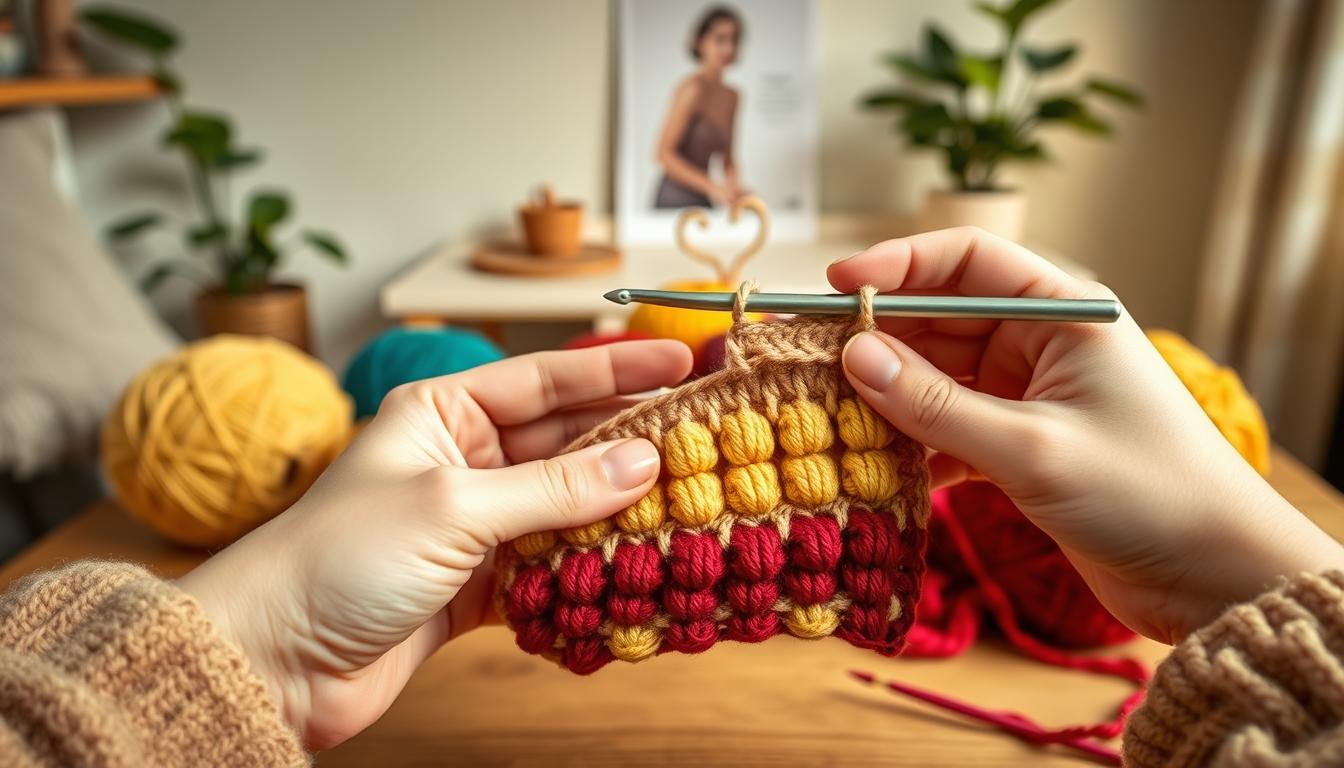
If you want to add cozy, tactile texture to blankets, cushions, or shawls, this tutorial will help you start with confidence. The bobble stitch uses a few simple steps to create big visual interest. Some people call it a puff stitch, which pulls several loops into one raised bump on the fabric.
The technique is often worked on the wrong side so the bobbles pop on the right side. To make a bobble, you yarn over and insert the hook, pulling up loops several times. Usually, you repeat this 4 to 6 times before drawing through all loops. After the bobble, a shorter stitch like a single crochet in the next stitch helps the bobble stand out.
Keep in mind that bobbles use more yarn than plain stitches, so plan your yarn stash carefully. Video and photo guides are useful along with written directions. Many creators offer demonstrations for both right- and left-handed crocheters.
Popular projects that use bobbles include blankets like Waves of Grain, cushions that spell words, and textured shawls such as the Wheatfields Shawl by Zeens and Rogerson.
Key Takeaways
- The bobble or puff stitch creates raised, tactile texture by pulling up multiple loops in one stitch.
- Work bobbles on the wrong side for best popping on the right side.
- Typical loop repeats are 4–6; more repeats make denser bobbles.
- Bobbles consume extra yarn—factor that into project estimates.
- Combine written, photo, and video guidance for faster learning.
- Use comfortable hooks (for example, K/6.5mm) and varied yarns for stash-busting projects.
Why the Bobble Stitch Is Perfect for Beginner Crochet Projects
The bobble stitch adds instant texture and character to simple crochet designs. Its raised stitches create a bold, tactile surface that makes blankets, cushions, and colorwork pop. This effect happens without any complex shaping.
The bobble stitch helps beginners learn stitch relationships and tension control. Pulling grouped loops and finishing them together shows how loop counts and stitch height affect fabric.
Use bobble stitch texture to try new ideas with stitch placement, spacing, and contrast. It gives fresh ways to add texture to crochet projects.
What the bobble stitch adds to your projects
Bobble clusters offer three-dimensional accents that can spell words or form motifs. They also work well to outline borders. When placed in staggered rows, bobbles create repeated textures that look like woven beads.
Choosing contrasting yarn highlights bobbles vividly. A single color gives subtle depth. Both add special flair to your crochet pieces.
Common names and variations to know
Terminology varies across patterns and blogs. The stitch section usually explains if a term means a classic bobble, puff, popcorn, or cluster.
Understanding the difference between bobble and puff stitches avoids confusion. Variations use three to five partial starts or change stitch types. Different loop counts create unique shapes and sizes.
Popcorn stitches have a similar raised look but use a different finishing method. Always check stitch definitions before starting a pattern.
Materials, tools, and yarn considerations
Yarn choice affects how bobbles appear. Bulky or worsted yarns create large, tactile bobbles and reduce fiddly loops. Lighter yarns make smaller, tighter bumps.
Pick yarn based on the bobble look and feel you want. Hook size also matters for working grouped loops. Many crochet makers use a slightly larger hook than recommended.
For example, a K/6.5mm hook helps manage multiple loops easily. Adjust hook size to balance stitch detail and fabric drape.
Practical tips for success
- Use a stitch marker to track row starts and avoid misplaced bobbles.
- Swatch with your chosen yarn for textured crochet to check gauge and tension.
- Good lighting and steady finger placement make handling many loops easier.
| Factor | Effect on Bobbles | Recommendation |
|---|---|---|
| Yarn weight | Heavier yarns create larger, fuller bobbles | Worsted or bulky for bold texture; fingering for subtle texture |
| Hook size for bobbles | Larger hooks ease loop manipulation and loosen fabric | Try a hook one or two sizes up from label, such as K/6.5mm |
| Stitch choice | DC, HDC, or SC starts change bobble height and fullness | Use DC for tall bobbles, HDC for medium, SC for compact |
| Color | Contrast highlights raised stitches; same color mutes them | Use contrasting hues to add flair crochet or tone-on-tone for subtlety |
| Pattern terms | Names vary; confusion between bobble vs puff stitch is common | Check stitch nomenclature crochet in the pattern before starting |
crochet bobble stitch tutorial
Start with a short setup: chain an even number (try 14). Work two rows of half double crochet to make a base.
This base shows right and wrong sides. It helps you count bobbles easily when you add them later.
Step-by-step written tutorial for the classic bobble
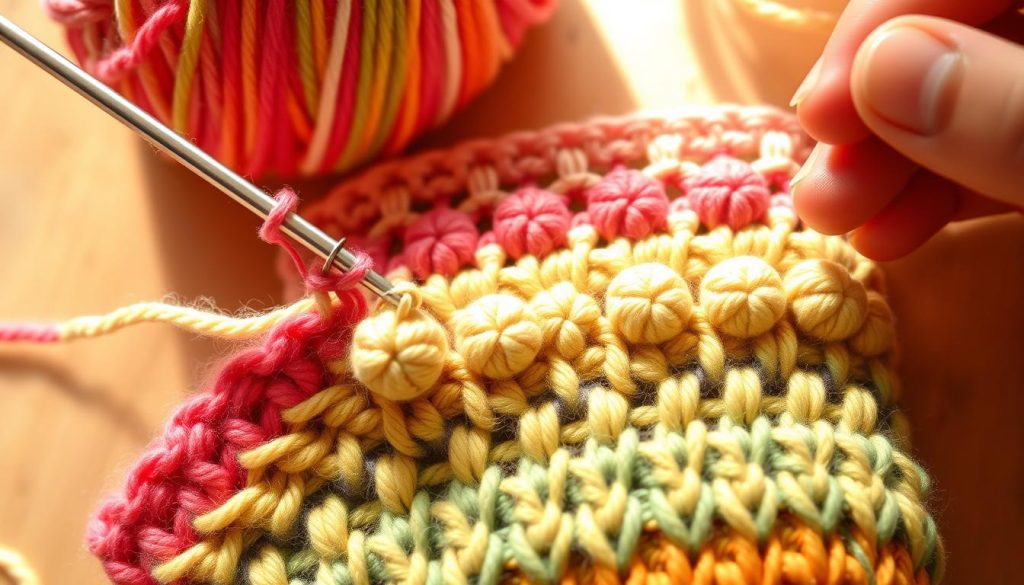
Work the classic bobble using double crochet partials. Yarn over, insert the hook, yarn over, and pull up a loop.
Yarn over, pull through two loops. Repeat this three or four times in the same stitch, depending on how dense you want the bobble.
After repeating, yarn over and pull through all loops at once to finish the bobble. Pull tight to shape it well.
Make a single crochet in the next stitch to set spacing. This helps the bobble pop on the right side.
Photo and video guidance tips
Use close-up photos that show the first pull-up, the crowded hook, and the final pull-through before closing.
A bobble stitch video helps with rhythm and tension. Choose videos that offer right-handed and left-handed options.
Pause and rewind videos when practicing. The motion looks easier on video than in a single picture.
Row placement and stitch-height choices
Put bobbles on the wrong side to make them pop on the right side. Surround them with shorter stitches for more pop.
Use single crochet around bobbles for strong texture. For a softer look, use taller stitches like double crochet.
Plan bobble rows to sit between two rows of half double crochet for balance. Choose stitch height to control bobble height.
Spacing and counting
Alternate two half double crochets and one bobble to space bobbles evenly.
When staggering rows, reduce one bobble on every other row to keep alignment neat. Count carefully; bobbles can confuse counting.
Variations and troubleshooting
Change bobble size by using three to five partials. Try half double or single crochet partials for different shapes.
Use different yarn colors within a bobble row to form motifs. To fix tension issues, practice loop control and swatch consistently.
Work in a quiet place to avoid interruptions. Use the same hook and yarn throughout your project.
Fixing common mistakes
If loops crowd the hook, use fewer partials or a bigger hook for that row.
If the final pull-through looks messy, steady the bobble base with your thumb. Pull tighter to improve shape.
If stitch counts go off, recount carefully. Place the single crochet after each bobble as the pattern says. This keeps your project tidy.
| Focus | Why it matters | Quick tip |
|---|---|---|
| classic bobble stitch steps | Defines construction and loop counts for consistent shape | Use 3–4 partials, finish by pulling through all loops firmly |
| bobble stitch photos | Shows critical moments that still images can clarify | Include close-ups of first partial, crowded hook, final pull-through |
| bobble stitch video tutorial | Reveals rhythm, hand positioning, and tension in motion | Choose tutorials offering right-handed left-handed bobble tutorial options |
| bobble stitch row placement | Controls how much bobbles project on the right side | Work bobbles on the wrong side and surround with chosen stitch heights |
| bobble spacing | Affects pattern readability and fabric drape | Try two filler stitches between bobbles for balanced texture |
| stitch height for bobbles | Determines bobble prominence | Shorter surrounding stitches increase pop; taller ones soften it |
| bobble stitch variations | Provides creative textures and edging options | Alter partial count, partial type, or color for unique effects |
| fix bobble stitch mistakes | Prevents pattern drift and unsightly joins | Recount, steady the base, and tighten final pull-through |
| bobble stitch tension issues | Impacts uniformity and hook management | Swatch, use consistent tools, and practice loop control |
Conclusion
The bobble stitch is a simple, versatile technique that adds bold texture to many projects.
With practice, you can control size, density, and placement of bobbles.
This lets you create subtle textures or bright, sculpted motifs that stand out on blankets, cushions, and shawl borders.
Use clear written instructions along with photos or videos to learn faster.
Look for demos for both right- and left-handed crocheters.
Start with small swatches using a K/6.5mm hook and worsted weight yarn.
This helps you test tension and yarn use, which predicts how bobbles will sit and how many stitches a pattern needs.
Check the special-stitches notes in patterns to know if the designer calls it a bobble, puff, popcorn, or cluster.
When you have trouble, steady the loop with your thumb and try fewer partial stitches.
You can also move up a hook size and count stitches carefully.
These steps help finish bobble projects neatly and consistently.
Once you feel confident, use the stitch in home decor and garments.
The bobble adds instant visual interest, especially in colorwork and edging.
This makes your pieces look handcrafted and shows the beginner crochet skills you have learned.
FAQ
What is the bobble stitch and how does it differ from a puff or popcorn stitch?
The bobble stitch is a textured crochet technique. It creates raised, rounded “bobble” elements by pulling up multiple loops into the same stitch and finishing them together.
Terminology varies: some call similar grouped-loop stitches “puff” or “popcorn.” Popcorns usually have a different finish, often turned inside out or joined specially.
Puffs and bobbles share the grouped-loop method. Always check the pattern’s special-stitches section for the exact meaning.
Which side should I work bobbles on so they show on the right side?
Bobbles are usually worked on the wrong side so they pop on the right side.
Patterns often note right and wrong sides. If unsure, try a small sample row and see which side shows the texture best.
How is a classic bobble constructed step by step?
The classic bobble uses double crochet partials. First, yarn over, insert hook, pull up a loop, yarn over again, and pull through two loops to make a partial double crochet.
Repeat the partial double crochet 3–5 times in the same stitch. Then yarn over and pull through all loops to close the bobble.
Finish by working a single crochet or short stitch next. This helps the bobble stand out on the right side.
How many partials should I make to form a bobble?
Typical counts range from 3 to 5 partials.
Four repeats usually create nine loops before closing; five repeats can make 11 or more loops.
Fewer partials make smaller bobbles; more partials make fuller, chunkier ones. Try swatching to find your preferred look.
What yarn and hook should I use for practicing bobbles?
Sturdier worsted-weight or bulky yarns show bobbles well and reduce fiddly loops.
Many start with a K/6.5mm hook and worsted weight yarn. Adjust based on your yarn and tension.
A larger hook helps pull up multiple loops and creates a looser, more noticeable bobble.
Do bobbles use more yarn than regular stitches?
Yes. Bobbles pull up many loops and close them together, using more yarn than flat stitches.
Plan for more yarn in bobble-heavy blankets, cushions, or shawls and adjust your estimates.
How do I keep my tension even when making many loops on the hook?
Practice and swatch to improve tension. Use a larger hook if loops crowd on your hook.
Hold the bobble base steady with your thumb when pulling through all loops. Keep the final pull slightly tighter.
Good lighting, a quiet workspace, and steady hand placement help maintain even tension.
How should I space bobbles so stitch counts stay accurate?
Maintain a regular pattern of filler stitches around each bobble, like two half double crochets, one bobble, and two half double crochets.
Place the single or short stitch right after the bobble as the pattern says. Use stitch markers and recount often.
Bobbles can make counting tricky, so markers help keep you on track.
Can I create motifs, letters, or colorwork with bobbles?
Yes. Bobbles work well for colorwork, letters, and motifs due to their 3D texture.
Use contrasting colors to highlight shapes, or a single color for subtle texture.
Follow a two-color chart for bobble colorwork and test placement on a swatch first.
What variations change the size and shape of a bobble?
You can change the number of partials (3–5), the stitch type (double crochet, half double crochet, or single crochet), yarn weight, or hook size.
Each factor changes the bobble’s height and density: fewer partials or lighter yarn make smaller bobbles.
More partials, thicker yarn, or a larger hook make bobbles chunkier.
How can I troubleshoot crowded loops or a messy final pull-through?
If loops crowd the hook, try fewer partials or a larger hook on the bobble row.
Use your thumb to steady the bobble base during the final pull-through and pull a bit tighter.
Practice on swatches again if tension is uneven. Stitch markers can help track rows and counts.
Are there photo or video tutorial tips that help learners master bobbles?
Good visuals show the first partial loop, next partials in the stitch, and the crowded hook before closing.
They also show pulling through all loops. Right- and left-handed demos are helpful.
Pause, rewind, and practice short swatches until you close loops consistently without missing yarn overs.
How do surrounding stitch heights affect how much a bobble “pops”?
Shorter surrounding stitches like single crochet make the bobble stick out more.
Taller stitches like double crochet let the bobble sit less pronounced.
Half double crochets around bobbles give a balanced look. Experiment to control the bobble’s pop.
What project ideas work best for bobbles?
Bobbles suit statement blankets, cushions, shawls, edgings, and colorwork lettering.
Designers like Zeens & Rogerson use bobbles in the Wheatfields Shawl. Makers use them for cushions and textured blankets.
Bobbles add 3D texture and make simple patterns look more complex.
What tools and extras make bobble rows easier?
Helpful tools include a comfortable hook, good lighting, a stitch marker, and optional crochet thimbles.
A larger hook for the bobble row and a tidy workspace reduce frustration when many loops crowd your hook.
Any final tips for beginners learning the bobble stitch?
Start with small swatches using worsted yarn and a K/6.5mm hook.
Combine written instructions with photos or videos. Expect to use more yarn and check tension carefully.
Practice steadying loops with your thumb. Once confident, use bobbles to add texture, colorwork, or borders to projects.