
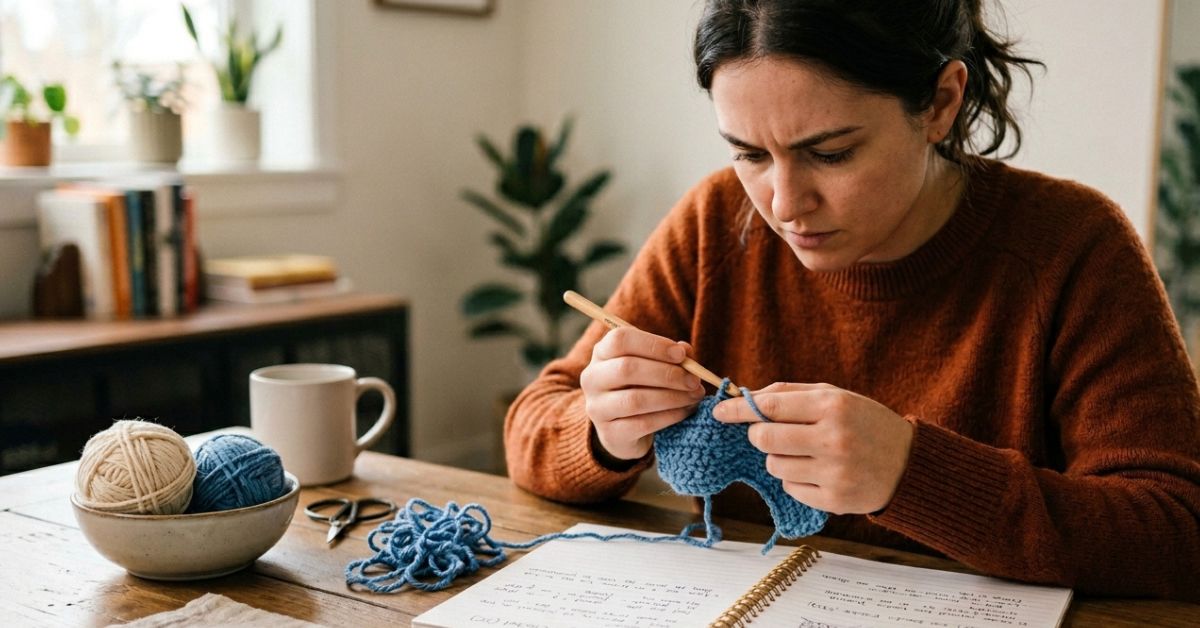
There is something inherently magical about holding a hook and a ball of yarn and watching a piece of fabric emerge from thin air. If you have ever scrolled through social media or walked into a local craft store, you have likely felt that gentle tug of inspiration, followed immediately by a wave of hesitation. We have all been there—wondering if the complex, beautiful blankets and intricate garments we see online are actually attainable for a beginner, or if they require some secret, inherited talent.
The truth is that crochet is much more approachable than it first appears. It isn’t about innate ability; it is about muscle memory, patience, and the joy of creating something with your own two hands. The learning curve is usually steep at the very beginning—mostly because your hands aren’t used to holding tension—but it plateaus quickly, turning into a rhythmic, meditative practice. This article is designed to demystify the process for you. We are going to walk through the fundamentals by working on a classic, versatile project: the “Cozy Mornings” Textured Mug Rug. It is the perfect beginner-friendly accessory that teaches you everything you need to know about starting, maintaining tension, and finishing a project like a pro.
Quick Project Overview
- Skill Level: Absolute Beginner / Beginner-Friendly
- Estimated Time: 1 to 2 hours
- Finished Size: Approximately 5 inches by 5 inches (perfect for a standard ceramic mug)
- Best Use: A quick DIY gift, a practice swatch for larger blankets, or a cozy piece of home decor.
- Why You’ll Love It: This project requires minimal yarn, works up quickly, and uses the three foundational stitches that make up 90% of all crochet patterns. It provides instant gratification and helps you master your tension without the pressure of a massive project.
Materials Needed
- Yarn: Medium weight (Category 4 / Worsted Weight). A cotton-acrylic blend is excellent for beginners because it has good stitch definition and doesn’t split easily.
- Crochet Hook: Size H/8 (5.0 mm). This is the “gold standard” for beginners as it is comfortable to hold and works well with most standard weight yarns.
- Tapestry Needle: For weaving in your ends.
- Scissors: Any sharp pair will do.
- Optional: A small wooden bowl to hold your yarn ball so it doesn’t roll across the floor.
Stitches and Abbreviations
- CH (Chain): The foundation of most crochet. Yarn over and pull through the loop on your hook.
- SC (Single Crochet): Insert hook into the next stitch, yarn over, pull up a loop, yarn over, and pull through both loops on the hook.
- HDC (Half Double Crochet): Yarn over, insert hook into stitch, yarn over, pull up a loop (3 loops on hook), yarn over, and pull through all 3 loops on the hook.
- DC (Double Crochet): Yarn over, insert hook into stitch, yarn over, pull up a loop (3 loops on hook), yarn over, pull through 2 loops, yarn over, pull through remaining 2 loops.
- SL ST (Slip Stitch): Insert hook, yarn over, pull through the stitch and immediately through the loop on your hook.
- FO (Fasten Off): Cut the yarn and pull the tail through the final loop to secure it.
Pattern Notes Before You Start
Crochet is all about your individual “tension,” or how tightly you pull the yarn. If you find your finished piece is curling like a potato chip, your tension is likely too tight. If it looks like a loose, holey net, you might be holding the yarn too loosely. Don’t panic! This is normal for your first project. Aim for a consistent hold that allows you to move the hook through the loops without forcing it. Always count your stitches at the end of every row to ensure you haven’t accidentally dropped one at the edges.
Full Crochet Pattern
This mug rug is worked back and forth in rows. By alternating stitch heights, we create a beautiful, squishy texture.
Part 1: The Foundation
Chain 16. This provides a nice, manageable width for your mug.
Part 2: The Body
Row 1: In the second chain from the hook, work one SC. Continue working one SC in every chain across. (15 stitches total). Turn your work.
Row 2: Chain 2 (this counts as your first HDC). Skip the very first stitch (since the chain occupies it), and work one HDC in every stitch across. Turn your work.
Row 3: Chain 3 (this counts as your first DC). Skip the first stitch, and work one DC in every stitch across. Turn your work.
Row 4: Chain 1. Work one SC in every stitch across. Turn your work.
Repeat Rows 2 through 4 until the piece measures 5 inches long. This pattern creates a lovely, ridged texture that is both functional and aesthetically pleasing.
Part 3: Finishing
Once you have reached your desired length, perform one final row of slip stitches across the top edge. This creates a neat, finished “binding” look that prevents the edge from stretching out. FO, leaving a 6-inch tail of yarn. Use your tapestry needle to weave this tail back and forth through the stitches on the back side of the work to secure it permanently.
Step-by-Step Tutorial Explanation
When you start that first chain, it will feel like you don’t have enough fingers. That is the “newbie struggle,” and it usually lasts for about twenty minutes. The most important thing is to focus on holding the yarn in your non-dominant hand—try weaving it through your pinky and index finger to create a bit of friction. This “yarn management” is what regulates your tension.
As you work your rows, pay attention to the “V” shapes at the top of your stitches. Those are your anchor points for the next row. When you turn your work at the end of a row, make sure you aren’t accidentally going into the very last stitch twice (a common beginner “increase” error) or skipping the first one (a common “decrease” error). If your piece starts to look like a trapezoid, you are likely missing one of these edge stitches. Count them out loud—it feels silly, but it works!
Common Mistakes to Avoid
The most frequent hurdle is the “disappearing stitch.” When you reach the end of a row, the corner stitch can get pulled tight and look like it’s part of the side-edge of the work. Always look for that final “V” at the corner. Another common culprit is the twisted starting chain. If your first row seems to have a spiral or twist in it, lay your chain flat on a table like a ladder before you begin your first row of stitches.
Finally, do not be afraid of the “frog.” Crocheters call it “frogging” when you rip out your work because it says “rip it, rip it.” If you see a mistake three rows down, just pull the yarn out gently until you reach the error and start again. It isn’t a failure; it’s an essential part of the design process.
Pro Tips for a More Beautiful Result
If you want your projects to look professional from day one, consider these tips. First, treat your stitches with care. When inserting your hook, ensure you are going under both loops of the “V” instead of just the front or back one. This creates a much sturdier fabric.
Second, if your edges still look a bit wobbly, don’t worry—blocking solves everything. Once you are finished, lightly dampen your mug rug, lay it flat on a dry towel, and gently press it into a perfect square with your hands, pinning it down if necessary. Let it air dry; the difference in the look of the project will be night and day. Lastly, choose light-colored yarn for your first few projects. It makes seeing the individual stitches in dark loops much easier, which saves your eyesight and your patience.
Variations and Personalization Ideas
Once you have mastered the mug rug, you can use the same technique to create a larger dishcloth by simply chaining 30 instead of 16. You can also experiment with color changes. Try working one row of a contrasting color every four rows to create a sophisticated, striped look. If you want to make this a gift, pair it with a handmade ceramic mug or a bag of gourmet coffee. A set of four different colored mug rugs tied together with jute string makes an incredible housewarming present that feels deeply personal.
Care Instructions
Since this project is intended for daily use, it will get dirty! If you used a cotton or cotton-blend yarn, you can simply toss your mug rug into the washing machine on a gentle cycle, preferably inside a mesh laundry bag to keep it from getting tangled. Lay it flat to dry to ensure it keeps its shape. Avoid using harsh bleaches, as these can break down the fibers over time. With simple care, these handmade pieces will last for years.
FAQ
How do I stop my crochet from curling at the edges?
Curling is usually a sign that your tension is too tight or that your starting chain was too tight. Try using a hook that is one size larger just for the foundation chain to give your base more room to breathe.
Why do I keep ending up with more or fewer stitches than I started with?
This is caused by either skipping the last stitch of a row or accidentally adding an extra stitch at the start of a row. Always count your stitches at the end of every row until the process becomes second nature.
Does the brand of yarn really matter for beginners?
Yes and no. While you don’t need expensive yarn, avoid “fun” fuzzy or eyelash yarns. Stick to a smooth, plied yarn where you can clearly see the twist and the stitch structure. This makes learning much less frustrating.
How do I know if I’m holding my hook correctly?
There is no “right” way, only the way that is comfortable for you. Some people hold it like a pencil, others like a dinner knife. As long as your hand doesn’t cramp, your method is perfectly valid.
Is it normal to pull the yarn so hard my hands hurt?
Not at all! If your hands hurt, you are holding the yarn too tightly. Take a break, shake out your hands, and consciously try to relax your grip. Remember, the yarn should glide through your fingers, not be dragged.
Conclusion
Learning to crochet is a journey, not a race. You have just taken the first step toward a hobby that will provide you with a lifetime of creative satisfaction, stress relief, and beautiful, handmade treasures. Whether you end up making simple dishcloths or complex heirloom blankets, the foundational skills you learn right here, right now, are the keys to everything.
Do not let yourself get discouraged by the early learning curve. Every master crocheter began exactly where you are today—with a tangled ball of yarn, a hook that felt slightly clumsy in their hand, and a genuine desire to create something beautiful. Keep your mug rug as a reminder of your progress, and once you feel confident with this project, don’t hesitate to pick up a new pattern and try again. You are doing something wonderful for yourself, and the crochet community is so happy to have you. Happy hooking!