
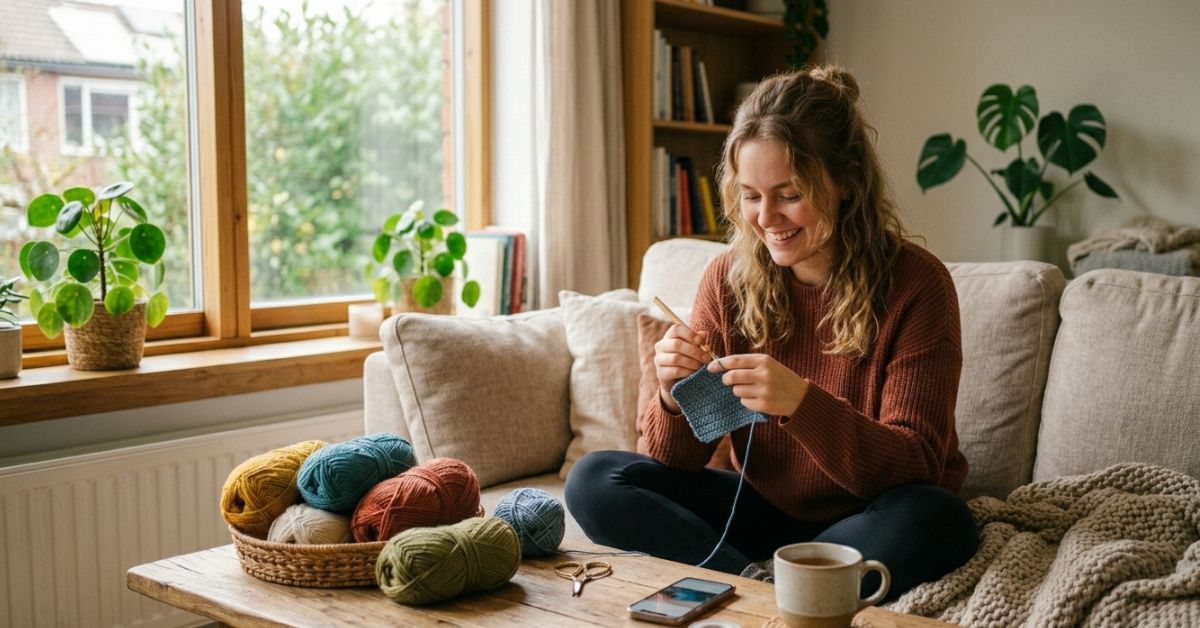
There is a specific kind of magic that occurs the first time you pull a loop of yarn through another and realize you are creating fabric from nothing but a single strand and a hook. If you have been sitting on the sidelines, scrolling through photos of cozy handmade blankets, delicate baby booties, or charming home decor, wondering if you have the “knack” for this, consider this your official invitation to begin. The honest truth is that crochet is surprisingly accessible, yet infinitely deep. It is a hobby that meets you exactly where you are: it can be a mindless, rhythmic escape after a long day or a complex, meditative craft that keeps your mind sharp and your hands busy.
Many people are intimidated by the sight of elaborate stitches or dense patterns, but at its heart, crochet is just a few foundational movements practiced until they become muscle memory. You don’t need a degree in textiles or a natural-born gift to create something you will be proud to display in your home or gift to a loved one. Today, we are going to walk through the reality of starting this journey, addressing the common hurdles, and diving into a delightful beginner-friendly project that will give you the confidence to call yourself a maker.
Quick Project Overview
To help you get comfortable, we aren’t just going to talk about theory; we are going to dive straight into a project: the “Ever-Cozy Textured Coaster Set.”
- Skill Level: Beginner
- Estimated Time: 1 to 2 hours for a set of four
- Finished Size: Approximately 4.5 inches square
- Best Use: A perfect first project for your coffee table or a thoughtful DIY housewarming gift.
- Why You Will Love It: It introduces you to the most essential stitches without the commitment of a large blanket. It’s small, manageable, and provides instant gratification.
Materials Needed
- Yarn: One skein of Medium (4) weight cotton yarn. Cotton is ideal for beginners because it doesn’t stretch as much as acrylic, making your stitches look cleaner.
- Crochet Hook: Size H/8 (5.0 mm). This is the “Goldilocks” size—not too small, not too big—and very easy to maneuver.
- Tapestry Needle: A large-eye, blunt needle for weaving in those final yarn tails.
- Scissors: Any sharp pair you have on hand.
- Measuring Tape: Just to check your progress occasionally.
Stitches and Abbreviations
Using standard U.S. terminology, here are the abbreviations you need to master for this project:
- ch (chain): The foundation of most crochet projects. Wrap the yarn over the hook and pull it through the loop already on your hook.
- sc (single crochet): Insert the hook into the stitch, yarn over, pull up a loop (two loops on hook), yarn over again, and pull through both loops.
- dc (double crochet): Yarn over, insert hook into stitch, pull up a loop (three loops on hook), yarn over, pull through two loops, yarn over again, and pull through the remaining two loops.
- sl st (slip stitch): Insert hook into stitch, yarn over, pull through the stitch and immediately through the loop on your hook. Used to join rounds or movement.
- st(s) (stitch/stitches): The individual loops of fabric you have created.
Pattern Notes Before You Start
Crochet is all about tension. In the beginning, you might notice your work looks a bit like a ruffled potato chip or a tight, shriveled triangle. This is normal! Tension is how tightly or loosely you hold the working yarn. For this project, try to keep your grip consistent. Don’t strangle the hook, but don’t let the yarn hang limp, either. If you find your work curling, your stitches might be too tight. If they look holey and uneven, they might be too loose.
Full Crochet Pattern
This pattern is worked flat in rows to create a beautiful, textured fabric.
Part 1: The Foundation
Start with a slipknot. Chain 16. The foundation chain builds the base for your coaster.
Part 2: Working the Rows
Row 1: Skip 2 chains (this counts as your first spike), dc in each chain across. Turn your work. (14 stitches total).
Row 2: Ch 1 (does not count as a stitch here), sc in the first stitch. dc in the next stitch, sc in the next—repeat from to across the row. Turn.
Row 3: Ch 2 (counts as a dc), dc in each stitch across. Turn.
Row 4: Repeat Row 2.
Row 5: Repeat Row 3.
Part 3: Finishing
After Row 5, fasten off by cutting the yarn, leaving a 6-inch tail. Pull the tail through your final loop to lock it. Use your tapestry needle to weave the loose ends back and forth through the stitches on the back side of the coaster to ensure they are secure and invisible.
Step-by-Step Tutorial Explanation
When you start that first row, you are essentially creating a row of “v-shapes.” By the time you reach the end of Row 1, you should be able to count 14 clear bumps along the top. When we alternate between single crochet and double crochet in Row 2, you are creating a “griddle stitch.” This creates a lovely, bumpy texture that is very forgiving for beginners because the different heights of the stitches hide minor inconsistencies. If you finish Row 2 and realize you have too many or too few stitches, don’t panic! Simply pull the hook out and gently tug the yarn to unravel it—this is called “frogging” (because you “ribbit,” or rip-it, rip-it).
Common Mistakes to Avoid
- The Twisted Chain: When you join a chain to start in the round, make sure the chain isn’t twisted like a curly fry. Lay it flat before your first stitch.
- Skipping the Edge Stitch: Beginners often forget the very last stitch of a row, which causes the piece to narrow into a triangle. Count your stitches every few rows!
- The “Hidden” Loop: Sometimes the very last stitch looks like a knot. Take a moment to poke your hook into everything that looks like a completed loop before assuming you are finished with the row.
- Tightening the Turning Chain: When you chain at the start of a row, keep those chains as loose as your normal stitches. Tight chains will pull your edges inward.
Pro Tips for a More Beautiful Result
Use a “yarn under” or “yarn over” consistently. Most beginners subconsciously switch between the two. Stick to one method for the life of the project for a uniform, professional look. Furthermore, blocking is your secret weapon. Once you finish your coaster, mist it with a little water, lay it flat, and pin it into a perfect square shape with sewing pins on a towel. Let it dry completely. This relaxes the fibers and makes your work look like it came from a boutique. Finally, always buy enough yarn from the same dye lot if you are making a larger set; even brands that produce the same color can have subtle variations between batches.
Variations and Personalization Ideas
Once you have mastered this square, the world is your oyster. Because this pattern uses a “stitch repeat,” you can make it any size. Chain more to make it a placemat, or chain until it is as wide as your bed to make a blanket! Use chunky, wool-blend yarn for a winter feel, or thin, multicolored bamboo yarn for a breezy, summery vibe. You can even add a fringe to the edges by looping short lengths of yarn through the side stitches and knotting them. For a housewarming gift, stacking four of these in different shades of the same color family (an ombre set) makes a high-end impression with very little extra effort.
Care Instructions
Since we are using cotton yarn, your coasters are durable. You can toss them in the washing machine on a gentle cycle, but always place them in a small mesh laundry bag to prevent the fringe or edges from catching. Lay them flat to dry on a towel to ensure they don’t lose their shape. Never iron your crochet directly unless it is a heat-safe fiber; a light steam from a distance is usually enough to freshen them up after a spill.
FAQ
How do I know if I’m holding the hook correctly?
There is no single “right” way. Some people hold it like a pencil (pencil grip), and others hold it like a dinner knife (knife grip). The correct way is whichever one doesn’t make your hand cramp. Experiment with both!
Why does my crochet project look different from the picture?
Patience is key. Professional photos are often done by crocheters with years of practice. Your first project will have its own character. Embrace the “handmade” look—that is exactly what gives it its charm.
How do I fix a mistake I made several rows back?
If it’s a small error, you don’t have to fix it! Most minor mistakes are invisible. If it’s a big error, you can “frog” it back to the mistake, or simply call it a “design feature” and keep going.
Does it matter what kind of yarn I buy?
For your very first project, avoid fuzzy, dark, or textured “novelty” yarns. You need to see your stitches clearly. A smooth, light-colored cotton or wool/acrylic blend makes it much easier to see where your hook should go.
Is crochet expensive to start?
One of the best things about crochet is how affordable it is. You only need one hook and one ball of yarn to begin. You don’t need expensive machines or elaborate tables. It is perhaps the most portable, low-cost creative hobby you can pick up.
Conclusion
Starting a new hobby is an act of bravery. It requires us to be beginners again, to accept the slightly clumsy first attempts, and to trust that with a little time, we will find our rhythm. Crochet is not just about the items you create—it is about the quiet moments you carve out for yourself in a busy world. Each stitch is a tiny victory, a moment of focused mindfulness that results in something tangible and warm.
Do not worry about being perfect. Worry instead about enjoying the feel of the yarn sliding through your fingers and the satisfaction of seeing fabric grow under your own hands. You have everything you need to start, and there is an entire community of makers ready to cheer you on. Keep this tutorial bookmarked as you grow, and remember that every expert crocheter started with the exact same chain you just practiced today. Pick up that hook, take a deep breath, and let your journey begin. It is truly as easy—and as wonderful—as one loop at a time.