
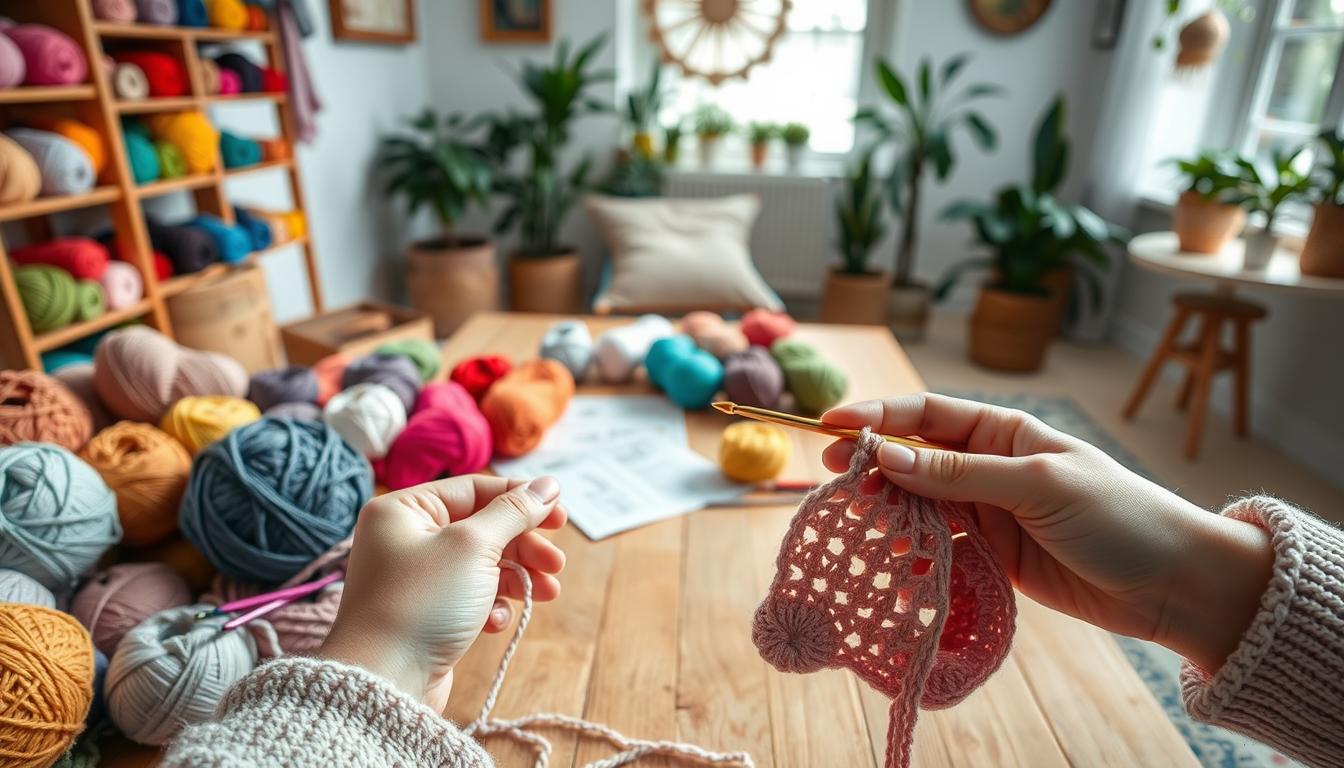
Welcome to an easy, friendly introduction to hay hay crochet. This beginner tutorial shows you the mindset and materials needed for scrap yarn crochet. It’s fast and rewarding.
If you want to turn leftovers into wearable pieces, these patterns are great starters. They include the Polly Pullover, Renea Top, and Checkerboard Cookie vest.
The Polly Pullover uses mixed leftover fibers and a 6.00 mm hook. It creates a breezy mesh with treble crochet stitches.
The Renea Top is a customizable tank. It’s worked with DK or light worsted yarn and a 4.00 mm hook. This makes neat half-double crochet fabric.
The Checkerboard Cookie vest shows simple two-color blocks and clean shaping. It’s made with medium worsted yarn and has a crisp look.
This guide keeps techniques practical and easy to follow. You’ll learn basic stitches, simple shaping, and smart shortcuts.
One shortcut is crocheting over ends to reduce finishing time. Every pattern is rated easy, with clear notes on hook sizes and yarn weights. Small adjustments help fit your gauge and style.
Key Takeaways
- Hay hay crochet works well for scrap yarn and quick, fun projects.
- Polly Pullover, Renea Top, and Checkerboard Cookie vest are beginner-friendly designs.
- Use the suggested hooks (6.00 mm, 4.00 mm, 4.5 mm) but adjust for your gauge.
- Focus on core stitches: treble (TC), half-double (Hdc), and simple color-change methods.
- Crocheting over ends and watching linked video tutorials speeds finishing and reduces weaving.
Getting Started with Hay Hay Crochet: Tools, Materials, and Basics
Begin with a quick overview so you feel set up and confident. Hay Hay crochet materials are simple to find.
The patterns for Polly Pullover, Renea Top, and Checkerboard Cookie vest are labeled Easy for a reason.
These designs use simple panel construction—front, back, sleeves or straps—so you build garments step by step.
Why choose these patterns as a beginner
Patterns are forgiving and written for customizing sizing and length. You can use scrap yarn to mix fibers like acrylic, cotton, mohair, or wool.
This keeps costs low and boosts creativity. Video tutorials from the designer show alignment, crocheting over ends, and strap placement.
They help visual learners who want demos alongside written directions.
Essential materials and tools
Start with a small kit of beginner crochet tools: hooks, scissors, a darning needle, tape measure, and a few stitch markers.
Yarns depend on the pattern—medium/worsted (4) suits Polly Pullover and Checkerboard vest, while DK/light worsted (3) works best for Renea Top.
Examples include Lion Brand and Drops Alpaca Silk for fluffy options, plus standard 100% acrylic or cotton for durable wear.
Yarn amounts vary: Polly Pullover needs about 400 g acrylic or 365 g cotton for S/M. Checkerboard vest uses roughly 307 g, split across colors.
Renea Top ranges from 2 to 4 skeins by size. Use 4.00 mm hook for DK/light worsted, 4.5 mm for ribbing, and up to 6.00 mm for airy Polly drape.
Adjust hook size to match gauge and fabric feel.
Basic stitches and crochet abbreviations you’ll use
Hay Hay patterns rely on core stitches: chain (ch), single crochet (sc), half double crochet (hdc), double crochet (dc), and treble (tc).
Renea Top uses foundation half double crochet (fhdc) for a neat start. Common abbreviations include ch, st(s), hdc, hdc2tog, tc, tc2tog, sl st, and fhdc.
Patterns use US terminology. Shaping often uses hdc2tog and tc2tog stitches.
The Checkerboard vest uses sc blo for ribbing. When switching colors, crochet over yarn ends to save time and tidy edges.
Pattern notes and beginner-friendly tips
Pay attention to crochet turning chain rules. Many Hay Hay patterns specify a turning chain of 1 or 3 that does not count as a stitch.
This keeps stitch counts accurate and shaping consistent.
Follow foundation chain guidance: chain length usually equals garment width or shoulder drop.
For example, a Polly foundation might start at ch 48 + 3 for S/M. Renea Top and Checkerboard vest list exact counts by size and provide a measure-over-bust method for custom widths.
Gauge matters. Renea Top shows a 4″x4″ gauge of 16 hdc x 14 rows; Checkerboard vest uses 16 sts x 14 rows.
Change hook size to meet gauge for precise sizing, or use a larger hook for drapier worsted yarn projects.
For assembly, join panels with a visible single crochet seam or sew with a darning needle and whip stitch for a smooth finish.
Finishing touches include scallop edging for Renea Top, optional ribbing for the vest, or raw edges for a relaxed Polly Pullover look.
Try pieces on as you work. Use stitch markers to check strap placement and fit.
Hay Hay Crochet step-by-step project walkthroughs and techniques
This section guides you through three easy projects. Each has clear crochet notes and helpful tips for beginners. You can pick the technique that fits your yarn and schedule.
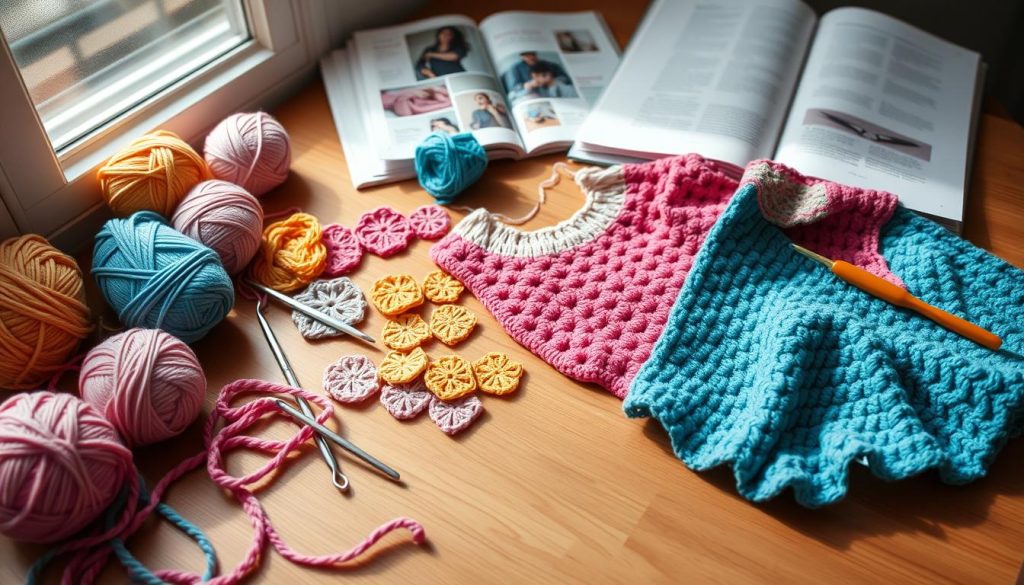
Polly Pullover pattern: Start with two rectangular panels and matching sleeves. Use mixed weight yarn and about 400 g acrylic for S/M, or 365 g cotton if preferred. Use a 6.00 mm hook for airy mesh; changing hook size alters drape.
The foundation chain equals shoulder drop or arm circumference (like ch 48 + 3 for S/M). Work rows in treble crochet, repeating rows until the right length. Use tc2tog at row ends to smooth edges.
Join panels with single crochet seam or whip stitch. Crochet over ends when changing colors to reduce weaving. Block lightly if needed.
Renea Top tutorial: This easy DK/light worsted top uses a 4.00 mm hook. The gauge is 4″ = 16 hdc x 14 rows. Work front and back in half double crochet to desired length.
Add hdc2tog sequences for bust shaping on larger sizes. Make straps separately and pin or try on as you go to adjust placement. For scallop edging, use dc clusters and sl sts in multiples of 4 on the foundation chain.
Whip stitch front and back together. Weave in ends or leave edges plain for a clean, minimalist finish.
Checkerboard Cookie vest: This vest uses medium weight yarn and a 4.5 mm hook. Make a long foundation chain and switch colors mid-row by pulling the new color through the last three loops on the hook for clean color changes.
Alternate pulling each color through rows to build checker blocks. Carry or drop unused yarn in the middle or back to hide floats. Options include ribbing at hem and neck using sc blo and short rows or a boxy finish without ribbing.
For mohair versions, subtract stitches per size and add rows to keep proportions correct. Sew panels with right sides together, flip, and add ribbing if desired.
Techniques to speed progress and improve results
Crochet over yarn ends during color changes to reduce finishing time and create a neater inside. Use stitch markers to mark row starts, strap points, and measurement positions for multi-size builds.
Check gauge early with a 4″ swatch and change hook size if needed to match the pattern drape. Test single crochet versus whip stitch seams on scraps to choose your favorite look and structure.
For mixed fibers, watch drape and stretch. Mohair needs fewer stitches and more rows for the right fit. Measure and try on as you work so straps and lengths land where you want them.
Conclusion
Hay Hay Crochet offers beginner-friendly patterns that are easy to adapt and gentle on your yarn stash. The Polly Pullover, Renea Top, and Checkerboard Cookie vest all use panel-based construction. They come with clear sizing to help you use scrap yarn or affordable skeins for great results.
Key beginner crochet tips include matching yarn weight with hook size to get the drape you want. Always check gauge when it is provided. Follow the pattern’s turning chain rules carefully.
Practical tips will help speed up your work and improve the finish. Carry color tails by crocheting over ends. Join panels with single crochet for strong seams or whip stitch for a softer edge. Use stitch markers to shape your pieces better.
To get started, pick one pattern: Polly Pullover for a mesh, scrap-friendly look. Choose Renea Top for a fitted tank. Or try Checkerboard Cookie vest to practice carrying colors.
Gather the needed materials, including the right hook, darning needle, and stitch markers. Watch Hay Hay’s video tutorials for help. Try on your pieces as you go to ensure the best fit.
These designs promote sustainable crochet by encouraging scrap yarn use and mindful choices. Use this tutorial conclusion as a checklist: choose your pattern, check gauge, follow turning chain rules, and finish carefully. Share your finished projects with @hayhaycrochet to join the community and keep learning.
FAQ
What makes Hay Hay Crochet patterns good for beginners?
Hay Hay Crochet patterns—like the Polly Pullover, Renea Top, and Checkerboard Cookie Sweater Vest—are labeled Easy. They use simple panel construction (front, back, sleeves/straps). They include clear stitch counts and row numbers across sizes.
These patterns have short repeat rows and many video tutorials. Tutorials show techniques such as segment color changes, joining panels, and strap placement. The scrap-friendly approach encourages leftover yarn use. It lowers cost and reduces pressure while you learn.
What basic tools and materials do I need to start these patterns?
You’ll need yarn in the recommended weights: medium/worsted 4 for Polly Pullover and Checkerboard vest, DK/light worsted 3 for Renea Top. Use suggested crochet hooks (4.00 mm for Renea, 4.5 mm for Checkerboard, up to 6.00 mm for the airy Polly Pullover), scissors, and a darning needle. Optional stitch markers and a tape measure help check fit.
Examples include Lion Brand Skein Tones for checkerboard and Drops Alpaca Silk for mohair variations.
Which core stitches and abbreviations will I use across these patterns?
Common US-terms used are ch (chain), sc (single crochet), hdc (half double crochet), dc (double crochet), and tc/treble (triple/treble crochet). Other stitches include fhdc (foundation half double crochet), hdc2tog and tc2tog for shaping, and sl st.
Patterns note whether turning chains (ch 1 or ch 3) count as a stitch—usually they do not.
How do turning chains affect stitch counts?
Many Hay Hay patterns specify that turning chains do NOT count as stitches. For example, Polly Pullover often uses turning ch 3 that does not count. Renea Top and Checkerboard instructions typically use turning ch 1 that does not count. Follow pattern notes closely to keep correct stitch counts and shaping.
How do I choose the right yarn weight and hook for drape and fit?
Choose DK/light worsted yarn with a 4.00 mm hook for a fitted tank like Renea Top. Use medium/worsted yarn and 4.5–6.00 mm hooks for boxier or airier garments like Checkerboard and Polly Pullover.
Make a 4″ x 4″ gauge swatch where provided—for example, Renea and Checkerboard list 16 hdc x 14 rows. Adjust hook size to meet gauge and desired drape.
How much yarn do I need for each project (example S/M)?
The Polly Pullover used about 400 g of mixed 100% acrylic or 365 g of 100% cotton for size S/M. Checkerboard Cookie Sweater Vest used about 307 g for S/M, usually 4 skeins total (2 skeins each color). Renea Top skein counts vary by size—generally 2–4 skeins depending on size and brand.
How are the garments constructed and joined?
All three patterns use panel-based construction. Work a long foundation chain for front and back panels. Sleeves or straps are made as separate pieces.
Join panels with single crochet for a visible decorative seam or whip stitch/sew with a darning needle for a flatter finish. Instructions include tc2tog or hdc2tog at row ends for even edges.
Can I mix different fiber types and leftover yarns in the Polly Pullover?
Yes. Polly Pullover is designed as a scrappy, leftover-yarn project. It accepts mixed fibers and weights like acrylic, cotton, mohair, and wool.
Keep in mind that different fibers change drape and stretch. Mohair may require fewer stitches and more rows to keep fit. Use larger or smaller hooks to balance meshiness and drape.
What shaping techniques are used for fit (bust shaping, strap shaping, decreases)?
Renea Top uses hdc2tog decreases for bust shaping and explicit row counts per size. Checkerboard uses decreases and short rows for strap and shoulder shaping. Polly Pullover uses tc2tog at row ends for smooth edges.
Each pattern provides size-specific stitch and row counts to guide shaping.
How do I handle color changes and avoid lots of weaving in?
Crochet over yarn ends during color changes to secure tails as you work. For Checkerboard-style two-color switching, pull the new color through the last three loops to make a clean mid-row color change.
Carry or drop unused color in the center or back of the work. Hay Hay video tutorials demonstrate both methods step-by-step.
Do the patterns include optional edgings or finishing details?
Yes. Renea Top offers an optional scallop edging worked in multiples of four if you plan to add it. Checkerboard uses optional ribbing with sc blo for neck, hem, and armholes, or edges can be left plain.
Polly Pullover can be left raw for a relaxed look or finished with single crochet edging.
How should I check my gauge and fit as I work?
Make the recommended 4″ x 4″ gauge swatch (16 hdc x 14 rows for Renea and Checkerboard) before starting. Try the piece on as you crochet, especially when working straps.
Use stitch markers to mark strap placement and row starts. Adjust hook size or stitch counts if your gauge differs.
What seam method gives the neatest finish?
Whip stitch or sewing with a darning needle gives a flatter, neater seam. Single crochet seams create a visible, raised decorative join that adds structure.
Test both on a scrap swatch to decide which look and feel you prefer.
Are video tutorials available to help with alignment, color changes, and finishing?
Yes. Hay Hay Crochet patterns include video tutorials showing techniques like crocheting over ends, mid-row color changes, strap and panel alignment, and finishing tips. These help visual learners and beginners a lot.
What adjustments are recommended when substituting mohair or fluffy yarns?
For mohair/fluffy versions like the Checkerboard vest using Drops Alpaca Silk, reduce foundation chains by about eight stitches per size. Add extra rows to keep proportions.
Use lighter hooks and expect a looser, airier fabric. Check fit often and follow the patterns’ mohair notes.
Any tips to speed up progress and reduce finishing time?
Crochet over ends during color changes to reduce tails to weave in. Use stitch markers to track row starts and strap placement. Block lightly to even stitches and make joining easier.
Work with repeat rows (many patterns repeat rows 1–2) to build length quickly and consistently.