
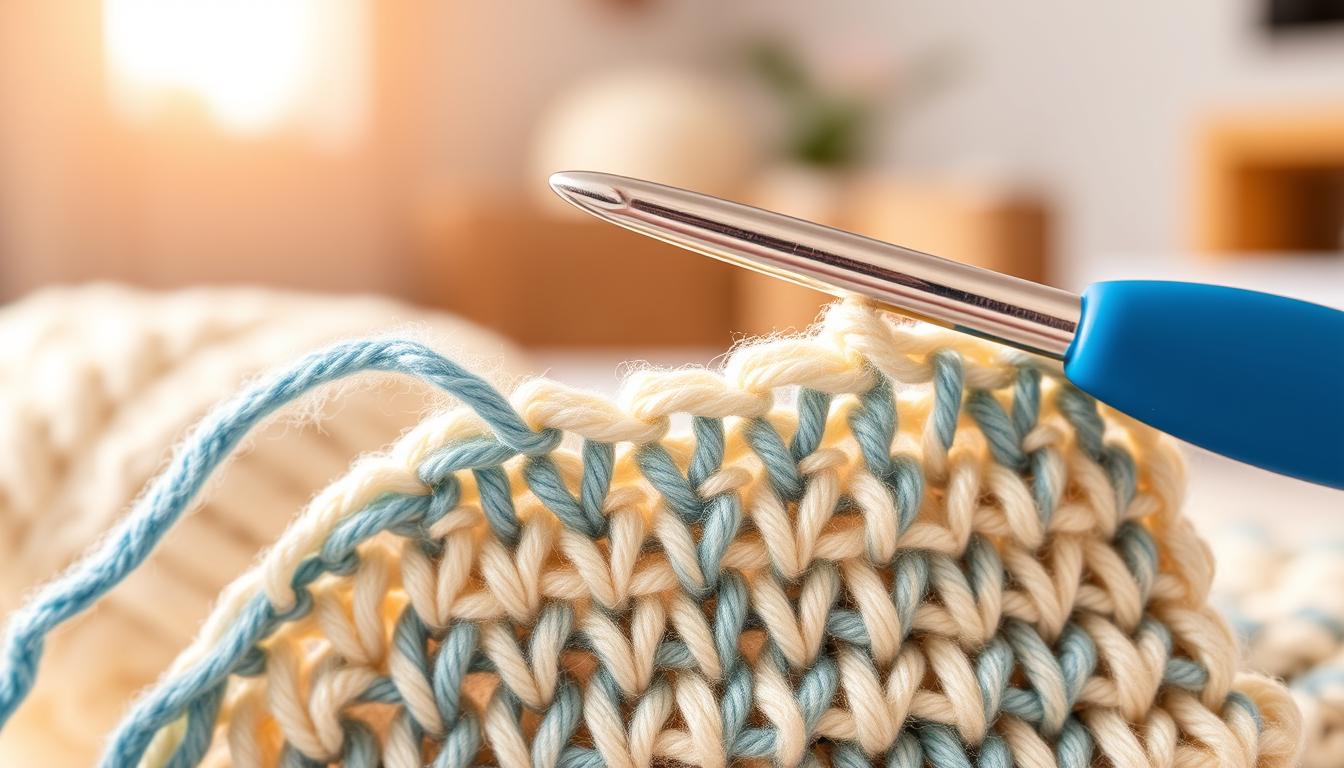
The single crochet stitch is one of the first techniques every new maker learns. It creates a short, dense fabric. This fabric has firm edges, perfect for blankets, amigurumi, and ribbed accessories.
In this beginner crochet guide, you’ll find a clear single crochet tutorial. It uses common tools like a 5.5mm Clover Amour hook and worsted weight yarn such as We Crochet Brava Worsted.
The steps include making a slip knot and forming a foundation chain. You will work into the second chain from the hook. A CH 1 turning chain is used for the next rows.
This how-to single crochet guide follows right-handed, American crochet terms. It shows a simple rhythm: insert the hook into the V, yarn over, and pull up a loop.
Then yarn over again and draw through both loops. Practice these motions slowly to build even tension. Count stitches by spotting the V shapes on your chain.
Key Takeaways
- The single crochet stitch produces a tight, solid fabric. It suits many projects.
- Start with a slip knot, then make a foundation chain. Work into the second chain from the hook.
- Use a CH 1 turning chain. Work the first stitch into the last stitch of the previous row.
- Count V-shaped stitches to avoid missing or adding stitches.
- Fasten off by cutting a 4–6″ tail and pulling it through the final loop.
what is a single crochet
A single crochet is the first stitch many beginners learn. This short dense stitch makes a firm fabric with minimal gaps.
The single crochet definition is simple: insert the hook, yarn over, draw up a loop, yarn over, and pull through both loops.
That sequence creates a compact row often called the SC stitch description in patterns.
Definition and basic description
The SC meaning in American crochet terms is the basic stitch that equals one unit of height.
When explained step by step, you work into the V or back bar of a chain, not into the loop on the hook.
The turning chain single crochet is usually CH 1; you do not work into the turning chain itself but into the last stitch of the previous row.
Common abbreviations and terminology
Crochet abbreviations help patterns read smoothly. Common ones include SC, CH, YO, and sl st.
YO stands for yarn over. CH means chain. Sl st means slip stitch.
Learning CH, YO, sl st, and other shorthand speeds up following patterns and reduces mistakes.
Where single crochet is used
Single crochet uses cover many project types because the stitch makes dense, stable fabric.
Projects with single crochet range from amigurumi single crochet toys to practical washcloth single crochet pieces.
The stitch suits scarves, ribbed cowls, and sturdy garment panels when you need structure rather than drape.
Supplies and preparation for beginners
Gathering the right tools helps you learn single crochet faster and with less frustration. For most projects, teachers suggest a medium hook and smooth worsted weight yarn. Ashley used We Crochet Brava Worsted in Denim with a Clover Amour 5.5mm hook for balanced stitches.
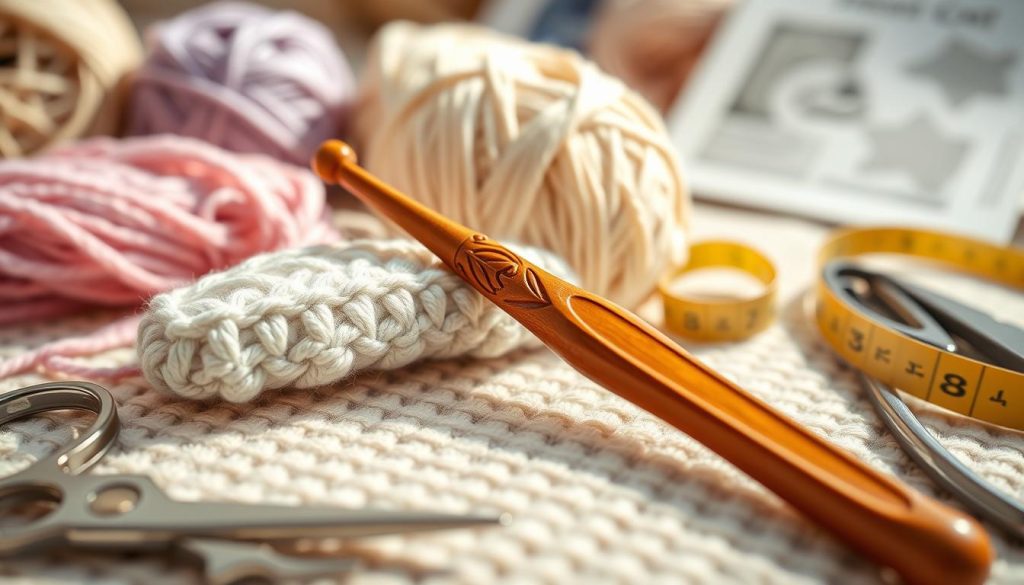
Recommended tools and yarn
Pick a 5.5mm hook for a familiar feel and gauge in many patterns. The Clover Amour 5.5mm is top-rated because its tapered throat creates neat chain stitches and single crochet rows.
Choose worsted weight yarn (size 4) for beginners’ projects. We Crochet Brava Worsted shows clear stitch definition and tension issues early. Keep scissors, yarn needle, and stitch markers nearby to mark edges consistently.
How to hold your hook and yarn for consistent tension
There are different ways to hold a hook. Practice both to find what fits you best. Learn to hold the hook comfortably and relax your hand as you crochet. The tutorials below assume right-handed use of the hook.
Two common yarn tension methods are wrapping yarn around the pinky or looping it over the pointer finger and guiding with the middle finger. Try each for a few rows to see which is more comfortable and creates even stitches.
Change hook size if stitches are too tight or loose. A larger hook loosens fabric; a smaller hook tightens it. The right hook also helps prevent hand cramps and makes chain stitches uniform.
Creating a slip knot and foundation chain
Start by leaving about a 4″ tail. Hold the short end and working yarn, wrap yarn around your first two fingers to form an X. Insert the hook under the front strand and pull the back strand through.
Tighten gently so the loop on the hook slips but does not bind. Yarn over and pull through to make the first chain stitch. Repeat yarn over and pull to reach your needed chain length.
Keep the V’s on each chain facing you to prevent the foundation chain from twisting. The loop on the hook does not count as a chain. When a pattern says to work into the second chain from the hook, skip the loop and start at the first chain stitch.
Step-by-step how to single crochet with pictures or video guidance
This part walks you through how to single crochet the first row and then the next rows. Follow each short step and use the photo guide or a quick video. Practice until your tension stays even.
Working the first row: single crochet into a starting chain
After your foundation chain (example: 11 chains for 10 stitches), insert your hook into the 2nd chain from hook. Push through the center of the V and under the back bar. Yarn over and pull up a loop so two loops sit on the hook.
Yarn over and draw through both loops to complete one stitch. Repeat across the chain, counting stitches by checking the V’s. This helps confirm you have the correct number.
Working subsequent rows: single crochet into stitches
When you finish row one, make a turning chain CH1 and turn your work counterclockwise. Do not work into the turning chain.
Work the first single crochet into the last stitched V from the previous row. Insert the hook under the top of the V, yarn over and pull through. Yarn over and draw through both loops.
Continue one SC in each stitch to the end for neat single crochet rows.
Common beginner mistakes and how to fix them
Missing the first or last stitch is a frequent mistake. Use stitch markers to mark the first and last stitch.
Count stitches after each row to catch missed stitches early. A twisted chain can hide the V’s.
Lay the foundation flat and make sure the V’s face you before you begin.
Tight or uneven loops create stitches that are too tight. This makes it hard to work.
Try a larger hook or adjust your grip if stitches feel cramped. If loops are loose, try a smaller hook or wrap methods.
The pinky wrap can help you gain control. When inserting into the chain, only skip the first chain if instructed.
Many patterns tell you to skip the first chain and work into the 2nd chain from hook. This keeps the stitch count correct.
Finishing techniques: fastening off and weaving in ends
After your last stitch, cut the yarn leaving a 4–6″ tail. Pull the tail through the final loop and tighten to secure.
This is how to fasten off crochet properly. Thread the tail onto a tapestry needle.
Weave in yarn ends along the row backs and through a few stitches. This locks the finish securely.
| Step | Action | Quick Tip |
|---|---|---|
| Chain setup | Make foundation chain with one extra chain for turning | Count V’s to check length before row 1 |
| Row 1 | Insert into 2nd chain from hook, work single crochet into chain | Work under the back bar for consistent loops |
| Turn and row 2 | Make turning chain CH1, turn, work first SC into last stitched V | Do not work into the turning chain |
| Common fixes | Use stitch markers and count stitches after each row | Prevents missed first stitch and keeps stitch count correct |
| Tension | Adjust hook size or change wrap method if too tight stitches occur | Test a small swatch to find even tension |
| Finish | Cut yarn leaving 4–6″ tail, pull through last loop, weave in yarn ends | Ashley recommends a 4″ tail for starting; 4–6″ for finishing |
Conclusion
Single crochet is a basic stitch that creates dense, even fabric and clean edges. Use the right hook and worsted weight yarn to learn quickly. This guide’s step-by-step process will help you.
Keep your tension steady. Use a turning chain of CH 1. Mark the first or last stitch to avoid losing count.
Beginner tips include counting stitches often and using picture-heavy steps. Ask questions when unsure to improve faster.
Practice single crochet by making multiple chains and rows. Then fasten off with a 4–6″ tail. Weave in ends to finish neatly.
Right-handed American terms are common in tutorials. They may help speed your progress.
Use the free patterns here to practice single crochet and build your skills.
For more help, check sites like The Loopy Lamb, YouTube channels, Instagram makers, and Clover social channels.
If you want to learn the next stitch, try half double crochet once you feel ready.
FAQ
What is a single crochet?
Single crochet (SC) is the simplest crochet stitch in American terms. It makes a short, dense fabric with few gaps. This stitch has straight edges, perfect for structured projects like amigurumi, washcloths, scarves, and sturdy accessories. SC is one of the first stitches beginners learn because it is easy and useful.
How do you describe single crochet in simple terms?
A single crochet is a tight stitch made by inserting the hook into a stitch or chain. Then, yarn over (YO), pull up a loop (two loops on the hook), YO again, and pull through both loops so one loop remains. It is the height of a single chain. This stitch creates a firm, even fabric when your tension is steady.
What are the common abbreviations and terms I need to know?
Common abbreviations include SC for single crochet, CH for chain, YO for yarn over, and sl st for slip stitch. “Yarn over” means bring the yarn from back to front over the hook. The loop on the hook does not count as a chain.
Where is single crochet commonly used?
Single crochet is used in amigurumi, washcloths, ribbed cowls, simple scarves, and sturdy garments. It works best for projects needing structure or little stretch. Designers like Amelia Makes, Oombawka Design, and The Loopy Lamb often feature SC in free beginner patterns.
What tools and yarn should a beginner use for single crochet?
Beginners should use medium worsted weight yarn (size 4) and a hook about 5.5 mm (I/9). Ashley from The Loopy Lamb used a 5.5 mm Clover Amour hook and We Crochet Brava Worsted yarn. Follow the yarn label’s recommended hook size and adjust if stitches feel too tight or loose.
How should I hold my hook and yarn for consistent tension?
Two common ways keep tension even. First, wrap yarn around your pinky and guide it with your pointer finger. Hold your work with your thumb and middle finger.
Second, hold your work with your pointer and thumb and wrap yarn around your middle finger to form the YO. Try both to find what feels right. This helps avoid cramps and keeps tension steady.
How do I create a slip knot and foundation chain?
Make a loose loop by wrapping yarn around your first two fingers. Insert the hook under the first strand, grab the second strand, and pull it through to form a loop on your hook. Leave a 4″ tail on the starting end.
Tighten the slip knot so the hook moves freely. Then YO and pull through the loop repeatedly to make chains. Remember, the loop on the hook does not count as a chain.
How do I single crochet into the starting chain for the first row?
After making your foundation chain, for example chain 11 for 10 working stitches, skip the first chain from the hook. Insert the hook into the second chain from the hook through the center of the V and under the back bar.
YO, pull up a loop (two loops on the hook), YO, and pull through both loops to complete one SC. Count the V’s across the chain to check stitch count.
How do I work single crochet in subsequent rows?
Make a turning chain of CH 1, turn your work, and work the first SC into the last stitch of the previous row, not the turning chain. Insert under the first V at the top of the stitches.
YO and pull up a loop, YO and pull through both loops. Continue one SC in each stitch across the row. Use stitch markers to mark the edges if you are unsure.
What common beginner mistakes should I watch for and how do I fix them?
Watch out for missing the first or last stitch, twisting the foundation chain, and uneven tension. Use stitch markers to mark edge stitches. Keep V’s facing you when chaining to avoid twists.
Change hook size or hold yarn differently to fix tight or loose stitches. Count stitches after each row to keep your work even.
How do I fasten off and finish a project after single crochet?
After your last stitch, cut the yarn leaving a 4–6″ tail. Pull the tail through the last loop and tighten to secure.
Weave in ends with a tapestry needle to make your project neat. Practice finishing to get tidy seams and edges.
Where can I find picture or video tutorials to learn single crochet?
Picture-heavy and video tutorials are widely available. The Loopy Lamb (Ashley) has step-by-step photo and video guides using a 5.5 mm Clover Amour hook and worsted weight yarn.
YouTube, Pinterest, and blogs like Amelia Makes and Oombawka Design offer free patterns and visual how-tos. These help with practice projects using SC.
How should I practice single crochet to improve quickly?
Practice many foundation chains and crochet several rows of SC. This builds comfort with inserting stitches, tension, and turning chains.
Try small projects like washcloths, ribbed cowls, or simple amigurumi. Vary your hook size to see how tension changes fabric.
Use tutorials until the motions feel natural and your stitches look even and neat. Practice leads to progress.