
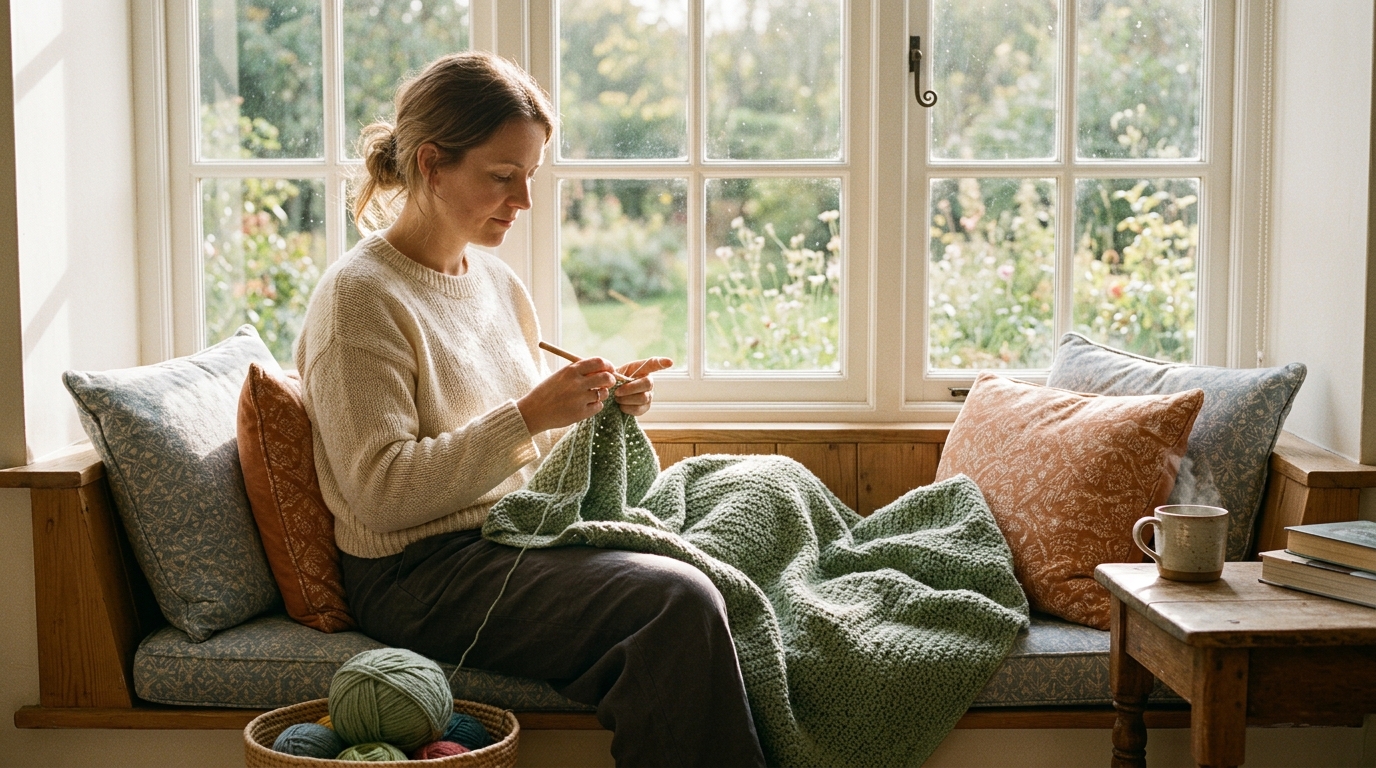
There is something inherently healing about the rhythmic click of a crochet hook and the soft tension of yarn as it flows through your fingers. In a world that often demands our constant, fractured attention, crochet offers a quiet refuge. It is a form of active meditation, a way to anchor ourselves in the present moment while creating something beautiful and tangible with our own two hands.
Whether you are looking for a creative outlet to decompress after a long day or simply seeking the quiet satisfaction of seeing a project grow one stitch at a time, you have come to the right place. Today, we are focusing on the Mindful Mosaic Washcloth—a project that is as therapeutic to make as it is useful for your home. By engaging in repetitive, simple stitch work, we tap into a “flow state” that lowers cortisol and quiets the mind. This tutorial is designed to be a gentle, step-by-step experience, providing you with all the clarity you need to enjoy the process from that first slip knot to the very last woven end.
Quick Project Overview
The Mindful Mosaic Washcloth is the perfect “entryway” project for those looking to experience the calming benefits of repetitive fiber arts. Because it relies on a simple, repeating stitch pattern, your hands will eventually work on “autopilot,” allowing your mind to rest and reset.
- Skill Level: Beginner-Friendly
- Estimated Time: 1.5 to 2 hours
- Finished Size: Approximately 8 x 8 inches
- Best Use: A luxurious addition to your bath routine or a thoughtful, handmade gift for someone who needs a little extra self-care.
- Why You Will Love It: It uses only basic stitches, it’s quick enough to finish in a single evening, and the finished texture is thick, scrubby, and incredibly satisfying.
Materials Needed
To create this project, you will want materials that feel good in your hands. High-quality natural fibers are best for washcloths as they are absorbent and durable.
- Yarn: Approximately 70 yards of medium (worsted) weight, 100% cotton yarn. Cotton is essential for washcloths because it holds water well and stands up to frequent washing.
- Crochet Hook: Size H/8 (5.0 mm).
- Extras: A yarn needle for weaving in your ends and a pair of sharp scissors.
- Accessibility Note: If you find your hands get tired, look for an “ergonomic” crochet hook with a soft silicone grip. It makes a world of difference during long sessions.
Stitches and Abbreviations
We will be using standard U.S. terminology throughout this guide.
- CH (Chain): Yarn over, pull through the loop on your hook.
- SC (Single Crochet): Insert hook into the stitch, yarn over, pull up a loop, yarn over, pull through both loops on the hook.
- HDC (Half Double Crochet): Yarn over, insert hook into the stitch, yarn over, pull up a loop, yarn over, pull through all three loops on the hook.
- ST (Stitch / Stitches): The spaces where your hook will go.
- SL ST (Slip Stitch): Insert hook, yarn over, pull through both the stitch and the loop on your hook.
Pattern Notes Before You Start
Crochet tension is a personal thing, and it often fluctuations based on your mood. If you notice your washcloth curling, your tension might be too tight. If it feels floppy or “holey,” your tension might be a little loose. Don’t fret; the more you practice, the more consistent it will become. For this pattern, focus on keeping your yarn tension comfortable—not strangled, but not sagging. This is your time to breathe; if your shoulders feel tense, pause, shake out your hands, and start again when you feel relaxed.
Full Crochet Pattern
Getting Started
Start by creating a slip knot and placing it on your hook.
Chain 30. (This will give you an eight-inch base; if you prefer a larger or smaller washcloth, simply chain any even number of stitches).
Row 1
Starting in the second chain from your hook, work one SC into each chain across. Turn your work. (You should have 29 stitches).
Row 2
Chain 1 (this does not count as a stitch). Work one HDC into the first stitch, and one SC into the next stitch. Repeat the (HDC, SC) sequence across the row. You will end the row with an SC in the final stitch. Turn your work.
Row 3
Chain 1. Work one SC into the first stitch, and one HDC into the next stitch. Repeat the (SC, HDC) sequence across the row. You will end the row with an HDC in the final stitch. Turn your work.
Repeating the Pattern
Continue repeating Rows 2 and 3 until your washcloth reaches the desired length of 8 inches, or until it looks like a perfect square. The alternating stitches create a beautiful, “mossy” texture that is wonderful for gently exfoliating the skin.
Finishing
Once you are happy with the size, fasten off your yarn, leaving a six-inch tail. Use your yarn needle to weave the tail back and forth through the stitches on the back side of the washcloth to secure it firmly. Trim any excess yarn.
Step-by-Step Tutorial Explanation
If this is your first time working with row-based patterns, here is a visual guide to what is happening. When you start an HDC in one row, it creates a slightly taller loop than an SC. By alternating where these stitches sit, you are creating a “bump” in the fabric. This is the “mosaic” texture.
As you move through Row 2 and Row 3, take note of the “Vs” at the top of your stitches. Your hook should always go under both parts of that V unless the pattern specifies otherwise. As you work, you will see a subtle, pebbled surface emerging. If you feel like your edges look a bit uneven, don’t worry—most of this will be smoothed out during the final block, or by simply stretching the fabric with your hands once you are finished.
Common Mistakes to Avoid
Even experienced crocheters have “off” days. Here is how to keep your project looking professional:
- Tension Fatigue: If you start with loose stitches and finish with tight ones, your washcloth will look like a trapezoid. If you feel your hands tightening up, take a five-minute break.
- The Disappearing Stitch: Beginners often accidentally skip the very last stitch of a row, which causes the edges to slant inward. Always count your stitches at the end of the first few rows to ensure you have 29 stitches every single time.
- Tangling the Chain: When starting, ensure your chain isn’t twisted or knotted. A smooth foundation makes working the first row significantly easier.
- Poor Finishing: Never cut your yarn too close to the project. Always leave several inches to weave in, ensuring the tail is long enough to double back on itself so the project doesn’t unravel in the washing machine.
Pro Tips for a More Beautiful Result
To take your washcloth from “homemade” to “handmade beauty,” try these professional techniques:
- Blocking: This is the magic final step. Once finished, dampen your washcloth with cool water, lay it flat on a clean towel, and gently stretch it into a perfect square. Use rust-proof pins to hold the corners in place while it air-dries. It will look like it came from a boutique shop.
- Color Palette: If you are gifting these, consider making a set of three in varying shades of the same color (e.g., light blue, medium blue, and deep navy). This looks incredibly sophisticated in a bathroom.
- Yarn Choice: Stick to 100% cotton. Acrylic yarn feels soft, but it will not absorb water, making it poor for a washcloth. Organic or recycled cotton is a wonderful, eco-friendly choice.
- Seaming and Borders: If you want an even more polished look, you can add a simple SC border around the entire rectangle once you’ve finished the body. Simply work one stitch into the end of every row along the sides, and place three stitches in every corner to keep your work flat.
Variations and Personalization Ideas
The beauty of this pattern is its versatility. Once you have mastered the repeating rows, you can get creative:
- The Scrubbie Version: If you want a deeper exfoliation, hold two strands of cotton yarn together at the same time and use a larger hook (like a 6.0 mm). This creates a thicker, sturdier cloth.
- The Spa Gift Set: Pair your washcloth with a handmade soap or a small bottle of lotion. It makes a beautiful, budget-friendly, and deeply personal gift for housewarmings or birthdays.
- Seasonal Colors: Use bright, cheerful cottons for the spring, rich earth tones for the fall, and festive reds or greens for the holidays.
Care Instructions
Since this is intended for daily use, keeping it clean is simple.
- Washing: You can machine wash your washcloth on a gentle cycle with like colors.
- Drying: For best results, air dry by laying it flat, or tumble dry on low heat.
- Storage: Always ensure the cloth is completely dry before folding it into a drawer or stacking it in a guest bathroom to prevent moisture buildup.
FAQ
Does crocheting actually help with anxiety?
Yes, many people find the repetitive motion of crochet helps redirect the brain’s focus. The combination of tactile stimulation and the “rhythm” of the stitches can help ground someone who is feeling overwhelmed, acting much like a mindfulness practice.
What if my washcloth isn’t perfectly square?
In crochet, “hand-made” often means “unique.” Even the most expert stitchers have slight variances. A little bit of blocking will fix most shape issues, but if it remains slightly uneven, remember that it is a functional item designed for scrubbing. It will still work perfectly, and the slight imperfections simply add charm.
How do I know if my tension is right?
Test your tension by crocheting a small “swatch” of 10 stitches by 5 rows. If it feels stiff and board-like, go up a hook size. If it feels like loose, sagging netting that loses its shape when you tug on it, go down a hook size. Your goal is a fabric that is firm enough to hold its shape but soft enough to be pliable.
Can I use scrap yarn for this?
Absolutely! This is a fantastic “scrap-buster” project. Since each washcloth is relatively small, it is the perfect way to use up those leftover balls of cotton yarn from previous, larger projects. You can even alternate colors every few rows to create a unique, striped look.
Is crochet hard for beginners?
Not at all. While there is a learning curve to controlling your tension and learning how to hold your hook, the basic stitches—like the ones used in this tutorial—can be mastered within a few hours. The trick is to be patient with yourself and celebrate the progress, not perfection.
Conclusion
Creating something with your own hands is a profound act of self-care. As you finish your Mindful Mosaic Washcloth, remember that the goal wasn’t just to produce a piece of kitchen or bath decor—it was to carve out a little space in your day for peace. May this small project remind you that you are capable, creative, and deserving of time spent on things that bring you joy.
Keep your hook and yarn handy, and don’t be afraid to start your next project today. There is always a new rhythm to discover, a new color to try, and a new bit of calm to stitch into your life. Whether you are crafting for your home or a gift for a loved one, your work carries your unique touch, and that is what makes it truly special. Happy crocheting!