
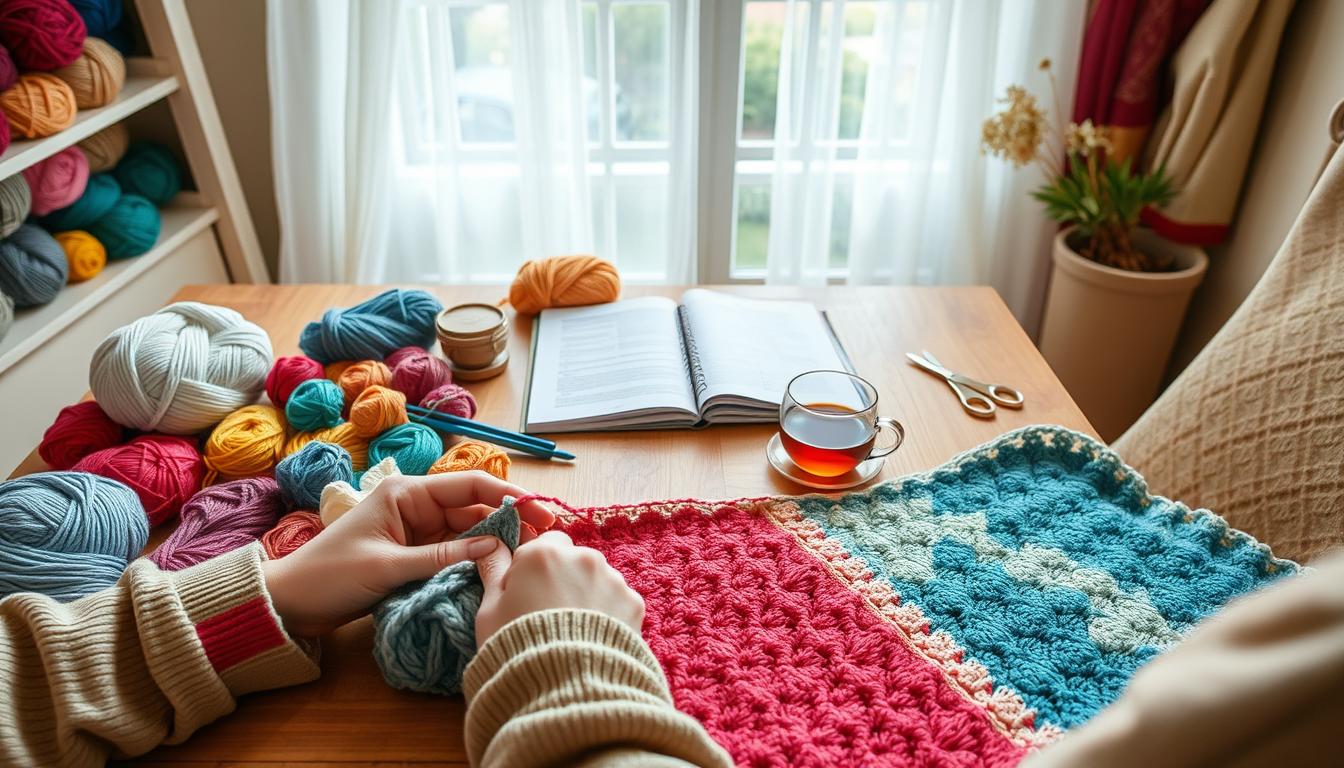
This short introduction shows how simple materials and a few stitches can become a warm, fall-ready throw.
Whether you prefer Lion Brand Heartland or Vanna’s Choice for classic worsted-weight yarn, plush Go For Fleece for sherpa style, or Bernat Blanket Yarn for chunky afghans, this tutorial covers easy starts and clear choices.
Choose a rectangular shape to keep counting simple. Pick a hook like US J (6.0 mm), 11.5 mm, or 15 mm, based on yarn thickness. Decide if you want stripes or a single color.
Beginners can try alternating double crochet and single crochet stitches. Use half double crochet for quick work. Or try linen stitch into chain spaces for a soft, fluffy texture.
This project is great for using up leftover yarn and making last-minute gifts.
Follow care notes on yarn labels. For example, Go For Fleece is machine-wash gentle and must be laid flat to dry. This keeps your cozy crochet project beautiful and durable.
Key Takeaways
- Pattern choices suit beginners and experienced makers alike.
- Use Lion Brand Heartland, Vanna’s Choice, Go For Fleece, or Bernat Blanket Yarn based on desired texture.
- Simple stitch combinations (DC, SC, HDC, linen stitch) speed up progress.
- Select hook size to match yarn: US J (6.0 mm), 11.5 mm, or 15 mm.
- Rectangular shapes and stripe changes make a DIY crochet blanket easy to customize.
Beginner-Friendly Crochet Blanket Tutorial
This guide walks beginners and makers through a cozy, approachable project. Pick an easy crochet pattern to match your time and skill.
Projects range from a simple HDC starter blanket to a textured linen-stitch sherpa throw using Lion Brand Go For Fleece.
Overview of the pattern and who it’s for
The HDC chain-based blanket suits true beginners. It builds confidence with a steady rhythm and great for quick finishes.
Intermediate makers will enjoy alternating double crochet and single crochet rows for subtle striped texture. This makes a nice fall crochet throw.
Materials and tools
Gather basic supplies: scissors, tapestry needle, measuring tape, and stitch markers. Choose yarn like worsted-weight (#4) for striping throws.
Bernat blanket yarn works well for chunky quick projects. Lion Brand Go For Fleece (#7) creates a plush linen-stitch sherpa-style throw.
Skillset and stitch glossary
Start with a crochet stitch glossary to learn common terms. Practice the chain stitch and single crochet first.
Add half double crochet and double crochet as you get comfortable. The linen stitch uses alternating single crochets in chain-1 spaces to form dense fabric.
Choosing size and customizing
Choose blanket sizes before you start. Common sizes include baby, throw, and larger afghans.
Adjust width by changing the starting chain in pattern repeats. To change length, add or remove rows until you reach the size you want.
| Pattern Type | Yarn | Recommended Hook | Skill Level | Notes |
|---|---|---|---|---|
| HDC Chain Blanket | Bernat blanket yarn | 11.5 mm (US) | Beginner | Fast build, great stash-buster blanket, simple foundation chain start |
| Striped DC/SC Throw | Worsted weight (#4) – Lion Brand Vanna’s Choice | J (6.0 mm) | Advanced Beginner | Practice switching stitches and colors for a fall crochet throw |
| Linen-Stitch Sherpa Throw | Lion Brand Go For Fleece | 15 mm | Advanced Beginner | Dense, plush texture; first row can be tricky with fuzzy yarn |
| Quick Chunky Blanket | Bernat Blanket Yarn | 11.5 mm | Beginner to Advanced Beginner | Large gauge, fast yardage usage, ideal for gifting |
Practice foundation chain tension on medium yarn before using plush fibers. Use stitch markers to mark repeats or corners.
Follow yarn label care instructions. Many polyester plush yarns are machine washable on gentle and lay flat to dry.
Use yardage estimates and blanket sizes to buy the correct yarn amount for Small through X-Large throws.
Techniques, Step-by-Step Instructions, and Design Ideas
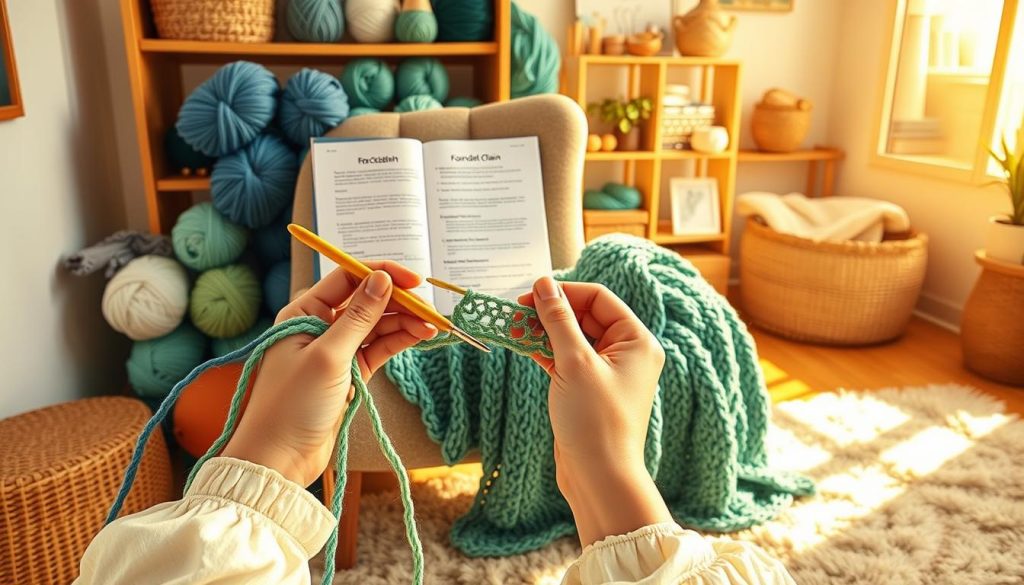
Start with a clear foundation chain tutorial to set the mood for your blanket. Make a slip knot and chain to your desired width.
For a linen stitch throw pattern, chain 60 for small, 72 for medium, 88 for large, or 102 for X-large. A quick chunky blanket often uses chain 80. For baby blankets, chain 45 works well.
Keep an eye on the starting chain so edges stay even. Avoid twisting the chain as you work.
Mastering crochet tension tips early saves time later. Use stitch markers to mark repeats and count rows.
With plush yarn, practice on medium yarn first because fuzzy yarns make stitches hard to see. Gently separate chain loops to find spaces.
These tricks improve even edges for any quick crochet blanket or easy afghan pattern.
Getting started: foundation chain and tension
When you begin, place a marker at the last chain to track width. Work into chain spaces, not tiny loops, when using plush yarn like Go For Fleece.
With two-stitch blanket and linen-stitch throw patterns, the first row feels slower. Be patient and use tension tips to keep fabric uniform.
Stitch sequences for different looks
Choose stitch sequences based on the look you want. The linen stitch pattern creates a dense, sherpa-like texture when paired with Go For Fleece.
For a striped fall throw, alternate DC and SC rows: Row 1 DC across, Row 2 SC across, repeat. The HDC blanket pattern offers a neat, quick finish.
Work HDC into the third chain and across. Chain 2, turn, then HDC back into the second stitch and repeat.
Color changes and stripe planning
Plan stripes before you start. Count rows or measure to keep stripe widths even.
Try switching colors every eight rows for baby blankets or set custom widths for stash-buster blankets. Use a simple color change: finish the last pull-through of the final stitch with the new color.
Fasten off or join yarn securely when working with plush yarns.
Working with challenging yarns
Crochet plush yarn differently than smooth yarns. Use large hooks like 11.5 mm or 15 mm to work faster.
Securely join fuzzy yarns with a square knot and trim tails short since texture hides ends. Practice linen stitch on lighter yarn until you can work by touch.
Finishing touches
Border options tie a project together. A single crochet border gives a clean finish. Work 2 SC in each corner for round one, then 3 SC in corners next round for smooth corners.
Weave in ends with a tapestry needle, or trim short on plush yarn and trust the texture. Follow crochet blocking and care directions: lay flat to dry and follow yarn label washing guidelines, especially for polyester plush yarns.
Pattern examples and quick builds
Pick a pattern based on time and yarn on hand. The fall striped throw uses worsted weight yarn with DC and SC alternating rows. It’s a great stash-buster with warm colors like rust and cream.
The fluffy linen-stitch throw uses Go For Fleece tips: chain size, then Row 1 SC into 4th chain from hook. Repeat linen stitch rows to build dense fabric.
The quick chunky blanket uses the HDC blanket pattern with Bernat blanket yarn and an 11.5 mm hook for fast results.
| Project | Suggested Yarn/Hook | Start Chain Example | Key Technique |
|---|---|---|---|
| Fluffy linen-stitch throw | Lion Brand Go For Fleece #7, 15 mm hook | Small 60 / Medium 72 / Large 88 | Linen stitch pattern into chain spaces; hide yarn tails |
| Fall striped throw | Worsted #4 (Lion Brand, Vanna’s Choice) with J hook | Chain to preferred width (example: 72) | DC and SC alternating rows; stripe planning for blankets |
| Quick chunky blanket | Bernat blanket yarn, 11.5 mm hook | Chain 80 suggested for a portable throw | HDC blanket pattern into 3rd chain; fast repeat rows |
| Two-stitch blanket pattern | Worsted or bulky yarn, hook sized to yarn | Adjust chain for multiples required by pattern | Simple repeat stitches for easy afghan pattern and stash use |
Conclusion
This crochet blanket tutorial conclusion ties the project together and reminds you the same pattern suits many goals.
A quick two-stitch HDC blanket with Bernat Blanket yarn and an 11.5 mm hook works for last-minute throws.
For plush texture, Lion Brand Go For Fleece (#7) on a 15 mm hook creates sherpa-style warmth.
A worsted-weight fall throw on a US J (6.0 mm) hook alternating double and single crochet gives tidy stripes and faster progress.
Practical takeaways help you make your own crochet blanket with confidence.
Match yarn weight and hook size to your desired speed and feel.
Practice foundation chains and the first rows, especially with plush yarn where stitches hide.
Use stitch markers, watch a video when needed, and follow yardage tables or chunky-skein guidance to plan size.
Finishing matters: a simple single crochet border tidies edges.
Weave ends back and forth 3–5 times with a tapestry needle to secure them.
Many polyester plush yarns are machine washable on gentle and should be laid flat to dry.
This makes them ideal for everyday throws or baby blankets.
Handmade blankets are thoughtful gifts and fit any room when you customize color, size, and texture.
FAQ
What is this crochet blanket tutorial and who is it for?
This tutorial covers three beginner-friendly blanket styles. They include a worsted-weight fall-striped throw with alternate DC and SC rows. Also, a sherpa-style linen-stitch throw using Lion Brand Go For Fleece (#7).
Finally, a quick chunky blanket made with Bernat Blanket Yarn using HDC. It suits true beginners, advanced beginners, and experienced makers. These projects are fast, cozy, and good for using up yarn stashes.
What materials and tools will I need?
Basic supplies include yarn matched to the pattern: worsted-weight (#4) yarn for striping throws. Super-bulky Go For Fleece (#7) for the plush linen-stitch throw, and blanket yarn like Bernat Blanket Yarn for quick HDC blankets.
Hooks recommended are US J (6.0 mm) for worsted, 11.5 mm for chunky yarn, and 15 mm for Go For Fleece. Also gather scissors, a tapestry needle, stitch markers, and measuring tape.
What stitches and abbreviations are used in these patterns?
The tutorials use Chain (CH), Single Crochet (SC), Double Crochet (DC), and Half Double Crochet (HDC). They also use Linen Stitch worked into chain-1 spaces. Abbreviations include CH, SC, DC, HDC, SP (space), and ST (stitch).
How do I choose the right size and adjust dimensions?
Choose a starting chain to match your desired width. Add or subtract even numbers of chains to fit the stitch pattern.
For example, Small linen-stitch Go For Fleece = 60 chains, chunky HDC sample = 80, baby blanket suggestion = 45. Length depends on rows worked.
Use the size table for Go For Fleece: Small 42 x 46 in, Medium 50 x 50 in, Large 60 x 60 in, X-Large 70 x 70 in. Adjust yarn yardage accordingly.
What yardage will I need for the Go For Fleece linen-stitch throw?
Yardage for Lion Brand Go For Fleece (~89 yd/skein) is roughly: Small ≈ 600 yd total (like 3 Seafoam + 4 Cream skeins), Medium ≈ 780 yd, Large ≈ 1,120 yd, and X-Large ≈ 1,520 yd. These help plan colors and purchases.
What gauge and hook sizes should I use?
Use hooks suited to your yarn: US J (6.0 mm) for worsted-weight striping throws. Use 11.5 mm for Bernat Blanket Yarn projects and 15 mm for Go For Fleece.
The gauge for super-bulky linen stitch is about 5.8 sts x 4.6 rows per 4 x 4 in. Adjust hook if your tension differs.
How do I start with a foundation chain and keep even tension?
Make a slip knot and chain your width. Keep tension steady by working at a relaxed, consistent pace.
With plush yarns, practice first rows on medium-weight yarn. This helps you learn the feel before switching to fuzzy yarn where stitches are harder to see.
Use stitch markers for corners or repeats. Check your work often to keep edges even.
How do I work the linen stitch with plush Go For Fleece?
Linen stitch starts with Row 1—SC in the 4th CH from hook. Then repeat [CH 1, skip 1 CH, SC in next SP] across.
Row 2—CH 2, SC in first CH-1 SP. Then repeat [CH 1, skip 1 ST, SC in next SP] across. Repeat Row 2 for length.
Work into chain spaces, not tiny loops. Since Go For Fleece is fuzzy, crochet by feel and use stitch markers. Consider a practice swatch in medium yarn first.
What is the fastest blanket to make from these options?
The chunky blanket with Bernat Blanket Yarn and an 11.5 mm hook is fastest to make. It uses only chain and HDC stitches.
Chain a width (example 80), HDC across from the third chain, chain 2 to turn, and repeat rows until you reach desired length. Large skeins and hooks make it fast and portable.
How do I plan and change stripes or colors?
Plan stripes by counting rows or measuring as you crochet. A baby blanket might switch colors every 8 rows.
For fall-striped throws, alternate rows of DC and SC, changing yarn at stripe ends. Use stash yarn to mix textures and tones like burnt orange, taupe, rust, cream, and grey.
How should I join and secure new yarn when changing colors or skeins?
For plush yarn like Go For Fleece, join with a tight square knot. Trim tails short—about 1/4 inch—because texture hides them.
For smoother yarns, join using standard methods. Weave in ends with a tapestry needle for a neat finish.
What finishing touches and border options work best?
Simple single crochet rounds make tidy borders. Work 1 SC between stitches and 2 SC in each corner for the first round.
A second round adds 3 SC in each corner for structure. Weave in ends with a tapestry needle, repeating back and forth 3–5 times.
With plush yarn, short trimmed tails are usually hidden by the pile.
How do I care for these blankets and handle blocking?
Follow yarn label care instructions. Most polyester plush yarns like Go For Fleece are machine washable on gentle cycles. Lay flat to dry.
Avoid harsh agitation or heat. Instead of steaming blocking, lay bulky, textured yarn blankets flat to keep their shape.
What common challenges should beginners expect and how can I overcome them?
Beginners often find stitches hard to see in fuzzy yarn and edges might be uneven. Practice foundation chains and first rows on medium yarn to learn.
Use stitch markers to track repeats and corners. Crochet by feel when using plush yarn. Gently separate chains to find stitch insertion points.
For linen stitch on super-bulky yarn, trying a video tutorial beforehand helps a lot.
Can I mix yarn weights or use stash yarn for these patterns?
You can stash-bust with similar-weight yarns. Avoid mixing very different weights in one blanket to keep a consistent drape.
For dramatic texture changes, keep yarn weight consistent within the project. For striping throws, worsted-weight (#4) yarns like Vanna’s Choice or Heartland work well together.
For ultra-plush results, use #7 Go For Fleece or Bernat Blanket Yarn for HDC projects.
Are there size and yardage examples for quick reference?
Yes. For Go For Fleece: Small 42 x 46 in ≈ 600 yd, Medium 50 x 50 in ≈ 780 yd, Large 60 x 60 in ≈ 1,120 yd, X-Large 70 x 70 in ≈ 1,520 yd.
The chunky blanket measuring 52 x 90 in used 6 skeins of Bernat Blanket Yarn. Adjust these amounts based on stitch and tension.
What finishing techniques make a blanket gift-ready?
Tidy borders, hidden ends, and even stitch tension give a polished look. Add a two-round single crochet border.
Weave in tails securely or trim them short on plush yarn. Light blocking is fine if fiber allows.
Choose cozy fall colors like burnt orange, taupe, rust, and cream. Include care instructions with the gift.