
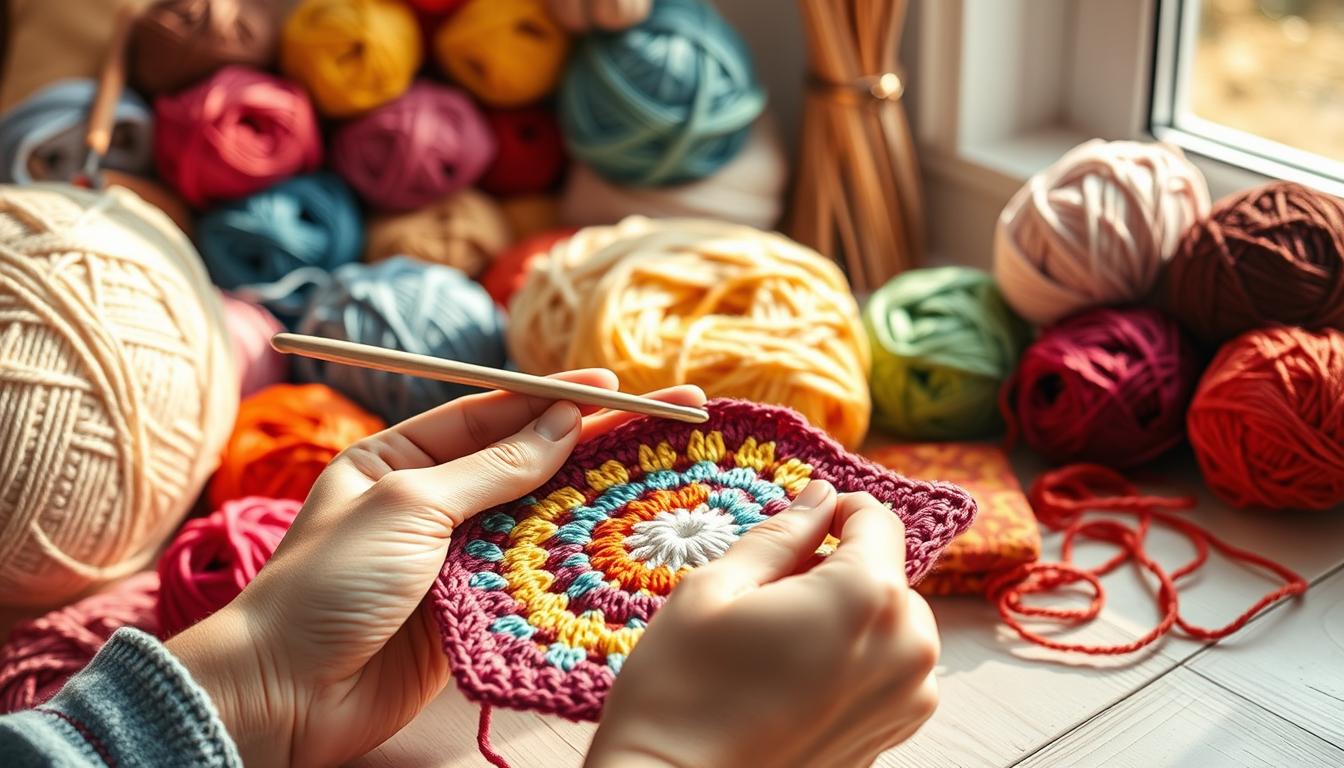
I learned to crochet at my grandmother’s knee. I started with simple chains and single crochet. Then, I moved on to double and treble stitches.
Watching her hands taught me more than any book. If you missed those first lessons, a few YouTube videos will help you catch up quickly.
This beginner crochet tutorial uses the classic granny square method. Chains and groups of three double crochets form corners and sides.
Start with a loop of 5 to 10 chains. Chain-10 creates a larger center hole. Join with a slip stitch to make a circle.
Round 1 starts with ch 3 (counts as first dc). Then work sets of three double crochets in the loop. Separate corner clusters with ch-3 spaces.
Finish Round 1 with a slip stitch to the top of the starting ch-3.
Round 2 begins with ch 3, placing 3-dc groups into each corner. Use ch-1 side spaces between clusters. I use ch-3 for corners.
Others often use ch-2 or ch-4, which are common variations. When changing colors, finish the round with a slip stitch.
Leave a 2–4 inch tail and weave it in after fastening off. Start the new color by joining in a corner or side space.
Carry on the pattern from there.
You can make one large square for an afghan. Or make many same-sized squares and join them later.
This granny square method is forgiving and repetitive. It is perfect for beginners who want quick, satisfying progress.
It helps practice tension, blocking, and neat joins.
Key Takeaways
- The granny square for beginners uses chains and groups of three double crochets for a simple repeatable pattern.
- Start with a chain loop of 5–10; chain-10 creates a larger center hole.
- Round 1: ch 3, 3-dc clusters with ch-3 corners; join with a slip stitch.
- Round 2: ch 3, add corner clusters and ch-1 side spaces; adjust corner chains if desired.
- When changing color, leave a 2–4 inch tail, fasten off, and weave in ends securely.
- This easy granny square is ideal for a beginner crochet tutorial and for building skills for larger projects.
Getting Started: Materials, Abbreviations, and Why Granny Squares Are Perfect for Beginners
Before you pick up a hook, it helps to have a quick checklist. Gather basic tools, a comfortable yarn, and hook size. Learn a few common shorthand notes. This prep saves frustration and speeds learning when you start your first square.
https://www.youtube.com/watch?v=npIsh-o9AM0
Essential materials and recommended yarn and hook sizes
Pick a medium weight yarn from stores like Hobby Lobby, Joann’s, or Walmart for a simple start. For U.S. beginners, worsted weight/medium #4 yarn paired with an H (5.0mm) crochet hook works well. It gives clear stitch definition and relaxed tension.
If you want lighter fabric, try DK (double knit) yarn with a 4.0mm hook. Brands like Stylecraft Special DK and Scheepjes Color Crafter are popular. They create a neat finish and easy handling.
Keep these tools handy: a blunt tapestry yarn needle for weaving ends, small sharp scissors, and optional stitch markers for corners. Using midweight yarn from a local store makes patterns easier to follow. It also reduces yarn tangles while working.
Common crochet abbreviations and U.S. vs. UK terms
Learn the key shorthand before starting your project. Typical abbreviations include ch = chain, dc = double crochet (U.S.), sl st = slip stitch, and st = stitch. These appear in most beginner patterns and make instructions shorter.
Keep in mind terminology differences. A U.S. double crochet equals a UK treble crochet. Check a US to UK crochet terms chart when using patterns from other countries. This helps avoid mismatched stitch heights. A stitch dictionary or conversion chart is a good reference for visuals and quick lookup.
Why the granny square is an ideal first project
The granny square uses a simple cluster pattern repeated many times. This helps you practice the same motions often. Repetition builds muscle memory for chains, double crochets, and slip stitches.
Stitches work into spaces, not tight stitch tops. This makes placement easier to see and count. Learning to build corners and knowing a chain-3 often equals double crochet height are useful skills. They apply to many other patterns.
Granny squares are forgiving projects. You can make one large square or join many for blankets, pillows, bags, or garments. Instructors at local yarn shops say most beginners finish at least one square in workshops. This boosts confidence and encourages trying new techniques.
crochet granny square tutorial
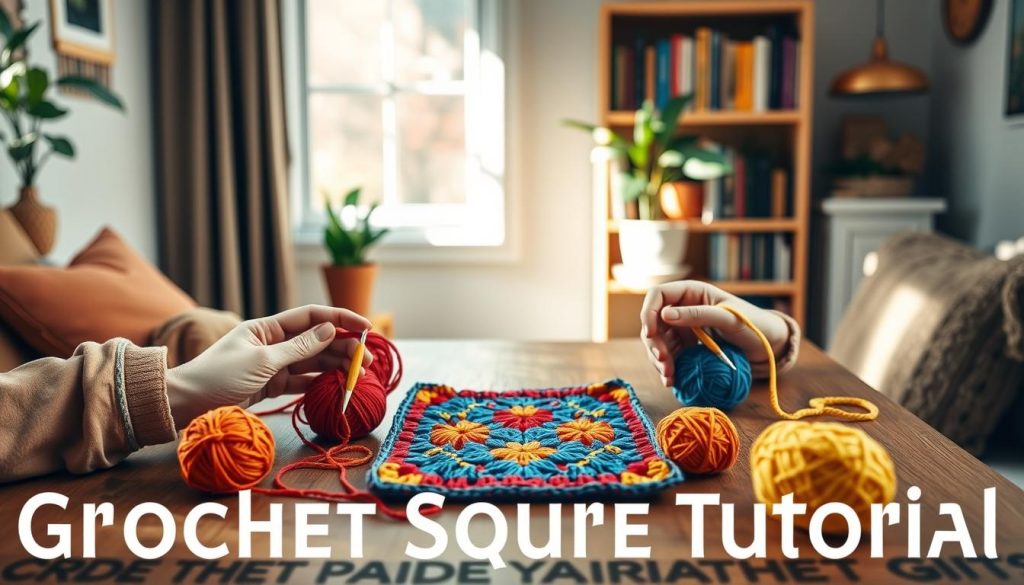
Start with a note on choices and feel. Your starting method sets the look of the center.
This crochet granny square tutorial covers chain-circle and magic ring methods. It also explains rounds and finishing tips.
Starting methods: chain circle versus magic ring
The chain-circle is simple. Chain 4 or 5 and join with a slip stitch to make a loop.
For a larger hole, chain 8–10. Place the first cluster into the loop. This method gives an airy center.
It is forgiving for beginners learning how to start granny square work.
The magic ring granny square gives a tight center with almost no hole. Form the adjustable loop, work clusters into it, then pull the tail to close.
Many crocheters prefer magic ring starts for a neat finish. It is best when a minimal center gap is desired.
Round-by-round step-by-step instructions
Round 1: Chain 3 (counts as first US dc), work two dc to make a 3-dc cluster, chain 2 for a corner space.
Repeat three more times to have four corner clusters separated by chain-2 spaces. Join with a slip stitch to the top of the starting chain-3.
Round 2: Slip stitch into the first corner space, chain 3, work 2 dc, chain 2, 3 dc in the same corner.
Move across the side with 3 dc, ch1 between clusters, then build the next corner with 3 dc, ch2, 3 dc.
Continue these rounds and finish by joining with a slip stitch to the starting chain-3.
Subsequent rounds: In each corner make [3 dc, ch2, 3 dc]. On sides place 3 dc in each side space and ch1 between clusters.
To change colors, finish the round with a slip stitch, cut the yarn leaving a 2–4 inch tail, fasten off.
Then join the new color in a corner and chain 3 to continue.
Techniques to maintain neat edges and consistent squares
Count spaces, not stitches, to avoid drift. Slip stitch across tops of adjacent clusters to reach corners cleanly.
Treat the chain-3 as the dc height so your edges stay even.
Watch tension and stitch height. If a square skews, switch hook size or block the finished piece.
Practice weaving the working tail into the square as you go. This cuts down on ends to weave later.
For crisp borders, use a consistent granny square edge technique. Keep ch-1 gaps even, place corner ch-2s between corner clusters, and finish rounds with tidy slip-stitch joins.
A short video or slow practice helps match hand movement to granny square rounds. This improves consistency.
Troubleshooting, color changes, finishing, and project ideas
Small fixes and neat finishes keep a granny square project looking polished and well-made. This short guide covers common issues and the cleanest ways to change colors.
It also shares quick ideas to use your squares in fun projects.
Changing colors and weaving in ends
To change colors in a granny square, finish the round with a slip stitch. Cut the yarn, leaving a 2–4 inch tail.
Pull the tail through the loop to fasten off. Make a slip knot for the new color, insert the hook into a corner space, slip stitch to join.
Chain 3 to count as the first dc and continue the round.
To weave in ends, thread a yarn needle and sew up and down through stitches several times.
Weave ends along color changes inside the square to hide joins. Carry yarn across short distances to reduce bulk in multiple color rows.
Limit the number of joins per round for a cleaner look.
Common beginner mistakes and how to fix them
Gaps in corners often happen because of inconsistent chain counts. Use the pattern’s specified ch-2, ch-3, or ch-4 between corner clusters so corners open properly.
To fix an uneven granny square, check whether your chain-3 counts as a dc and if your tension varies.
Try blocking finished squares to even edges. If tension is an issue, try a different hook size.
Miscounted clusters are common. Mark corner spaces with a stitch marker and count spaces instead of stitches.
Use slip stitches to move into corner spaces instead of crocheting across clusters. This keeps rounds accurate.
Ideas for using granny squares and next steps
Granny square projects range from a one-square cushion to a full blanket. You can continue rounds on a single square to make a large afghan.
Or make many same-sized squares and join them for blankets, garments, bags, or scarves. Try variations like solid granny, starburst, or round-up granny squares.
Explore joining methods such as seaming, slip-stitch join, and join-as-you-go. These change the look of your finished piece.
For practice, use worsted yarn with an H/5.0mm hook and follow a slow video lesson.
Start with a beanie or small blanket pattern that uses 3-round squares.
| Problem | Likely Cause | Quick Fix |
|---|---|---|
| Gaps at corners | Wrong chain count between clusters | Use correct ch-2/ch-3/ch-4 per pattern; place markers |
| Uneven edges | Inconsistent tension or miscounted chains | Check chain-3 as dc, change hook size, block finished square |
| Visible ends and bulk | Too many joins and short tails | Weave in ends crochet neatly, carry yarn, limit joins |
| Miscounted clusters | Counting stitches instead of spaces | Count corner spaces, use stitch markers, slip stitch between sections |
| Color join shows | Loose slip stitch or dangling tail | Join new color in corner space with slip stitch; weave tail inside square |
Conclusion
This granny square summary condenses the core process so you can repeat it with confidence: make a loop using a chain circle or magic ring. Chain 3 to count as the first double crochet. Form 3-dc clusters in corner spaces separated by chain-2 (or chain-3 if you prefer).
Place ch-1 between side clusters when your pattern calls for it. Finish each round with a slip stitch, join or change color as desired. Continue rounds to grow a single square or make multiple consistent squares to join later.
For steady progress, follow simple crochet practice tips: work slowly at first. Watch a clear step-by-step video while you stitch. Focus on matching rhythm and tension.
Use worsted weight yarn with an H/5.0mm (U.S.) hook or DK with a 4mm hook for UK conversions. The repetitive nature of granny squares builds muscle memory fast. This makes them ideal for practicing stitch consistency.
As next steps crochet granny squares, consult a stitch dictionary and a US‑UK conversion chart for clarity. Explore pattern collections for variations like solid, lace, or corner-to-corner grannies. Share progress on platforms such as Ravelry or Instagram to get feedback and ideas.
This beginner crochet conclusion emphasizes that granny squares are forgiving, versatile, and a reliable gateway to more complex projects. Keep practicing and enjoy the process.
FAQ
What materials do I need to start a granny square as a beginner?
For U.S. beginners, a worsted weight (medium #4) yarn and an H (5.0mm) hook work well. If you want a lighter fabric, use DK weight yarn with a 4mm hook—brands like Stylecraft Special DK or Scheepjes Color Crafter are good options.
You’ll also need a blunt tapestry/yarn needle for weaving ends, scissors, and optional stitch markers. Pick a smooth, midweight yarn from Hobby Lobby, Joann’s, or Walmart. These choices make learning easier.
What abbreviations should I know and how do U.S. and U.K. terms differ?
Common abbreviations include ch = chain, dc = double crochet (U.S.), sl st = slip stitch, and st = stitch. Note that a U.S. double crochet equals a U.K. treble crochet.
Keep a US–UK conversion chart handy to avoid mix-ups. Also consult a crochet stitch dictionary for visuals.
Why is the granny square a good first crochet project?
The granny square is repetitive and uses only a few stitches—chain, double crochet, and slip stitch. It builds muscle memory quickly.
Stitches are worked into spaces rather than stitch tops. This placement is easier to see and forgiving of mistakes.
The square scales easily. Continue rounds for a large square or make multiple small squares. Join them into blankets, pillows, bags, or garments.
Should I start my granny square with a chain circle or a magic ring?
Both methods work well. A chain circle (chain 4–10, joined with a slip stitch) is simple. Chain 5–10 creates a larger center hole; chain-10 gives a roomy center.
The magic ring makes a tighter center with a minimal gap. Choose chain circle for a classic start. Use magic ring if you want a snug center.
How do I make the first round of a classic granny square?
Chain 5 (or chain 4–5 per pattern) and join with a slip stitch to form a loop, or start with a magic ring.
Chain 3 (counts as first US dc), then make two more dc to complete a 3-dc cluster. Chain 2 (or chain 3 for your variation) for the corner space.
Repeat to create four corner clusters separated by chain-2 or chain-3 spaces. Finish the round with a slip stitch to the top of the starting chain-3.
What is the standard method for Round 2 and subsequent rounds?
Slip stitch into the first corner space, then chain 3 (counts as first dc). Work 2 more dc, chain 2, and 3 dc in that corner to form a new corner.
For sides, work 3-dc clusters separated by ch-1 between clusters. Repeat placing [3 dc, ch2, 3 dc] in each corner and ch-1 between side clusters.
Join each round with a slip stitch to the top of the starting chain-3. Continue rounds to grow the square.
Do I use ch-2 or ch-3 for corners and what difference does it make?
Traditional patterns use ch-2 corner spaces, but many use ch-3 for a more open corner. Ch-2 gives a compact look; ch-3 creates a slightly larger gap.
Either is fine—what matters most is staying consistent with your choice.
How and when should I change colors in a granny square?
Finish the round with a slip stitch, cut the yarn leaving a 2–4 inch tail, and pull the tail through to fasten off. Weave the tail in later with a yarn needle.
To start a new color, make a slip knot, insert the hook into a corner space, slip stitch to join, chain 3 (counts as first dc), and continue the pattern.
Weave ends along color changes or carry yarn across rows to minimize bulk.
How do I weave in ends neatly and minimize visible joins?
Use a blunt tapestry needle to sew the tail through several stitches on the wrong side or inside the square, following stitch direction. Weave ends along color changes or inside to hide joins.
Leaving a 2–4 inch tail when fastening off gives enough length for secure weaving without excess bulk.
My square is lopsided—what can I do to fix it?
First, check that you’re counting spaces (corner and side) rather than individual stitches. Make sure to count the chain-3 as dc height.
Check your tension—too tight or loose? Try changing hook size: smaller for tighter fabric, larger for looser fabric.
Use slip stitches to move cleanly into corner spaces. Consider blocking finished squares to even edges.
I keep miscounting clusters. Any tips to avoid this?
Mark corner spaces with stitch markers so you can count sides more easily. Count chain spaces, not stitches.
Use slip stitches to move to the next corner gap instead of crocheting across cluster tops. Work slowly and watch a short video to match hand movements and rhythm.
What hook size and yarn weight do instructors recommend for practice?
In the U.S., start with worsted weight (medium #4) yarn and an H (5.0mm) hook for clear stitch definition and comfortable tension.
In the U.K., try DK weight with a 4mm hook. Using a standard midweight yarn from a local craft store makes learning easier and consistent.
How many stitches do I use on the sides as the square grows?
On sides, work 3-dc clusters into each side space. Separate clusters with a ch-1 unless the pattern says otherwise.
In corners, always work [3 dc, ch2, 3 dc], or ch-3 if you prefer. As rounds increase, place one 3-dc cluster in each side space with ch-1 between clusters.
Continue the corner pattern at corners.
Should I weave in the joining tail as I work or wait until the end?
Weaving the tail in as you go reduces loose ends and keeps your project tidier. You can also leave ends to weave in after several rounds.
Plan to weave ends securely to prevent unraveling. Many teachers recommend working the tail from the skein into the project to cut finishing time.
What common beginner mistakes should I watch for?
Common issues include not counting the chain-3 as the first dc, inconsistent tension, and wrong US/UK stitch interpretations. Uneven corners come from incorrect chain spacing.
Fix these by re-counting spaces, using stitch markers, switching hook size to adjust tension, consulting a US–UK chart, and practicing slowly while watching a video.
How can I keep my square edges neat when moving between corners?
Slip stitch across the tops of adjacent clusters to reach corner spaces cleanly. Count chain spaces, not stitches, and keep tension consistent.
Count chain-3 as dc height, and place ch-1 between side clusters to keep straight edges. Blocking finished squares also tidies edges.
What projects can I make with granny squares once I’m confident?
Make a large single square for an afghan or many same-sized squares to join into blankets, cushions, bags, garments, or scarves.
Try variations like solid granny, starburst, or round-up granny squares. Joining methods include seaming, slip-stitch join, or join-as-you-go.
Next-step projects include a beanie, a small blanket using 3-round squares, or a granny-square bag.
Any tips for practicing and improving quickly?
Practice slowly and consistently to build tension control. Watch short step-by-step videos to match hand rhythm.
Use worsted yarn with an H/5.0mm hook. Repeat the same three rounds until they feel natural. Share progress on Instagram or Ravelry for feedback and inspiration.
Where can I find more resources, stitch dictionaries, or community support?
Consult a crochet stitch dictionary and a US–UK conversion chart for clarity. Explore pattern collections on LoveCrafts and Ravelry.
Find community hashtags on Instagram such as #offthehookforyou or tag @crochet365knittoo to share work and get feedback.
Local craft stores like Hobby Lobby and Joann’s also offer classes and supplies.