
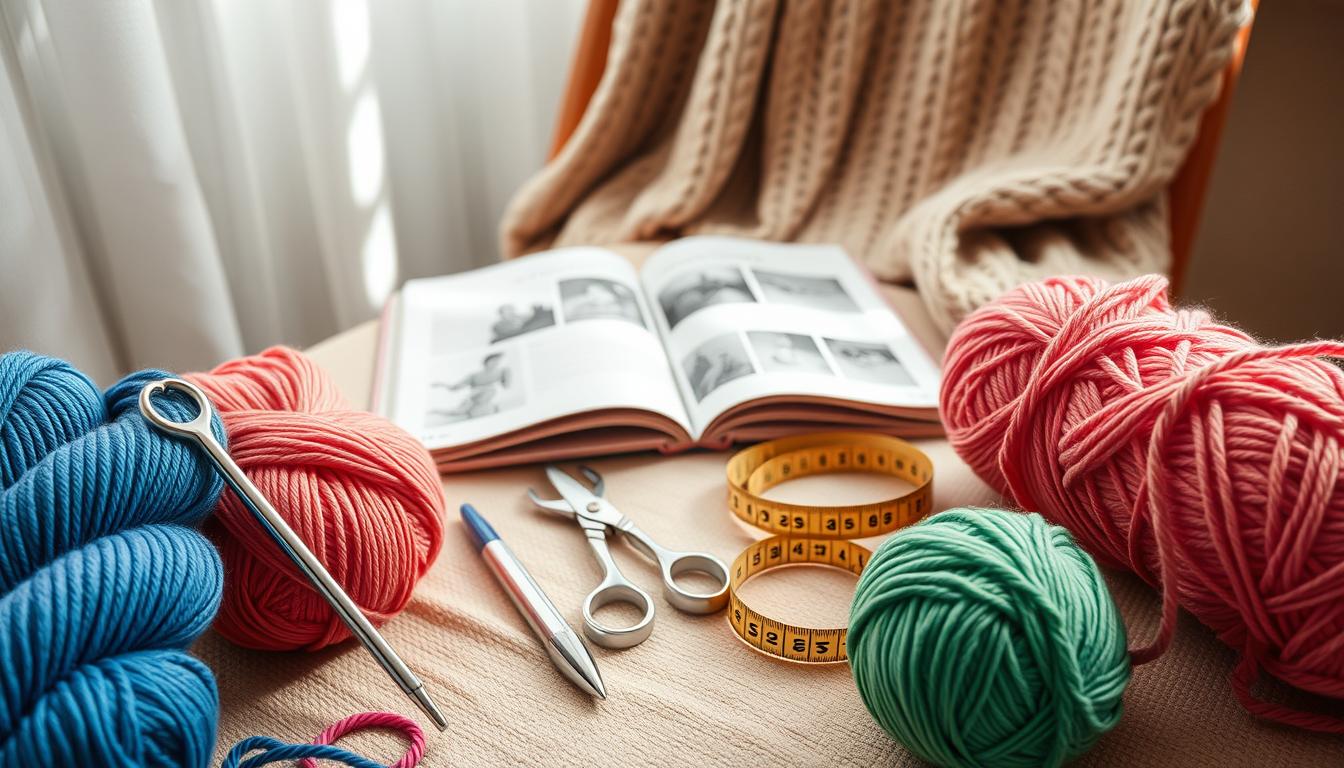
Starting a new craft should feel inviting, not overwhelming. This beginner guide explains simple supplies you need for easy crochet projects.
You won’t spend much or get lost in options when you follow this guide.
Most people need three essentials to start: a comfortable hook, smooth worsted-weight yarn, and scissors.
Ganxxet recommends ergonomic aluminum hooks for beginners. They are affordable, glide well, and reduce hand strain.
Yarn labels list matching hook sizes. A common pair is Medium/Worsted (Size 4) yarn with an H‑8 (5 mm) or G (4 mm) hook.
Pick a light or bright solid color so stitches are easy to see. Choose inexpensive yarn for practice.
Avoid novelty or variegated yarns at first. They hide stitch details and can slow your progress.
Don’t buy too much yarn now. Learn a few stitches, try a small scarf or dishcloth, then add more supplies.
Key Takeaways
- Start with crochet beginner supplies: one ergonomic hook, worsted-weight yarn, and scissors.
- Choose a bright, solid color for visibility and an affordable yarn for practice.
- Ganxxet recommends aluminum ergonomic hooks for comfort and smooth stitching.
- Yarn labels list recommended hook sizes; common starter pairing is Size 4 yarn with a 5 mm hook.
- Begin with simple, easy crochet projects and add tools later as you find preferences.
Crochet beginner supplies: essentials to start stitching
Start small to learn fast. The absolute essentials are one crochet hook, a skein of yarn, and scissors.
With these, you can practice chains, single crochet, and double crochet. Finish simple projects to build confidence.
Ask yourself what you need and keep the initial kit simple. A single skein of worsted weight yarn is ideal.
Choose a light or bright solid color so stitches show clearly. Read the yarn label for care, yardage, and recommended hook size.
Why these basic supplies are enough to start
Buying only a hook, yarn, and scissors keeps costs down and reduces confusion.
Learning a few stitches and finishing a small square helps you discover personal preferences for yarn and hooks.
Most beginner patterns use worsted weight yarn and basic stitches, so this minimal kit gets you making projects quickly.
Crochet hooks: sizes, materials, and beginner recommendations
Hook sizes appear as U.S. letters and millimeters. Common starter sizes for medium yarn are 4 mm (G) and 5 mm (H‑8).
If the yarn label recommends a hook, follow it. When unsure, pick 4 mm or 5 mm.
Hooks come in aluminum, bamboo/wood, plastic, and steel. Aluminum hooks glide smoothly and last long.
Bamboo feels warm and pairs well with natural fibers. Steel hooks are for fine thread work.
Many beginners like ergonomic hooks or metal hooks with soft handles to reduce hand strain.
Try a small set or buy a single quality hook. The best hooks feel comfortable and let yarn glide without snagging.
Tapered heads give a softer feel. Inline heads make uniform stitches easier to achieve.
Yarn: weight, fiber, and color tips for beginners
Worsted weight yarn (Medium, Size 4) is best for new crocheters. It is easy to see and handle.
In UK terms, this may be labeled Aran.
Choose beginner-friendly fibers like 100% cotton, acrylic, or blends. Cotton holds shape well. Acrylic is budget-friendly.
Blends offer softness and easier handling. Avoid novelty, metallic, or heavily textured yarns while learning.
Select solid, light or bright colors. Avoid black or pure white, which hide stitches.
Check yardage and care labels to match or replace yarn if a project grows past one skein.
Brands like Rico Designs and Paintbox offer accessible worsted-style cottons for beginners to test.
Scissors and cutting tools
Good cutting tools make finishing neat and simple. Use sharp yarn scissors or embroidery snips for textiles.
Household scissors often struggle and can fray yarn ends. Keep a small pair in your crochet bag.
This lets you trim tails and change colors quickly.
Consider a few cutting tools in your beginner kit: scissors for crochet, a small snipper, and a blunt-tipped yarn needle.
These items speed finishing and keep your work tidy.
Optional starter extras that make learning easier
Once basics feel natural, add helpful tools to improve comfort and accuracy. Stitch markers, a flexible tape measure, and a row counter save time.
A ball winder, yarn bowl, and simple storage keep yarn tidy as projects grow.
Other must-have accessories include a notebook for pattern notes, tapestry needles, and a needle threader for thick yarn.
These extras are not essential on day one but prove useful for larger projects.
Tools and accessories to grow your crochet kit
As your skills grow, adding a few smart tools makes projects smoother. Start with small items that save time and prevent mistakes.
These tools fit well in any crochet starter kit. They prepare you for more advanced patterns.
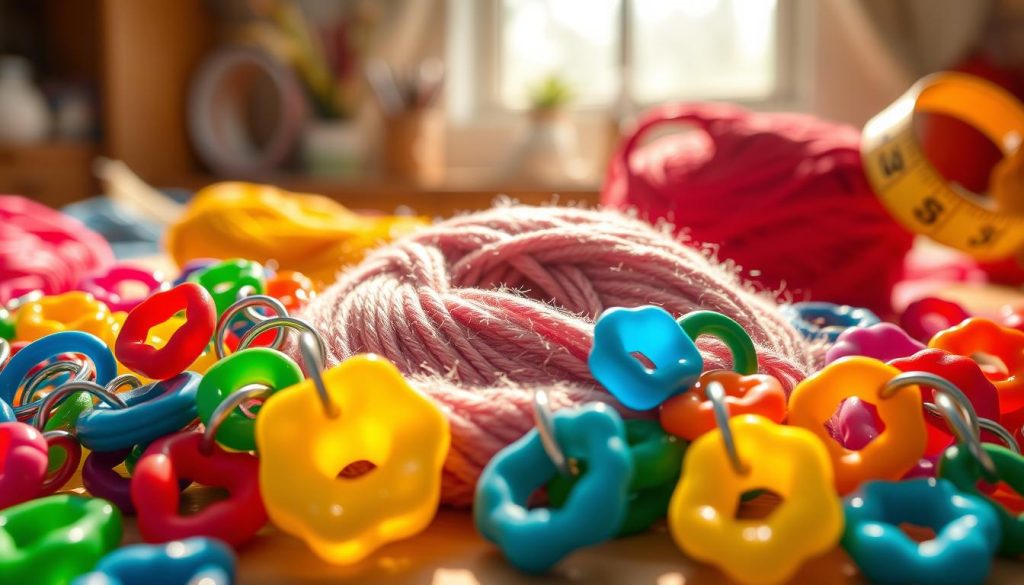
Stitch markers, row counters, and keeping track
Stitch markers help crochet more accurately. They mark stitch repeats, round starts, or decrease points.
Choose split rings or safety-pin markers. They slide on and off easily.
A crochet row counter removes guesswork. Wearable digital or clip-on counters help keep count without losing rhythm.
Free smartphone timers and apps work as crochet row counters if you want a no-cost option.
Using markers and counters early trains good habits. They help track rows in bigger projects like afghans and garments.
Organization and workspace items
Good crochet organization means less time hunting for tools. Use baskets, yarn bowls, and zip pouches to store yarn neatly.
A tidy workspace with a comfortable chair and good lighting reduces hand strain.
Add a hook gauge, needle threader, and small storage boxes for notions like tapestry needles and scissors.
Specialty tools for specific projects
Specialty crochet tools expand your project options. Amigurumi tools like T-pins, polyester stuffing, and safety eyes are vital for toys.
Use smaller hooks than the label suggests to keep stitches tight.
Tunisian hooks, ball winders, and blocking supplies like foam mats and rust-proof T-pins help with unique techniques.
Project-specific extras include wood buttons, zippers, and lining fabric for bags.
Starter kits and curated bundles
A crochet starter kit removes guesswork by pairing yarn, the right hook, a tapestry needle, and clear instructions.
Curated crochet kits for beginners often include video tutorials and project-specific tools. They make ideal gifts and reduce decision fatigue.
These kits give compatible materials and boost confidence to finish a first project without extra shopping.
Conclusion
Beginner crochet conclusion: start small and focus on three essentials—a comfortable crochet hook, a medium/worsted weight yarn in a light or bright color, and a sharp pair of scissors. These supplies let you finish simple pieces and build confidence.
Add a tapestry needle and some stitch markers soon after. These help tidy ends and keep track of rows.
Next steps crochet: buy one skein of worsted weight yarn and a matching 4 mm–5 mm hook. Then, practice basic stitches: chain, single crochet, and double crochet.
Try an easy project like a dishcloth, scrunchie, scarf, or granny square. If choosing supplies feels hard, a starter kit with yarn, hook, and video instructions helps simplify the process.
Long-term advice: don’t buy too much until you know your favorite fibers, hook styles, and patterns. Invest in ergonomic hooks, storage, and a yarn bowl as you progress.
Use blog tutorials, video guides, and stitch dictionaries to improve your skills. These start crocheting tips reduce frustration and help you finish satisfying projects.
They also prepare you for more advanced work.
FAQ
What three items do I absolutely need to start crocheting?
A crochet hook, yarn, and a pair of sharp scissors. With these three basics, you can practice chains and basic stitches. You can complete quick projects like a dishcloth, scrunchie, or granny square.
Which crochet hook should a beginner buy first?
For worsted/medium weight yarn (Size 4), a 4 mm (G) or 5 mm (H-8) hook is a reliable choice. You can buy a small hook set to experiment. But if you pick one hook, match it to the yarn label or choose an H-8 (5 mm) for general worsted projects.
Ergonomic aluminum hooks are recommended for comfort, smooth glide, and durability.
How do crochet hook sizes work and what do the labels mean?
Hook sizes are listed in U.S. letters and millimeters—for example, B-1 is 2.25 mm. Common starter sizes include G/4 mm and H-8/5 mm. Large T/X hooks go up to about 30 mm.
Yarn labels usually list a recommended hook size. When in doubt, follow the pattern or the label’s crochet recommendation.
Which yarn is best for a beginner?
Start with a medium/worsted weight (Medium, Size 4) yarn in a solid, light or bright color to see stitches better. Choose an inexpensive, easy-care fiber like acrylic, 100% cotton, or a cotton blend. Avoid novelty, metallic, or highly variegated yarns at first.
How much yarn should I buy to practice?
One skein of worsted-weight yarn (about 50 g or more) is enough to practice stitches and finish a small project. Buy extras only when you know the yardage for a larger project and to ensure color availability.
Do I need special scissors for crochet?
Use a sharp pair of scissors or embroidery/yarn snippers made for cutting yarn. Sharp blades give clean cuts and prevent fraying. Keep them in your crochet bag so you don’t misplace them.
Should I buy a multi-hook set or a single hook?
Both choices work. A single hook matched to your yarn is simple and cost-effective. A set lets you try different sizes to find what feels best.
Many beginners choose an ergonomic aluminum or soft-handle set for comfort and affordability.
What hook material is best for beginners?
Ergonomic aluminum hooks are a great first choice: they are inexpensive, smooth, and durable. Bamboo or wooden hooks feel warm and pair well with natural fibers. Plastic hooks are lightweight alternatives.
Try different materials later to find your preference.
What optional tools should I buy soon after starting?
Useful additions include tapestry/darning needles for weaving in ends and stitch markers to mark rounds and repeats. Also, a flexible tape measure helps with gauge and sizing. A row counter or counting app aids repetitive work.
These tools make finishing and tracking much easier.
Are starter kits worth buying?
Yes. Curated starter kits bundle the correct hook, yarn, tapestry needle, and pattern instructions. They often include video tutorials. Kits remove guesswork and ensure compatible materials.
They are great for first-success projects and gifts.
How important is yarn color for learning?
Very important. Choose solid, light or bright colors so stitches are visible. Avoid black and pure white since they hide detail.
Multicolored or novelty yarns can hide stitch structure and make learning harder.
What about yarn fiber—how do I choose between cotton, acrylic, and blends?
Cotton holds shape well and gives crisp stitches, useful for dishcloths and home items. Acrylic is affordable, common, and easy to care for but can feel scratchy. Blends like cotton/acrylic or cotton/bamboo often balance comfort and price.
Try small projects to learn your preference.
How can I avoid over-buying supplies when I’m just starting?
Buy only the basics first—a suitable hook, one skein of worsted yarn, and scissors. Practice a few stitches and complete a project before adding more yarns, tools, or specialty hooks.
Starter kits help avoid unnecessary purchases.
What workspace and ergonomic tips help new crocheters?
Good lighting, a comfortable chair, and an ergonomic hook reduce eye strain and hand fatigue. Soft-handle or ergonomic aluminum hooks help build stamina. Take short breaks and stretch your hands and wrists during long sessions.
When should I add organization tools like a yarn bowl or ball winder?
Add storage and winding tools as your projects and yarn stash grow. A yarn bowl and ball winder are handy for larger projects to prevent tangles.
They aren’t necessary for the first few practice projects.
What small notions should I always keep on hand?
Keep stitch markers, a tapestry needle, a tape measure, and a small notebook for pattern notes. These inexpensive items greatly help with accuracy and finishing.
Do I need different hooks for amigurumi or specialty stitches?
Yes. Amigurumi uses a smaller hook than the yarn label suggests to create tight stitches for stuffing. Specialty techniques like Tunisian crochet require longer hooks or hooks with cables.
Add these as you choose specific projects.
Where can I find beginner-friendly yarn brands and examples?
Look for worsted-weight yarns from Lion Brand, Red Heart, and Paintbox. Ganxxet offers beginner-focused yarns and kits. These include recycled cotton and t-shirt yarn options for certain projects.
Check yarn labels for weight, yardage, and recommended hook sizes.
How should I care for projects I make as a beginner?
Always follow the yarn label’s care instructions for washing and drying. For pieces needing shaping, blocking mats and rust-proof T-pins help. Use proper care to keep your items looking their best.