
Introduction
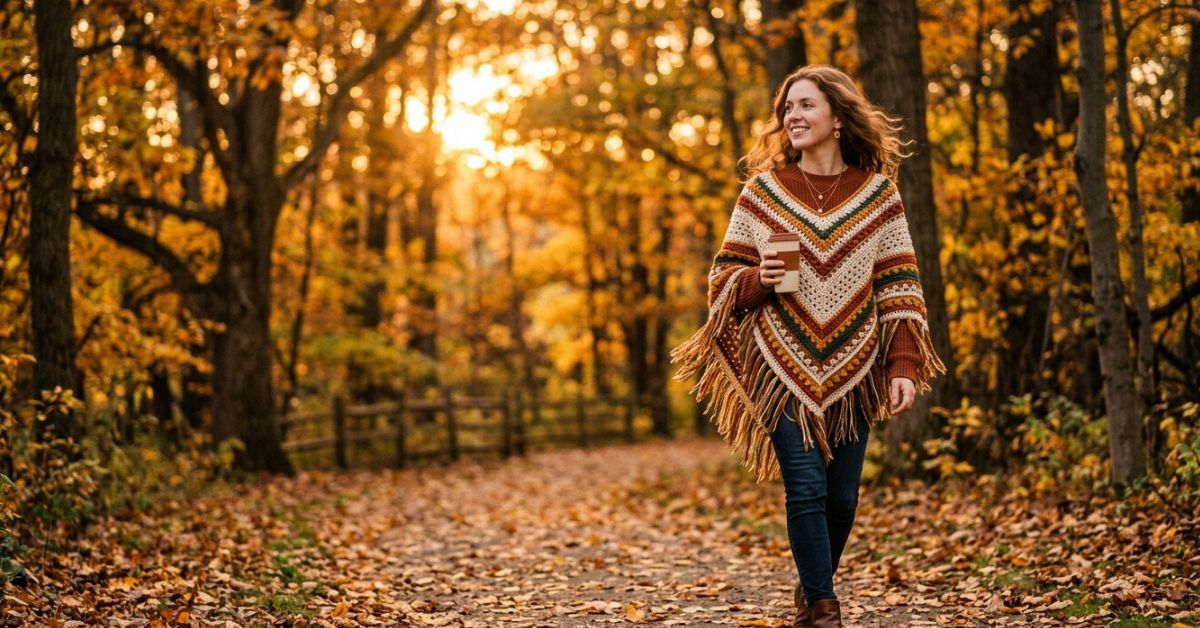
There is something undeniably magical about wrapping yourself in a handmade crochet poncho on a brisk autumn afternoon or during a chilly spring morning. A poncho is the ultimate bridge between comfort and style—a versatile piece that feels like a warm hug but looks sophisticated enough for a lunch date or a walk in the park. Whether you are new to the world of crochet or a seasoned yarn enthusiast looking for a relaxing, rhythmic project, this design is perfect for you.
We often think of clothing as intimidating, but a poncho is one of the most forgiving and rewarding garments you can make. It doesn’t require complex shaping, tight fittings, or tricky sleeves. Instead, it relies on simple geometry and the beauty of continuous stitch repeats to create a garment that drapes elegantly over your shoulders. In this tutorial, we will focus on an airy yet warm textured stitch pattern that builds quickly, giving you a professional-looking result without the stress of advanced techniques. By the time you finish your project, you will have a timeless accessory that you can wear for years to come. Let’s grab our hooks, choose our favorite soft yarn, and create something beautiful together.
Quick Overview
- Skill Level: Beginner-Friendly Intermediate
- Estimated Time: 10 to 15 hours, depending on speed
- Finished Size: Customizable (instructions provided for standard adult size, approximately 24 inches long from shoulder to point)
- Best Use: Fall layering, brisk spring transition, or a thoughtful handmade gift
- Why You Will Love It: It requires no complicated seaming, uses a meditative, repetitive stitch pattern, and offers endless color possibilities to match your personal wardrobe.
Materials or Tools Needed
Choosing the right materials determines the flow and “drape” of your poncho. For this project, you will need:
- Yarn: Approximately 1,200 to 1,400 yards of Category 4 (Medium/Worsted Weight) yarn. I recommend a wool or acrylic-wool blend for warmth and elasticity.
- Crochet Hook: Size H/8 (5.0 mm) or size needed to obtain gauge.
- Stitch Markers: Essential for keeping track of your corner increases.
- Tapestry Needle: For weaving in your ends securely.
- Measuring Tape: To ensure your piece stays on track.
- Scissors: A sharp pair for clean trims.
Crochet Terms, Stitches, or Key Concepts
We will use standard U.S. crochet terminology for this pattern:
- Chain (ch): The foundation of most crochet projects.
- Slip Stitch (sl st): Used for joining rounds or moving across a space.
- Double Crochet (dc): A taller stitch that works up quickly, perfect for ponchos.
- Chain-Space (ch-sp): The gap created by chaining, where we will place our stitches in the following rows.
- Stitch Marker: You will place these in your corner spaces to avoid losing your spot.
- Gauge: This is the measure of your stitches per inch. If your poncho feels too stiff, use a larger hook. If it feels too gappy or loose, use a smaller hook.
Helpful Notes Before You Start
Before diving into the rows, remember that your tension is unique. It is perfectly normal for your first few rows to feel slightly awkward, but once you establish your rhythm, the stitches will look more uniform.
Because this poncho is worked in joined rounds (from the neck down), you don’t have to worry about the width of the shoulders as much as you would with a flat-sewn garment. If you want the poncho to be wider or longer, simply continue the stitch repeats until you reach your desired dimensions. It is helpful to try the poncho on periodically to ensure the neck opening is comfortable and the length hits exactly where you want it.
The Poncho Pattern
This pattern is worked in the round, starting at the neckline. We will create a square shape that naturally transitions into a beautiful “V” point at the front and back when worn.
Part 1: The Foundation
Start by chaining 80 stitches. Join the last chain to the first with a slip stitch, being very careful not to twist the chain. This creates your neck opening.
- Round 1: Ch 3 (counts as first dc). Dc in the next 19 stitches. In the 20th stitch, place (dc, ch 2, dc) to create a corner. Dc in the next 19 stitches. In the 20th stitch, place (dc, ch 2, dc) for the second corner. Dc in the next 19 stitches. In the 20th stitch, place (dc, ch 2, dc) for the third corner. Dc in the next 19 stitches. In the 20th stitch, place (dc, ch 2, dc) for the final corner. Join with a sl st to the top of the beginning ch-3.
Part 2: The Main Body
This is where the magic happens. The “V” shape is formed by the increases at the corners.
- Round 2: Ch 3. Dc in every dc around. When you reach a ch-2 corner space, work (dc, ch 2, dc) into that space. Continue in this manner until you reach the end of the round. Join with a sl st.
- Repeat: Continue repeating Round 2 until the piece measures your desired length. As you work, you will notice the four corners becoming more pronounced, drawing the fabric into a diamond-like shape that sits comfortably on your frame.
Part 3: The Border
To give your poncho a polished, feminine finish, consider adding a simple shell border.
- Border Round: Skip 1 stitch, work 5 dc in the next stitch, skip 1 stitch, sl st in the next. Repeat this pattern all the way around the bottom edge. This creates a delicate, scalloped edge that adds weight and grace to the hem.
Step-by-Step Explanation
To visualize this process, imagine your poncho as a square. By increasing at the four corners in every round, you are essentially expanding this square continuously. When you put it on, two corners of the square will fall at your center front and center back, creating the iconic “poncho point,” while the other two corners sit comfortably over your shoulders.
At the end of each round, check your stitch markers. If you have an equal number of stitches between each corner, you are on the right track! If you somehow have one too many or one too few, don’t stress—it is usually only noticeable to the maker. You can gently adjust or add an extra stitch in the next round to balance it out.
Common Mistakes to Avoid
- Twisted Starting Chain: This is the most common beginner frustration. Lay your chain flat on a table like a necklace before joining. If it twists, your entire project will be a ring, and you will have to restart.
- Skipping Corner Increases: If you miss a corner increase, your poncho will stop growing into a square and start curling into a tube. Keep your stitch markers in those chain-2 spaces at all times.
- Ignoring Gauge: If you are using a different brand of yarn than a pattern recommends, your piece might turn out much larger or smaller than expected. Always check the width after round 3.
- Tight Tension at the Neck: Ensure your foundation chain isn’t too tight. If it doesn’t fit comfortably over your head, go up one hook size just for the starting chain, then switch back to your regular hook for the rest of the project.
Pro Tips for a Better Result
- The Power of Blocking: Once you finish your poncho, soak it in cool water with a little bit of mild soap, gently press out the moisture in a towel, and lay it flat to dry in the shape you want. This relaxes the stitches and makes the garment look store-bought and professional.
- Weaving Ends: Weave your tail ends in at least three different directions. This ensures that even after multiple washes, your hard work stays secure.
- Color Blocking: If you have leftover yarn from other projects, use them to make a striped effect. A poncho is a wonderful stash-buster.
- Steaming: If you are using acrylic yarn, a quick light steam with a garment steamer can help the stitches drape more softly around your body. Avoid touching the iron directly to the yarn, as it can melt synthetic fibers.
Variations, Examples, or Personalization Ideas
The beauty of a basic poncho is that it acts as a canvas for your creativity.
- Winter Warmth: Use a bulky weight yarn and a larger hook for an ultra-cozy, thick winter wrap.
- Summer Breeze: Use a cotton or bamboo blend with a larger hook than recommended. This creates an open, lacy effect that is perfect for cool summer evenings at the beach.
- Fringe Detail: Add 6-inch tassels of yarn to the bottom corners or along the entire bottom hem. It adds a bohemian touch and helps the hem hang properly.
- Buttons: If you want a more structured look, you can leave a small opening at the shoulder and add large wooden buttons to join the front and back pieces.
Care, Storage, or Next Steps
To keep your handmade poncho looking lovely, always check your yarn label for washing instructions. Generally, hand washing in cool water is the safest route for handmade garments. Once it has been washed, never hang your poncho to dry, as the weight of the water will stretch out the fibers. Always lay it flat on a mesh drying rack or a dry towel. For storage, fold your poncho neatly in a drawer; hanging it on a hanger for long periods can cause it to lose its shape at the shoulders.
FAQ
How do I know if the neck hole fits?
Before you continue past the first few rounds, try the piece on. It should slide over your head easily without feeling like it’s choking you. If it’s too snug, simply restart with a few more chains in your foundation ring.
Can I make this smaller for a child?
Absolutely! To customize the size, just reduce the number of stitches in your foundation chain. Keep the number of stitches between your corners equal, and you can make a poncho for any size from a toddler to an adult.
What if I run out of yarn?
Because this project is worked in continuous rounds, you can easily join a new ball of yarn at the start of any round. Just be sure to weave in your tails securely as you go so you aren’t stuck with dozens of ends to manage at the end.
How do I stop the edges from curling?
Some curling is natural in crochet, but if it is excessive, it usually means your tension is too tight. Try relaxing your grip on the yarn, or simply “block” the finished piece (as described in our Pro Tips) to flatten the edges.
Is this a good project for a total beginner?
Yes! As long as you know how to chain and double crochet, you have all the skills needed. It is a fantastic confidence-builder because you see the garment grow so quickly, and there are no complicated seams to sew at the end.
Conclusion
Creating a handmade poncho is such a rewarding way to spend your time. By focusing on the rhythm of the double crochet stitches, you are not just making a garment; you are practicing a form of mindfulness that results in something uniquely yours. Whether you choose a soft, earthy tone or an adventurous, vibrant color, this poncho will soon become your favorite companion for those chilly days.
Remember, there is no “perfect” crochet—only the project that reflects your style and your effort. Take your time, enjoy the process, and don’t be afraid to add your own personal flair. When you finally slip your finished poncho over your shoulders, take a moment to be proud of what your hands have achieved. If you enjoyed this guide, be sure to save it for your next rainy afternoon, and keep exploring the wonderful, cozy world of crochet. Happy hooking!