
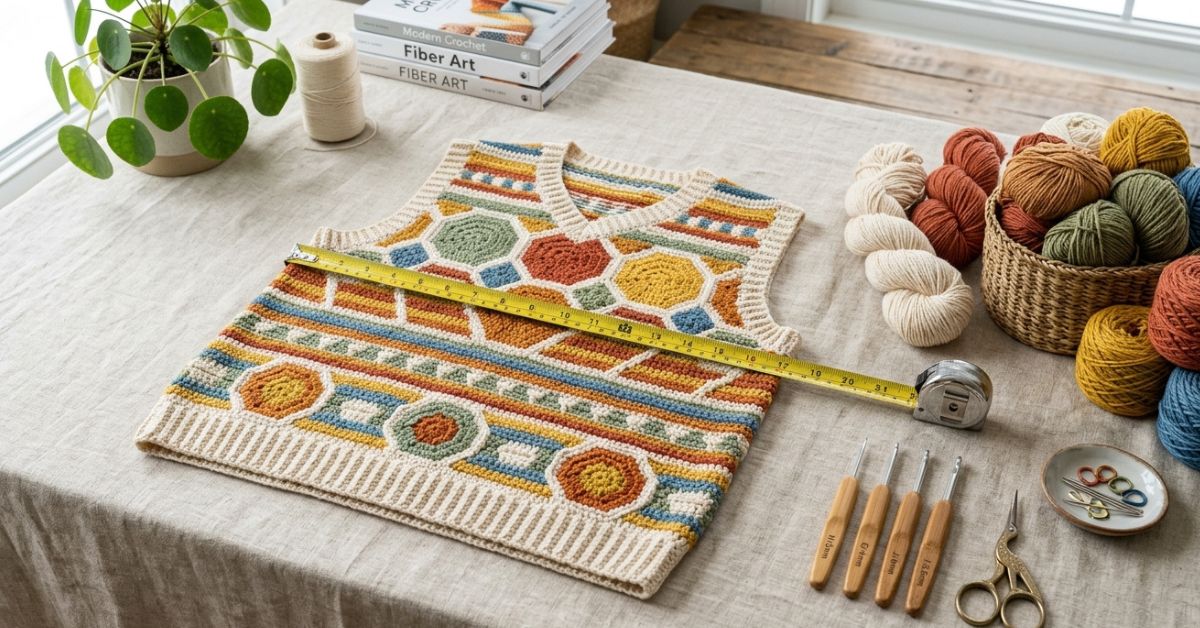
Introduction
There is something undeniably magical about the transition of seasons, especially when the crisp morning air calls for an extra layer of warmth that feels like a hug. If you have been looking for the perfect project to elevate your handmade wardrobe, you are in the right place. Creating a crochet vest is one of the most rewarding endeavors for makers of all levels. Not only is it a functional piece that spans multiple seasons—wear it over a light blouse in the spring or a cozy turtleneck during the winter—but it also serves as a beautiful introduction to garment construction without the intimidation of sleeves or complex shaping.
We will be diving into the art of crafting a versatile vest using simple geometric shapes. By focusing on two basic rectangles, we demystify the process of “clothing construction.” You don’t need an advanced degree in tailoring; you simply need your favorite hook, a soft skein of yarn, and a little patience. This guide is designed to be your best friend throughout the process, whether you are picking up a crochet hook for the first time or you are an intermediate crocheter looking for a meditative, relaxing project. Let’s prepare to turn yarn into a timeless, cozy layer you will reach for again and again.
Quick Overview
This project is designed to be accessible and highly customizable. By utilizing two identical rectangles and clever seaming, you will construct a vest that fits comfortably and drapes beautifully.
- Skill Level: Beginner-friendly.
- Estimated Time: 10–15 hours, depending on your speed and yarn weight.
- Finished Size: Customizable based on your measurements (instructions provided below).
- Best Use: Everyday layering piece for transitional weather.
- Why You Will Love It: It requires no shaping (like armhole decreases), making it the perfect “first garment” project. The geometric approach means you can focus on beautiful stitches rather than complex math.
Materials or Tools Needed
To create your perfect layering piece, you will want to gather a few essential items. Feel free to use what you have in your stash, provided your yarn weights are consistent!
- Yarn: Approximately 600–900 yards of Category 4 (Worsted) weight yarn. A wool-blend or a soft acrylic works wonderfully for structure and warmth.
- Crochet Hook: Size H/8 (5.0 mm) is a standard recommendation for worsted weight yarn, but check your yarn label for the Suggested Hook Size and adjust if your stitches feel too loose or stiff.
- Stitch Markers: Essential for holding your panels together during the seaming process.
- Tapestry Needle: For weaving in your ends and seaming the shoulders and sides.
- Measuring Tape: To ensure the vest fits your body perfectly.
- Scissors: A sharp pair of snips.
Crochet Terms, Stitches, and Key Concepts
Before we begin, let’s get comfortable with the terminology. We use standard U.S. crochet terms to keep things straightforward.
- Foundation Chain (Ch): Your starting line.
- Single Crochet (Sc): A short, sturdy stitch that creates a dense fabric.
- Double Crochet (Dc): A taller stitch that works up faster and has a beautiful, airy drape.
- Slip Stitch (Sl st): Used for joining rounds or creating invisible seams.
- Gauge: The number of stitches and rows per inch. It is important to check this so your vest isn’t too small or too oversized.
- Turning Chain: The chains you make at the start of a row to reach the height of the next stitch.
Helpful Notes Before You Start
Success in crochet is often 90% preparation. Before you start your first row, hold your yarn and hook and crochet a small 4×4 inch square using a simple stitch pattern of your choice. Count your stitches and rows per inch. If you have more stitches per inch than the pattern suggest, your piece will be smaller; if you have fewer, it will be larger. Adjust your hook size accordingly.
Remember, this vest is built from two large rectangles. The width of these rectangles equals half your bust measurement plus an inch or two for ease (that extra “wiggle room” that makes a garment comfortable). Do not rush the foundation chain—keep your tension even so the bottom edge doesn’t look stretched or puckered.
Main Tutorial: The Geometric Layering Vest
Our vest consists of two identical back and front panels. They are seamed at the shoulders and the sides, leaving ample room for your arms.
Part 1: The Panels
You will make two identical rectangles.
- Foundation: Ch a length that measures approximately half of your desired total bust circumference. For most medium sizes, this is around 18–20 inches. Ensure your chain is an even number.
- Row 1: Dc in the 4th ch from the hook and in every ch across. Turn.
- Row 2: Ch 3 (counts as first dc), dc in each st across. Turn.
- Repeat: Continue row 2 until the piece measures the desired length from shoulder to hip.
- Fasten Off: Leave a long tail for sewing. Repeat for the second panel.
Part 2: Assembly
Place your two rectangles flat, one on top of the other.
- Shoulders: Use stitch markers to mark a 3-inch section at the top corners of both shoulders. Using your tapestry needle and the long tail you left, sew the shoulders together across these 3-inch sections.
- Sides: With your panels still layered, use stitch markers to keep the sides aligned. Measure from the top of the shoulder down about 8–9 inches—this is your armhole opening. Use stitch markers to secure this space.
- Seaming: Starting from the bottom hem, sew up the sides of the vest until you reach your armhole marker. Repeat for both sides.
Part 3: The Finishing Touches
To give your vest a polished, boutique look, we will add a simple border.
- Neckline and Armholes: Attach yarn at the bottom of an armhole. Work one round of single crochet evenly around the entire armhole opening. Repeat for the other armhole and the neckline.
- Bottom Hem: Work two rounds of single crochet around the base of the vest to give it a sturdy, finished edge.
- Weaving: Carefully weave in all your loose ends on the inside of the garment, snip closely, and give your vest a gentle steam or light block to relax the stitches.
Step-by-Step Explanation
Think of this project as building a classic poncho that has been refined into a vest. By creating those initial rectangles, you are establishing the “fabric” of your garment. The most critical step is the transition from individual pieces to a wearable item. When you sew the shoulders, you are defining the neckline; when you sew the sides, you are defining the silhouette. Don’t worry if your seams aren’t “perfectly” invisible on your first attempt—the beauty of handmade crochet is the texture, and a decorative whip stitch can actually look like a charming design choice.
Common Mistakes to Avoid
Even experienced makers slip up! Here are a few things to keep an eye on:
- Counting Stitches: It is incredibly easy to lose a stitch at the end of a row. Always count your stitches at the end of every row until you get into a rhythm. A dropped stitch can lead to an uneven edge.
- Tension Fluctuations: If you are a tight crocheter, go up a half-size in your hook. If you are loose, go down. If your stitches look like they are “gaping,” your hook is likely too large for your yarn weight.
- The Twisted Chain: When joining your foundation chain into a row, ensure it isn’t twisted or you will be stuck with a permanent spiral!
- Forgetting to Block: Many beginners skip blocking. Giving your finished piece a light steam with a garment steamer (or hovering your iron slightly above without touching the yarn) allows the fibers to relax and the stitches to settle into a uniform shape.
Pro Tips for a Better Result
Want your vest to look professional? These tips make a world of difference:
- The Power of Blocking: I cannot stress this enough. Blocking transforms a “homemade” looking item into a “handmade” piece that looks purchased from a boutique.
- Choose the Right Yarn: Since this is a garment, aim for a yarn with a bit of “bounce,” like an alpaca or merino wool blend. It will hold its shape better than a very slick acrylic, which may stretch over time.
- Try on During Construction: Don’t wait until the very end to see if it fits. Since it’s made of two rectangles, you can drape them over your shoulders halfway through to see how the width feels.
- Add a Personal Touch: Once finished, you could add buttons, an oversized pin, or even a fringe at the bottom to give it a boho-chic vibe.
Variations, Examples, or Personalization Ideas
The beauty of a geometric vest is its versatility. You could make a long, duster-style vest by lengthening your rectangles. Or, if you want something cropped and modern, subtract rows. You could also experiment with color blocking—knit the back panel in a solid neutral and the front panels in a bold, contrasting stripe. For an intermediate twist, you could incorporate a lace stitch pattern across the center of the panels to add a feminine, airy detail to the standard double crochet fabric.
Care, Storage, or Next Steps
To keep your vest looking fresh for years, hand wash it in cool water with a gentle wool wash. Never wring or twist the garment; instead, lay it flat on a clean towel and roll it like a swiss cake roll to absorb excess water. Unroll and lay flat to dry. When storing, fold it gently rather than hanging it, as the weight of the crochet can cause the shoulders to stretch out over time.
FAQ
What if I don’t know my exact size?
No problem! Simply measure a sweater or a vest you already own and love. Use those dimensions as your guide for your rectangles.
Can I use a different weight of yarn?
Absolutely. Just be aware that if you use thinner yarn (like sport weight), you will need to add more stitches to the foundation chain and work more rows to reach the same physical size.
Why does my edge look wavy?
This often happens if you are adding extra stitches at the ends of your rows. Keep your stitch counts consistent by counting every single time you finish a row!
How do I make the neck hole bigger?
If the neckline feels too tight after seaming the shoulders, simply unpick a few stitches. It is much easier to adjust a seam than to re-crochet the entire panel.
Is this project really suitable for absolute beginners?
Yes! If you know how to chain and double crochet, you have all the skills required. The “garment” aspect might sound advanced, but remember: it is just two rectangles. You can do this!
Conclusion
Creating your own clothing is a beautiful journey of self-expression. By taking the time to crochet this vest, you are not just making a piece of clothing; you are crafting a memory, a warm layer for chilly mornings, and a testament to your own creativity. Don’t be too hard on yourself if your first attempt has a few “character” stitches—that is exactly what makes it yours. Take pride in every loop, enjoy the rhythm of the hook, and remember that every stitch brings you closer to a piece you will cherish. Happy hooking!