
If you’re wondering what to crochet for beginners, this guide points you to quick wins and steady progress. Crochet is forgiving and fast to learn.
With a slip knot, chain stitch, and single crochet, you can make practical items that build skill and confidence.
Beginner crochet projects often use basic stitches like single crochet, double crochet, and half double crochet. Free crochet patterns for dishcloths, coasters, simple scarves, and baby hats are easy to find.
Many pattern roundups include projects like ripple baby blankets, lemon peel washcloths, and heart cup cozies.
Start small to keep your momentum going strong. Easy crochet patterns that finish in under an hour—like washcloths, cup cozies, and small coasters—give quick satisfaction.
For larger pieces like blankets, choose double crochet or bulky yarn to work faster and keep the fabric soft. If you prefer single crochet, try using a larger hook to soften the fabric.
Practical tips help you avoid common mistakes. Count stitches to keep edges straight and use stitch markers to mark turning points.
Watch photo or video tutorials to master the single crochet stitch. Free crochet patterns and beginner resources from sites such as Crafting Happiness offer step-by-step help and categories to explore.
Key Takeaways
- Focus first on simple stitches: slip knot, chain, and single crochet.
- Pick small projects—washcloths, coasters, and cup cozies—for fast wins.
- Use double crochet or bulky yarn for quicker, less stiff blankets.
- Count stitches, use markers, and follow picture/video tutorials.
- Explore free crochet patterns and roundups for inspiration and stash-busting ideas.
what to crochet for beginners
Picking your first crochet projects should feel simple and rewarding. Start with items that finish fast and use basic stitches. This approach offers quick wins and helps you enjoy the beginner crochet benefits right away.
Why start with crochet: benefits for beginners
Crochet is low-cost and easy to learn. Many free patterns use only a few stitches. You can make useful items without a big time investment. Short projects like coasters and cup cozies give instant satisfaction and build momentum.
Working on small pieces also cuts waste and helps you pick the right yarn. Cotton yarn lasts for washcloths and scrubbies. Worsted weight yarn works well for scarves and baby blankets. Regular practice reduces stress and sharpens your focus.
Essential beginner skills and tools
Begin by learning the slip knot, chain stitch, and single crochet. Mastering single crochet opens up many pattern options. Once these feel steady, try half double crochet and double crochet for faster progress on bigger pieces.
Keep a basic kit: crochet hooks in common sizes, scissors, a tapestry needle, and stitch markers. Use worsted or medium weight yarn for practice. Bulky yarn helps you see quick results. Test gauge for garments or larger blankets to avoid surprises.
How to pick your first projects
Choose projects that match your time and goals. For quick wins, pick easy projects like washcloths, coasters, and cup cozies. These let you practice stitch counting and finishing without a long commitment.
If you want to expand skills, select patterns with repeating rows or simple shaping. Break larger projects into baby or lap sizes to keep them manageable. Plan one short piece and one slightly longer item to practice consistency and build confidence.
| Beginner Goal | Suggested Project | Key Skills Practiced | Recommended Materials |
|---|---|---|---|
| Fast finish | Cozy or coaster | Chain, single crochet | Cotton or worsted yarn, medium hook |
| Confidence boost | Washcloth or small square | Single crochet, counting rows | Durable cotton yarn, scissors, tapestry needle |
| Skill expansion | Scarf or baby blanket | Half double, double crochet, gauge | Worsted or bulky yarn, larger hook |
| Learn amigurumi basics | Small toy using single crochet | Single crochet in rounds, stitch markers | Worsted yarn, small hook, stuffing, markers |
Easy beginner crochet project ideas and free pattern categories
Start with projects that teach basic stitches and give quick wins. These ideas guide new makers toward steady progress with easy crochet projects that build confidence.
Pick one that fits your time and stash. Enjoy fast results and steady skill growth.
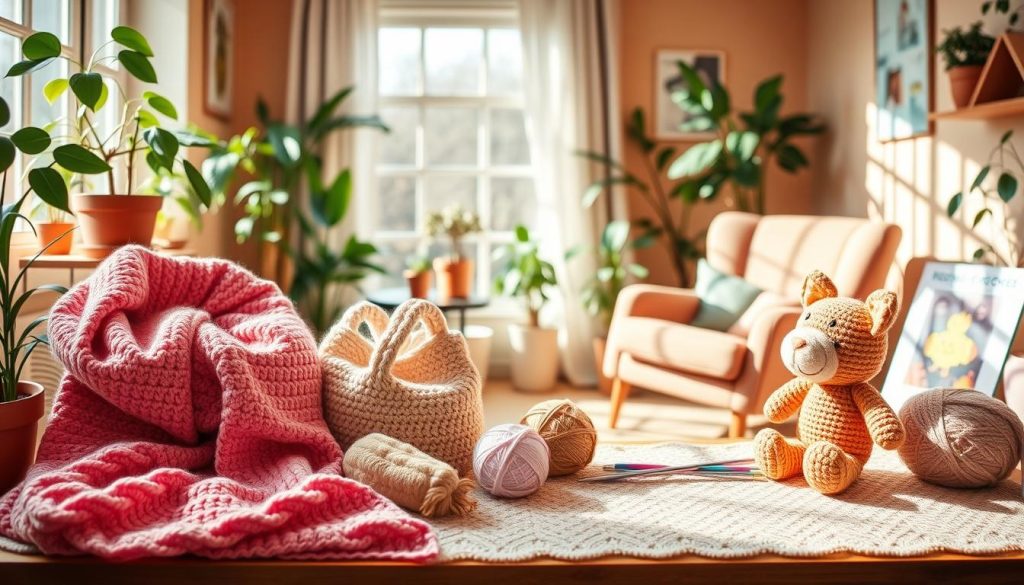
Blankets and throws
Blanket work uses repeating rows and simple stitches like single crochet, half double, and double crochet.
Bulky yarn speeds up a project so beginners see progress fast. Try small baby sizes or throw patterns.
This helps you practice gauge and tension.
Accessories: scarves, shawls, and cowls
Accessories teach shaping and stitch repeats without large time commitments. Use worsted or chunky yarn to finish quickly.
Crochet scarves for beginners often use double crochet or simple stripes. This helps you learn pattern reading and row counts.
Small quick projects: washcloths, coasters, cup cozies
Small pieces offer instant satisfaction and stash-busting chances.
A simple washcloth pattern or a set of coasters can be done in one session. These make practical gifts.
They also reinforce consistent tension and edging skills.
Baby items: hats, booties, loveys
Baby projects combine small shaping with easy stitches. Patterns for newborn hats or tiny loveys let you practice increases, decreases, and seaming on a fast, rewarding scale.
They make thoughtful gifts and clear milestone projects for new crocheters.
Amigurumi and small toys using single crochet
Beginner amigurumi focuses on single crochet, invisible decreases, and basic stuffing.
Start with mini creatures like an elephant or snake to learn rounds and gauge control.
Use a stitch marker to track rounds and keep shapes smooth.
Useful home items and practical projects
Practical crochet projects encourage daily use and steady practice. Think dish scrubbers, a glasses case, or colorful bath mats in cotton yarn for durability.
Next-step pieces include storage baskets and pillow covers. These teach holding multiple strands and shaping.
| Project Type | Skill Focus | Yarn Suggestion | Approx. Time |
|---|---|---|---|
| Baby Blanket | Rows, tension, simple stitch patterns | Bulky or worsted | Several evenings |
| Chunky Scarf | Row repeats, edge finishing | Chunky | 1–3 sessions |
| Washcloth | Stitch consistency, edging | Cotton | Under 1 hour |
| Baby Hat | Shaping, increases/decreases | Worsted | 1–2 sessions |
| Mini Amigurumi | Single crochet, rounds, stuffing | Worsted or DK | 1–3 hours |
| Storage Basket | Holding strands, sturdy fabric feel | Bulky or held double | Several sessions |
Conclusion
Learning what to crochet for beginners means starting small, staying steady, and enjoying every step of the process.
A roundup of 75 free beginner-friendly patterns shows many projects like blankets, accessories, toys, and home items.
Pick quick 60-minute projects like washcloths, coasters, or simple hats to build momentum and see fast results.
The first crochet projects summary highlights mastering the slip knot, chain stitch, and single crochet.
Single crochet alone makes hundreds of useful items. Switch to double crochet for faster, softer blankets.
Use cotton yarn for small items. Increase hook size on dense projects to avoid stiffness.
For progress, follow video or photo tutorials to learn stitch techniques. Track stitch counts to keep edges straight.
Focus on repeat-row patterns to practice consistency. Join communities or newsletters to find free patterns that fit your pace.
For next steps, pick simple repeat patterns, set short practice sessions, and celebrate small wins.
Regular practice builds speed and confidence. Soon, you’ll move from basics to more creative designs with ease.
FAQ
What should I crochet first as a complete beginner?
Start with a small, repetitive project using basic stitches. Washcloths, coasters, cup cozies, and simple scarves work well. They usually use single crochet (SC), half double crochet (HDC), double crochet (DC), or slip stitch. These can be finished quickly to build confidence.
Many free patterns like Lemon Peel Washcloth, Heart Cup Cozy, or Daisy Flower Coasters make perfect first projects.
Which stitches do I need to learn to make most beginner projects?
Learn the slip knot, chain stitch, and single crochet first. These three let you access many beginner patterns. Then, add half double crochet and double crochet for speed and texture.
Video and photo tutorials help you keep stitch consistency and tension.
How long will my first project take?
Time depends on yarn weight, hook size, and the project you choose. Small projects like coasters and cup cozies take less than an hour.
Scarves or baby hats can take a few hours. Blankets with single crochet and worsted weight yarn may take weeks or months. Using bulky yarn or double crochet will speed progress.
What yarn and hook should a beginner use?
For practice, try worsted/medium weight yarn with the hook size on the yarn label. For faster work, use bulky or super-bulky yarn and a larger hook.
Use cotton yarn for scrubbers, coasters, and cozies because it is durable. If you want a single-crochet blanket, increase your hook size by one or two to avoid stiffness.
How can I keep my edges straight and avoid mistakes?
Count stitches each row to keep edges straight and mark turning chains. Use stitch markers for the first stitch of a row or rounds for amigurumi. Mark the final stitch until you are confident not to skip it.
Practice consistent tension and check gauge when sizing garments or blankets for best results.
Are there free pattern resources suitable for beginners?
Yes. Many collections list dozens of beginner-friendly free patterns. These include blankets, scarves, washcloths, baby items, coasters, amigurumi, and home goods.
Examples are Mandala Lap Blanket, Ripple Baby Blanket, Easy Chunky Blanket, Simple Baby Hats in 5 Sizes, Mini Octopi, Pocket Dino, Colorful Bath Mat, and Glasses Case.
Sites like Crafting Happiness and popular crochet blogs offer step-by-step free patterns.
Should I practice with small projects or jump into a blanket?
Start with small projects to gain momentum and learn stitches. Cup cozies, coasters, washcloths, and small baby items give quick wins and help use stash yarn.
If you want to make a blanket, begin with a baby or lap size. Choose a double crochet pattern and bulky yarn to finish sooner.
Can beginners make amigurumi with only single crochet?
Yes. Many starter amigurumi patterns use single crochet with increases and decreases. Work with tight gauge, use a stitch marker for rounds, and control stuffing for smooth shapes.
Simple patterns like mini octopi or pocket dinos are great beginner projects.
What tools and extras should I buy beyond yarn and hooks?
Keep scissors, a tapestry needle for weaving ends, and stitch markers handy. A small tape measure and various hook sizes are useful.
For home items and scrubbers, use cotton yarn. A comfortable, well-lit workspace and online photo or video tutorials help learning.
How do I avoid stiff fabric when using single crochet for blankets?
Use hooks one or two sizes larger than the yarn label suggests. This helps soften single crochet blankets.
Alternatively, use double crochet for a looser, faster fabric. Bulky yarn also softens and speeds up blanket projects.
Where can I find community support and more patterns as I improve?
Join crochet groups on Facebook, subscribe to newsletters from trusted crochet blogs, and follow pattern roundups. Many creators offer step-by-step photo and video tutorials, holiday roundups, and beginner lists to help you progress.
Any quick tips to stay motivated as a beginner?
Choose projects that finish quickly for instant satisfaction and momentum. Pair small handmade items like washcloths and soap or coaster sets as gifts to stay motivated.
Track progress by repeating rows in blankets or scarves. Celebrate small wins—regular practice builds skill quickly.