
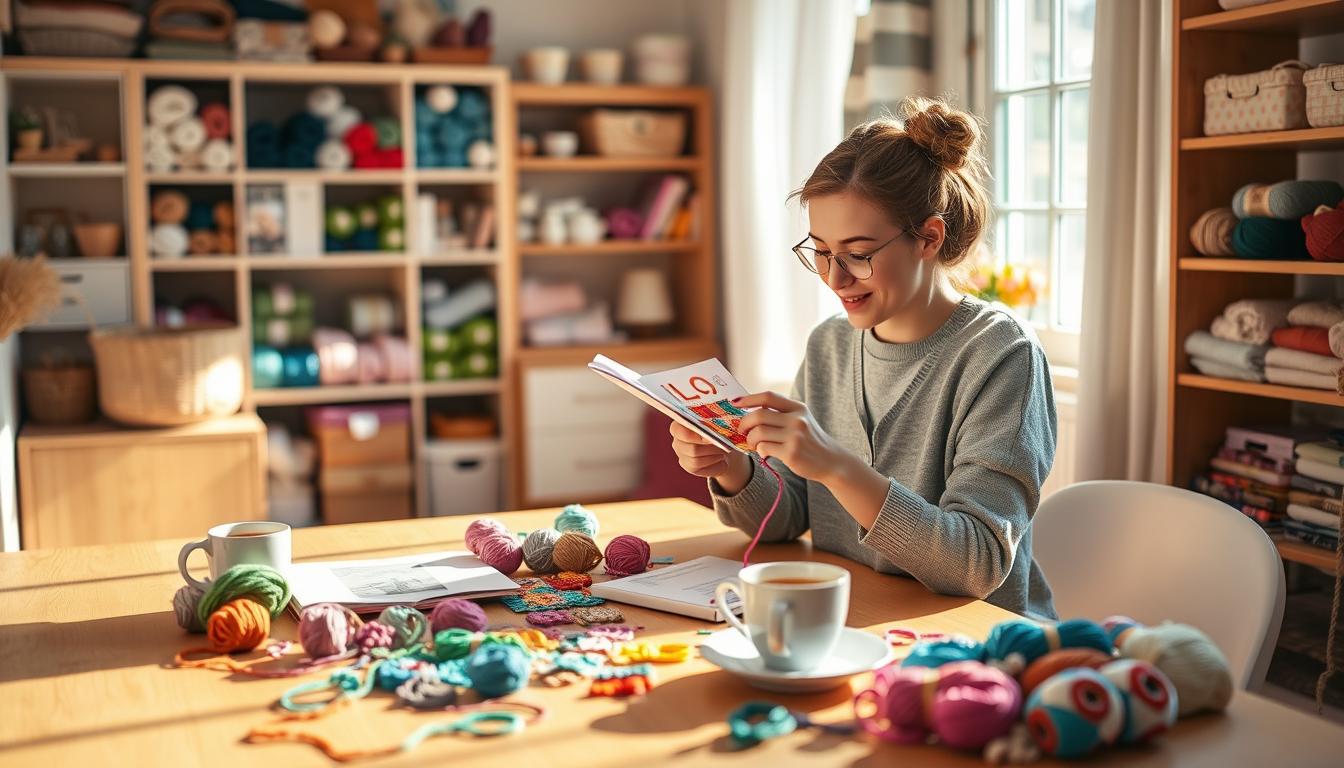
Crocheting is an easy and fun hobby. Many people in the United States ask, “How can I learn to crochet?” This beginner tutorial shows a clear path to start.
First, gather basic supplies. Then, make a slip knot. Next, learn how to hold the hook and yarn correctly.
Practice chain stitches and then work the single crochet stitch. These basics form a sequence that builds confidence fast.
You can learn chain and single crochet in a few hours of focused practice. After a few weeks of short daily sessions, you’ll feel comfortable.
Use short YouTube videos, step-by-step photo tutorials, and small written patterns to help each step. Start with quick projects like a washcloth or face scrubby to get repeatable wins.
Key Takeaways
- Follow a simple sequence: supplies, slip knot, hold, chains, single crochet for beginners.
- Most beginners learn the basics in a few hours and improve in weeks with short practice.
- Pair short videos with written steps for clearer learning.
- Choose small projects like a washcloth to build skill and confidence.
- Avoid buying many supplies at first; focus on one yarn and one hook to master crochet basics.
Getting started: Essential supplies and choosing beginner-friendly yarn and tools
Before you pick up a hook, gather a small kit that keeps practice simple and fun. Focus on a few reliable items so you learn stitches without fuss.
A tidy starter set builds confidence and saves time when you want to practice.
Recommended starter supplies for beginners
Start with one skein of worsted weight yarn and a comfortable hook. Many instructors suggest We Crochet Brava Worsted because it is smooth and easy to see.
Choose a solid, light color so stitches are easy to count.
Pick an I-9 hook (5.5 mm) or a Clover Amour 5.5 mm to begin. Add simple crochet tools: sharp scissors, a yarn (tapestry) needle for weaving ends, and a small tape measure.
Also include a few stitch markers. This small kit covers most early projects.
How to read a yarn label and match hook size
Yarn labels show a weight number and recommended hook sizes. Look for “4 / worsted” on the label to confirm you have medium-weight yarn.
The label often lists a hook size in millimeters and US letters. Use the printed recommendation to match your hook.
Fiber content and care instructions matter. Choose machine‑washable fibers like acrylic or washable cotton blends for easy care.
If your chains feel tight, try a slightly larger hook to improve tension and stitch formation.
Why simple materials help you learn faster
Thicker yarn and the right hook make stitch shapes clearer. A matched worsted weight yarn and I-9 hook create roomy loops that reduce hand strain and speed learning.
Fewer decisions mean you spend more time practicing.
Limit your palette to one solid color and a few basic crochet tools. That setup prevents decision fatigue and helps you spot mistakes.
With clear materials and a small, reliable kit, your practice sessions become more productive and enjoyable.
how can i learn to crochet
Start with a clear, simple plan to guide each practice session. Follow a beginner sequence from basic setup to finishing. These steps help you gain skill without overwhelm.
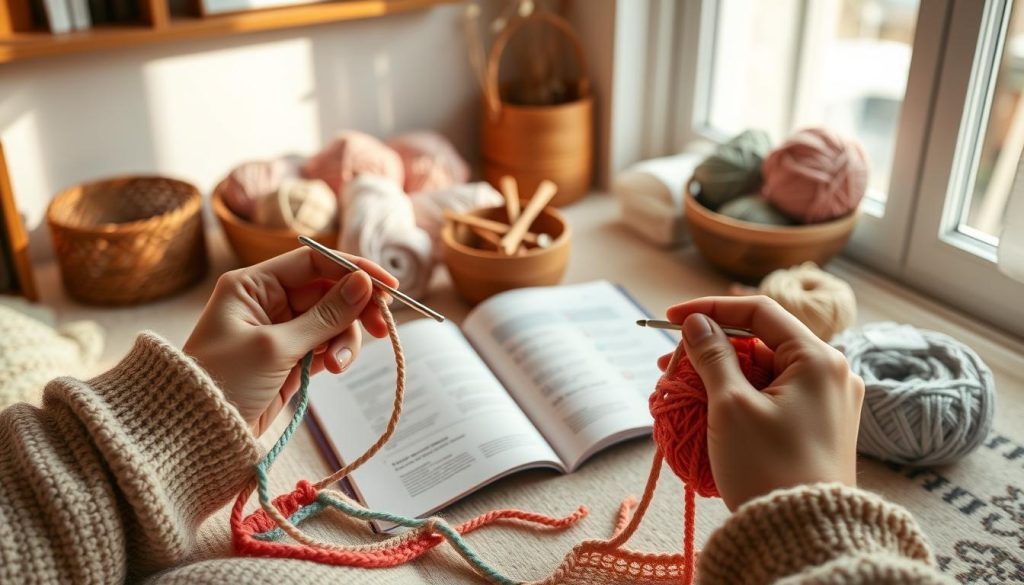
Step-by-step beginner sequence to follow
1. Attach yarn using a slip knot. Measure a 3–4 inch tail, form loops, pull one loop onto the hook, and tighten it so it can slide.
2. Find a comfortable hold. Try knife hold or pencil hold. Place yarn between your middle and index fingers and wrap it around your pinky or index to control tension.
3. Make a chain. Yarn over and pull through the loop on the hook to form chain stitches. The loop on the hook does not count as a chain.
4. Work single crochet using US terms. Skip the first chain or enter the second from the hook. Insert hook, yarn over, pull up a loop, yarn over, and pull through both loops.
5. Turn rows. Chain 1 as a turning chain, turn your work the same way each row. Insert the hook into the top V and work across.
6. Finish and weave in ends. After the last stitch, pull the loop to about an inch, cut yarn leaving 2 inches, pull through loop, and weave tail through stitches.
Practical tips to build good habits early
Make many small sample squares to practice tension and stitch counting. You can save them to create a patchwork project later.
Count the V-shaped stitches at the top of each row to avoid adding or missing stitches. If stitches feel tight, use a larger hook and relax your grip.
Turn your work the same way and use a chain 1 turning chain for straight edges. Stick with one holding method until you feel steady, then adapt as needed.
Short practice project suggestions
Start with a small washcloth or face scrubby. These quick projects use single crochet and build confidence fast.
Make practice squares of 10–20 chains and single crochet rows. Join them later into a blanket to see your progress.
Try a simple rectangular swatch to focus on rows and edge consistency. Use short YouTube demos and photo guides for extra help as you practice the beginner sequence.
| Practice Project | Skill Focus | Size | Time |
|---|---|---|---|
| Washcloth / Scrubby | single crochet steps, edge consistency | 8″ x 8″ | 1–2 hours |
| Practice Squares | crochet chain instructions, tension control | 4″–6″ squares | 30–45 minutes each |
| Rectangular Swatch | turn rows, stitch counting | 6″ x 10″ | 1–3 hours |
| Mini Blanket (joined squares) | beginner crochet sequence, joining techniques | 36″ x 36″ | Several sessions |
Common beginner techniques with how-to details and troubleshooting
Start here with quick, clear steps that make learning feel less intimidating. This section covers basics from making a slip knot to weaving in ends. These tips help your work look tidy and professional.
How to make a slip knot and attach yarn to the hook
Measure a tail about 3–4 inches. Wrap yarn around your index finger twice, then grab both tails with thumb and middle finger. Pull the back loop over the front loop, tightening the loop on the hook so it can still slide.
Use an alternate method if it feels easier. Form an X over two fingers, insert the hook under the first strand, grab the second strand, and pull through. Tighten and practice both methods until one feels natural.
How to hold your hook and yarn: knife hold and pencil hold
Two grips work well for beginners. The knife hold rests the hook like a knife in your palm for control. The pencil hold places the hook between thumb and index finger for precision.
For steady yarn tension, run the working yarn between middle and index finger. Wrap it around the pinky or other fingers as needed. Adjust until the yarn flows evenly without a tight grip. Compare knife hold versus pencil hold in practice sessions to find what fits your hands.
How to crochet a chain and count chains correctly
Yarn over and pull through the loop on the hook repeatedly to make chains. The loop on the hook does not count as a chain. Count the V-shaped chain stitches across the row when working into chains later.
If you make 11 chains and use the turning chain, you usually work 10 single crochets into the row. If chains feel too tight for the hook, try a larger hook or make larger loops while chaining.
How to work the single crochet stitch and turn rows
Insert the hook into the correct chain, usually the second chain from the hook. Yarn over and pull up a loop, so you have two loops on the hook. Yarn over again and pull through both loops.
At the end of a row, chain 1 as a turning chain, then turn your work. Insert the hook into the first V closest to the hook. Count crochet stitches each row to keep the same number. Hold the piece between thumb and middle finger to move the fabric and keep tension even.
How to finish a project and weave in ends neatly
To finish, yarn over and pull a loop about an inch long. Cut the yarn leaving 2 inches, then pull the yarn completely through the loop to secure. Thread that tail into a tapestry needle.
Weave in ends through the back-posts or inside stitches for a hidden finish. Don’t pull too tight or the edge may curl. Weave through several stitches or rows and trim close. If a small tail shows, gently stretch the row to tuck the end away.
Troubleshooting common beginner problems
Too-tight chains or stitches happen often. Try a larger hook and relax your hands. Loosen your grip while practicing.
Uneven edges usually mean inconsistent turning. Always chain 1 and count stitches at each row’s end.
If starts come loose or pieces unravel, check your slip knot method and weave in ends well. Missing or extra stitches are fixed by counting V-shaped stitches and using a stitch marker at each row’s start.
If feeling overwhelmed, pick small projects like washcloths. Watch short video clips and practice in brief daily sessions.
Conclusion
Learning to crochet is simple when you follow clear steps. Start with worsted-weight yarn and a 5.5 mm (I-9) hook. Learn the slip knot and how to hold yarn and hook.
Practice chains, then focus on single crochet and turning rows. Finish by fastening off and weaving in ends neatly. These steps create a strong foundation.
This foundation helps make complex patterns less scary. Expect to understand basics within a few hours. Comfort and speed develop after weeks of steady practice.
Small, regular sessions help avoid frustration and keep progress steady. If chains feel tight, try using a larger hook. Make sample squares to keep tension consistent.
Count the V-shaped stitches often. Weave in ends securely to make projects look neat. For next steps, try small projects like washcloths or face scrubbies.
Simple rectangles work well too. Use free patterns from trusted blogs and watch short video tutorials to improve. Join online groups or pattern support communities for help and motivation.
Focus more on practicing than buying new gear. This helps build your skills faster and keeps crochet enjoyable.
FAQ
How can I get started learning to crochet as a total beginner?
Start with a small, focused plan: gather basic supplies like worsted-weight yarn labeled “4 / worsted,” a 5.5 mm / I-9 hook, scissors, tapestry needle, stitch markers, and a tape measure.
Learn a slip knot, how to hold the hook and yarn, make chains, and practice the single crochet (US terms) worked back-and-forth in rows.
Finish by fastening off and weaving in ends. Follow short video demos and a step-by-step photo tutorial for each move, and keep practice sessions short and regular.
What starter supplies should I buy so I don’t get overwhelmed?
Keep it simple. Buy one skein of worsted-weight (size 4) yarn in a solid, medium color—We Crochet Brava Worsted is a reliable choice.
Start with a 5.5 mm (I-9) hook or the size on the yarn label, scissors, tapestry needle, stitch markers, and a tape measure.
Avoid buying many yarn types or fancy tools until you’re comfortable.
How do I read a yarn label and choose the right hook size?
Yarn labels show a weight number (4 = worsted) and recommended hook sizes. Pick yarn labeled “4 / worsted” and use the hook size printed on the label—often 5.5 mm / I-9.
The label also lists fiber content and care instructions. Choose a smooth, machine-washable yarn like acrylic or washable cotton blend for easy practice and care.
Why do simple materials help me learn faster?
Thicker, medium-weight yarn and the correct hook make stitches easier to see and handle, reducing frustration.
A single solid color helps you count V-shaped stitches. Limiting tools and colors prevents decision fatigue.
If chains feel tight, switch to a larger hook to keep learning comfortable.
What is the best step-by-step sequence for absolute beginners?
Follow this order: make a slip knot and attach it to the hook. Experiment with holding the hook and yarn (knife or pencil hold).
Practice making chain stitches and counting them. Learn the single crochet stitch (US), work back-and-forth in rows using a chain-1 turning chain, then fasten off and weave in ends.
Repeat short practice rounds to build confidence.
How long will it take to learn the basics?
Most beginners can learn the basic chain and single crochet stitches within a few hours of guided practice.
Becoming comfortable and consistent usually takes a few weeks of short, regular practice sessions.
Small daily practices help faster progress than long, infrequent sessions.
What practical habits should I build early to avoid frustration?
Practice small sample squares to refine tension and stitch counting. Count the V-shaped stitches at the top of each row and use a stitch marker to mark the first stitch or beginning of a row.
Keep your turning direction consistent and use a chain-1 turning chain for straight edges.
Relax your grip and adjust hook size if chains are too tight.
What are good first projects for early wins?
Choose quick, useful projects: a small washcloth, a face scrubby, practice squares (10–20 chains, single crochet rows), or a simple rectangular swatch.
These let you practice tension, turning rows, and finishing without getting overwhelmed.
How do I make a slip knot and attach yarn to the hook?
Measure a tail of about 3–4 inches. Wrap the yarn around your index finger twice or form a simple loop, pull the back loop over the front loop, and tighten the resulting loop onto the hook so it slides freely.
Another method is forming an X over two fingers, inserting the hook under the first strand, grabbing the second strand, pulling it through, and tightening.
What are the knife hold and pencil hold for the hook, and how should I hold my yarn?
Knife hold: hold the hook like a knife with the flat part resting in the palm.
Pencil hold: hold the hook like a pencil between thumb and index finger. For yarn tension, guide the working yarn between the middle and index finger and wrap it loosely around the pinky or finger to control flow.
Try both holds and pick the one that feels comfortable and steady.
How do I crochet a chain and count chains correctly?
Yarn over (wrap yarn over the hook from back to front) and pull through the loop on the hook to form each chain.
The loop already on the hook does not count as a chain. When working into chains later, count the V-shaped chain stitches across the row.
If you made 11 chains and one is the turning chain, you’ll work into 10 chains.
How do I work the single crochet stitch and turn rows evenly?
Insert hook into the correct chain (usually the second from the hook), yarn over, pull up a loop (two loops on hook), yarn over, and pull through both loops.
To turn, chain 1, flip your work the same way each time, insert the hook into the first V at the top of the stitch, and work across.
Keep stitch counts consistent and use a stitch marker for the first stitch if needed.
How do I finish a project and weave in ends so they don’t show?
After your last stitch, pull the yarn up about an inch, cut leaving ~2 inches, and pull the tail through the loop to secure.
Thread the tail onto a tapestry needle and weave it through the back or inside of stitches for several rows to lock it.
Avoid pulling too tight to prevent curling. Trim close and gently stretch the piece to hide any visible tail.
What are common beginner problems and quick fixes?
Too-tight chains or stitches: use a larger hook and relax your grip.
Uneven edges: use chain-1 turning chains and count stitches each row.
Missing or extra stitches: count V-shaped stitches and mark the first stitch. Loose tails or unraveling: weave ends through multiple stitches. Feeling overwhelmed: choose a tiny project and follow a short video plus a written guide.
What learning resources and formats work best for beginners?
Short video demos (around 8 minutes) paired with step-by-step photo tutorials and small written patterns offer the best reinforcement.
YouTube channels, blog photo guides, and free beginner patterns from reputable makers give both visual and written cues that help beginners learn faster.
After I master chain and single crochet, what should I try next?
Make more practice squares and join them into a small blanket, try larger rectangular washcloths, or explore basic increases, half double crochet, and simple texture stitches.
Small amigurumi basics come later. Keep projects short and satisfying while you build skills.
How can I keep improving without buying more supplies?
Practice with the same yarn and hook. Make multiple practice squares and repeat short projects.
Focus on tension, counting, and turning consistency. Join online crochet groups for tips and encouragement.
Short, regular practice sessions give bigger gains than buying new gadgets.