
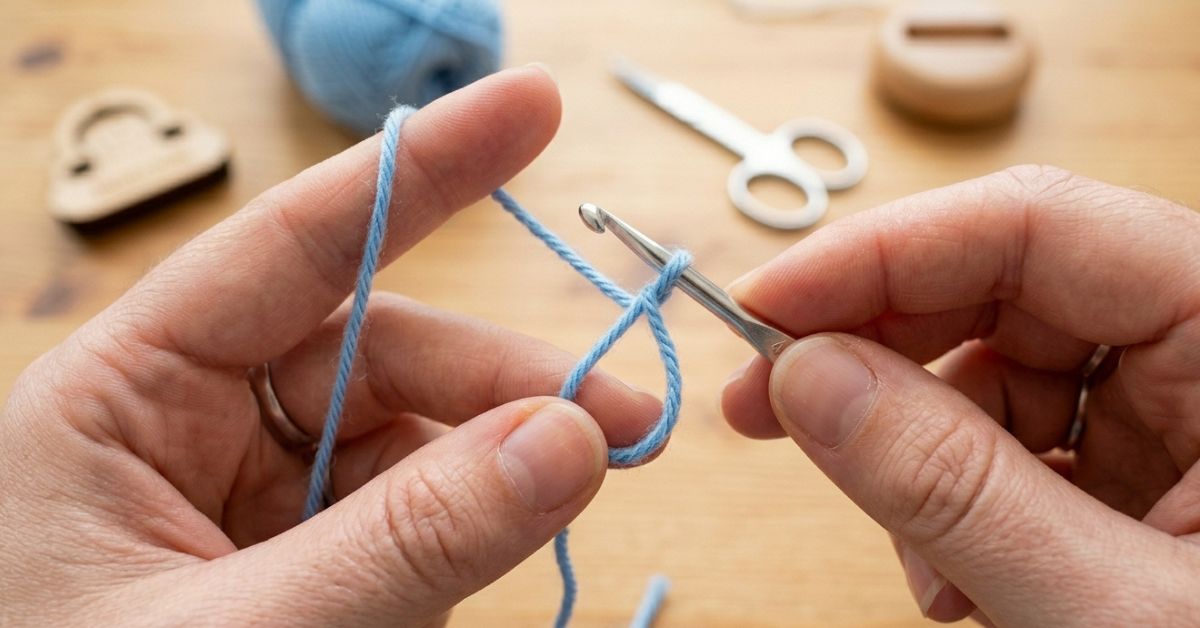
There is something truly magical about the way yarn transforms on a crochet hook, especially when you master a stitch that feels like a hidden treasure. If you have been browsing through crochet magazines or scrolling through your favorite maker inspiration feeds, you have likely stopped in your tracks at the sight of the star stitch. With its delicate, sunburst-like appearance and its thick, squishy texture, it is easily one of the most elegant patterns in a crocheter’s repertoire. While it may look intricate and perhaps a little intimidating to the uninitiated, I am so excited to show you that it is entirely achievable with a little bit of patience and the right guidance.
Whether you are dreaming of a heirloom-quality baby blanket for a shower gift or a luxuriously soft throw to drape over your favorite reading chair, the star stitch adds a touch of boutique-style sophistication to any project. It creates a dense fabric that holds its shape beautifully, making it perfect for winter home decor. In this tutorial, we will walk through the anatomy of the stitch, keeping things warm, encouraging, and clear, so you can confidently add this stunning texture to your creative collection. Grab a cup of tea, your favorite cozy yarn, and let’s get started on creating something beautiful together.
Quick Project Overview
- Skill Level: Intermediate (don’t worry, we will break it down!)
- Estimated Time: 15–20 hours for a full-sized lap blanket.
- Finished Size: Customizable; however, the pattern below is structured for a 36-inch x 48-inch lap throw.
- Best Use: Home decor, cozy living room throws, or a premium baby gift.
- Why You’ll Love It: The texture is incredible—it feels like a tiny, knitted-style fabric that is much warmer than standard double crochet stitches. It turns basic yarn into a masterpiece.
Materials Needed
To achieve the best results with the star stitch, I recommend a medium-weight (worsted) yarn with a bit of “bounce,” such as a wool blend or a high-quality acrylic.
- Yarn: Approximately 1,800–2,000 yards of worsted (size 4) weight yarn.
- Hook: Size I/9 (5.5 mm) crochet hook. (If your tension is naturally tight, bump up to a J/10 (6.0 mm) hook to keep the fabric supple).
- Extras: A tapestry needle for weaving in ends and a pair of sharp embroidery scissors.
- Blocking Mats: Highly recommended for this stitch to make the “star points” pop.
Stitches and Abbreviations
Understanding the language of the stitch is the first step to success. We will be using standard U.S. terminology:
- Ch (Chain): Yarn over, pull through the loop on your hook.
- Sc (Single Crochet): Insert hook into stitch, yarn over, pull up a loop, yarn over, pull through both loops.
- Hdc (Half Double Crochet): Yarn over, insert hook into stitch, yarn over, pull up a loop, yarn over, pull through all three loops.
- St/Sts (Stitch/Stitches): The individual loops along your row.
- Star Stitch (Special Sequence): A cluster of five loops pulled up through a series of spaces, completed with a yarn-over and chain to “cinch” the star shut.
Pattern Notes Before You Start
The star stitch is worked in rows, and it is a two-row repeat. The “magic” happens on the right side of the fabric, while the wrong-side row is typically a foundation row of half double crochets that sets up the next set of stars.
A note on tension: The most common challenge with the star stitch is pulling the loops up to the correct height. If your loops are too tight, the fabric will stiffen like cardboard; aim for a relaxed, even pull on each of the five pick-up steps. If you are a beginner, take your time on the first three rows—once you see the pattern emerges, you will find a natural rhythm.
Full Crochet Pattern
This pattern is written for a standard rectangular blanket.
Foundation
Chain an even number of stitches. For our 36-inch width, chain 120. Ensure your starting chain is not twisted.
Row 1
Starting in the second chain from the hook, work one sc in each chain across. Turn. (119 sc).
Row 2 (The Star Setup)
Ch 3. Insert hook into the second chain from hook and pull up a loop. Insert into the third chain and pull up a loop. Insert into the next 3 stitches of the row and pull up a loop for each. You should now have 6 loops on your hook. Yarn over and pull through all 6 loops. Ch 1 to “close” the star.
To continue the row: Insert hook into the “eye” of the star you just made and pull up a loop. Insert hook into the space between the last two loops of the previous star and pull up a loop. Insert hook into the base of the last star and pull up a loop. Insert into the next 2 stitches and pull up a loop. You now have 6 loops again. Yarn over, pull through all 6, and ch 1. Repeat from * across the row. End with one hdc in the last stitch of the row. Turn.
Row 3
Ch 2. Work 2 hdc in the center of every star stitch across the row. End with 1 hdc in the top of the turning chain from the previous row. Turn.
Row 4 (The Repeat)
Repeat rows 2 and 3 until your blanket reaches your desired length.
Finishing
After your final row, do not immediately fasten off. I love adding a simple single crochet border to give the piece a polished, professional frame. Work one round of single crochet evenly around the entire perimeter, putting 3 sc into each corner to keep the work laying flat.
Step-by-Step Tutorial Explanation
When you look at the crochet pattern, it might seem like a lot of steps, but once the yarn is in your hands, it’s much simpler. Think of the star stitch as a “pickup” stitch.
In the first row of stars, you are essentially gathering yarn from five different spots to create the legs of the star. When you do that final yarn over and pull through all loops, the “ch 1” is the most important part—that little tightener is what creates the hole in the center, giving the fabric its design. If you find your star looks a bit wonky, check your “pickup” spots; consistency in where you insert your hook is more important than speed. By the time you reach the third star in your first row, your hands will start to memorize the movement.
Common Mistakes to Avoid
The beauty of the star stitch requires a little precision. Here are the pitfalls I see most often:
- Tight Chains: If your starting chain is too tight, your blanket will have a curved edge that refuses to lay flat. Try going up one hook size just for the starting chain, then switch back to your regular hook for the rest of the project.
- Skipping the “Eye”: Many beginners forget to pull a loop through the eye of the star when starting a new one. This will cause your stitch count to plummet, and your blanket will turn into a triangle!
- Variable Loop Height: Because you are pulling up six loops at a time, each loop must be the same height. If one is loose and one is tight, the star will look lopsided. Take a moment to pull all six loops level before you yarn over to close the stitch.
Pro Tips for a More Beautiful Result
- The Blocking Secret: The star stitch can look a little “bunchy” while it is on the hook. Once you finish your blanket, give it a good steam block or wet block. Pin it out on a foam mat, pull those stars into shape, and let it dry. It will transform from a textured mess into a crisp, high-end piece of home decor.
- Yarn Choice Matters: Avoid dark, fuzzy, or mohair-style yarns for your first attempt. It makes it nearly impossible to see the “eye” of the star. A smooth, light-colored solid yarn is your best friend when learning this stitch.
- The Border: Because the star stitch creates a slightly wavy edge, a border is not just decorative—it is structural. It hides the minor inconsistencies in the edges and makes the transition from the star rows to the end of the project look completely intentional.
Variations and Personalization Ideas
The star stitch is incredibly versatile:
- Color Blocking: Because it is a two-row repeat, try changing colors every two or four rows. A gradient of blues or a soft cream paired with a sage green looks stunning for nursery decor.
- Mini Star Version: For a baby cardigan or a lighter accessory, you can use a lighter weight (DK) yarn and a smaller hook. It creates a finer, more delicate star that looks lovely on clothing.
- Mixed Texture: You can work two rows of stars and then two rows of simple double crochet. This breaks up the density of the fabric and makes the blanket slightly lighter and drapier.
Care Instructions
Since you have put so much love into these stitches, you want to keep them looking pristine!
- Washing: If you used an acrylic blend, a gentle machine wash on the delicate cycle is usually fine, but I always recommend placing the blanket in a large mesh garment bag to prevent snagging.
- Drying: Avoid high heat. Tumble dry on low or, better yet, lay your blanket flat to dry on a towel. This preserves the shape of the star stitches and prevents the edges from curling.
- Storage: Store folded rather than hung on a hanger, as heavy blankets can sag and lose their structure over time if they are pulling from their own weight.
FAQ
Is the star stitch good for beginners?
While it is technically an intermediate stitch, a determined beginner can absolutely master it. If you are comfortable with half double crochet, you already have the building blocks. Just practice on a small swatch—about 20 stitches wide—before starting your full project.
Why is my blanket getting smaller as I go?
This is a classic issue of missing the increase or decrease at the end of the row. Ensure you are counting your stitches at the end of the “hdc” row. If your stitch count drops, your piece will naturally taper, leading to that triangular shape.
Does this stitch use more yarn than other stitches?
Yes, the star stitch is a “yarn eater.” Because it uses multiple loops for every stitch, you will likely use about 20–30% more yarn than you would for a standard double crochet blanket. Make sure you buy an extra skein just to be safe!
Can I do this with variegated yarn?
You certainly can, but variegated yarn can sometimes obscure the definition of the star. If you love a multi-color look, try using a “self-striping” yarn that changes colors over long distances so the stars remain distinct.
Does the star stitch have a right side and a wrong side?
Yes, it does! The “right side” is the side where you work the star clusters. The “wrong side” is generally flatter. It is very easy to identify the right side as soon as you finish the star row, so just be mindful to keep track of which side you are on before you start a new row.
Conclusion
The star stitch is one of those timeless patterns that elevates a simple hook and string into something that looks like it came straight from a high-end home boutique. It honors the history of crochet while feeling fresh and modern in today’s interiors. Remember, your first star might look a little shy, but as you continue, the rhythm will become second nature, and you will find yourself wanting to put stars on everything!
Don’t be afraid to pull back your work if you make a mistake—we have all spent a few hours “frogging” (ripping out) stitches. It is all part of the creative process and the path to becoming a better maker. I hope this tutorial has given you the confidence to dive into this project and create something that keeps your family and friends warm for many years to come. If you found this guide helpful, stay tuned for more patterns and tutorials. Happy stitching!