
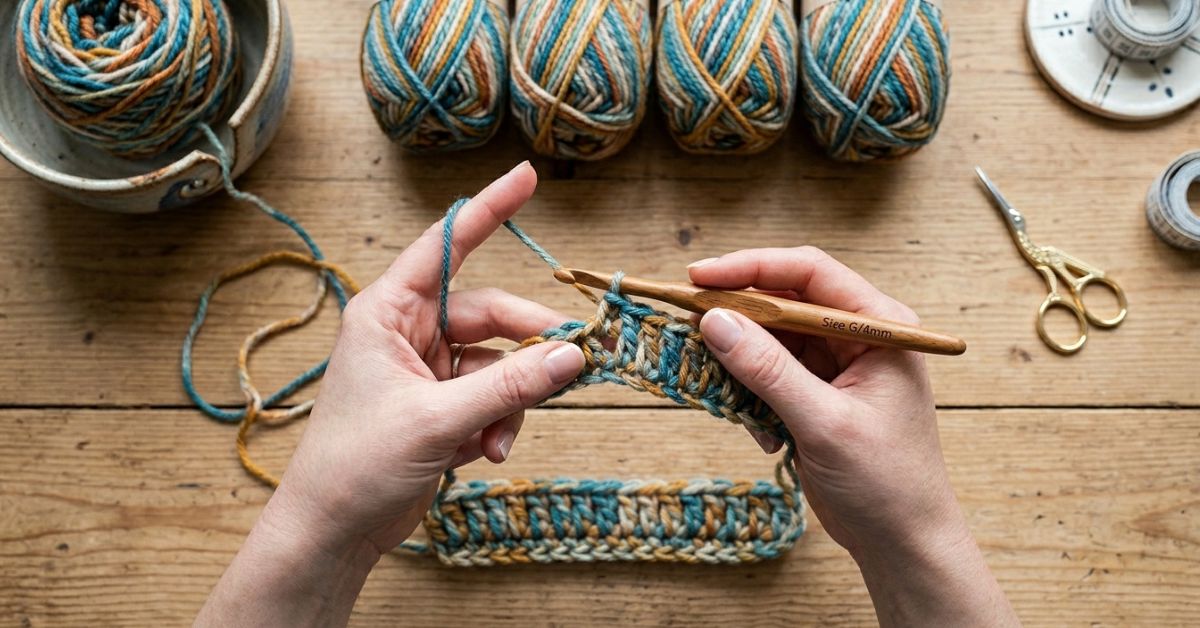
There is a unique kind of magic in starting a new crochet project. You have your favorite skein of yarn, a comfortable hook, and a vision for something beautiful. But often, the excitement hits a speed bump right at the beginning: the dreaded starting chain. We have all been there—trying to keep our chain stitches loose enough to work into, counting them over and over to ensure we have the right number, and then struggling to pick up those little loops once we finally reach the first row. It can feel like a chore before the real fun even begins.
If you have ever wished for a shortcut that makes your edges stretchier, more professional, and infinitely easier to work with, the foundation double crochet (FDC) is about to become your new best friend. By merging the foundation chain and the first row of double crochet into one fluid motion, you save time and achieve a beautiful, uniform edge that mimics the weight and drape of the rest of your fabric. This tutorial will walk you through the process, providing you with a seamless way to start your double crochet projects with grace, confidence, and a touch of professional flair.
Quick Project Overview
Whether you are crafting a cozy scarf, a classic temperature blanket, or a simple garment, mastering this technique will elevate your work instantly.
- Skill Level: Beginner-Friendly Intermediate
- Estimated Time: 15–20 minutes to practice the technique
- Finished Size: Customizable (you create the length as you go!)
- Best Use: Use this for any project where you would normally start with a chain followed by a row of double crochet. It is especially perfect for items that need a bit of “give” at the bottom, like sweater hems or blankets.
- Why You Will Love It: It eliminates the struggle of working into tight chains, provides a more stretchy and elastic edge, and gives you an instant view of how your piece will look as you build the foundation.
Materials Needed
You do not need anything fancy to practice this technique, but having the right tools makes a world of difference.
- Yarn: A medium worsted weight (4) yarn is best for learning. Choose a light-colored, smooth yarn so you can clearly see the stitch anatomy.
- Hook: Use the size recommended on your yarn label (usually a size H/8 or 5.0mm).
- Notions: A pair of sharp scissors and a tapestry needle for weaving in your ends.
- Alternatives: You can practice this technique with any weight of yarn, though I recommend starting with a standard acrylic or wool blend before trying it with very slippery or fuzzy fibers like mohair.
Stitches and Abbreviations
All terms are in standard U.S. crochet terminology.
- Ch (Chain): Yarn over and pull through the loop on the hook.
- Yo (Yarn Over): Wrap the yarn around your hook.
- Dc (Double Crochet): Yo, insert hook into stitch, yo and pull up a loop, yo and draw through two loops, yo and draw through remaining two loops.
- Fdc (Foundation Double Crochet): A combined stitch where the chain and the double crochet are worked together.
Pattern Notes Before You Start
The most important thing to remember is that the “Foundation Double Crochet” is a versatile technique. Unlike a traditional chain, where you have to decide your length before you start your actual stitches, Fdc allows you to keep going until your piece is exactly the width you want.
Tension is key here. Because you are creating a foundation and a stitch simultaneously, it is very common to feel like your hands are a bit “full.” Take your time. If your foundation feels tight, try going up a half or full hook size for just this first row, then return to your normal hook size for the subsequent rows.
Full Crochet Pattern: The Classic Washcloth
To practice your Fdc technique, let’s create a simple, elegant textured washcloth. This project is the perfect “low-stakes” way to master the foundation row while creating something practical for your home.
Part 1: The Foundation Row
- Start with a slip knot on your hook.
- Ch 3 (these count as the base of your first stitch).
- Yo, insert hook into the 3rd chain from the hook. Yo and pull up a loop (3 loops on hook).
- Yo and pull through only the first loop on the hook (this creates the “chain” base).
- Yo and pull through the next two loops (this creates the “dc” top). You have now completed your first Fdc.
- For the second stitch: Yo, insert your hook into that small “chain” loop you just created at the bottom of the previous stitch. Yo and pull up a loop.
- Yo and pull through the first loop only (again, the chain base).
- Yo and pull through two loops, yo and pull through two loops (the dc top).
- Repeat steps 6–8 until your work reaches your desired width.
Part 2: Building the Fabric
Once your foundation row is complete, turn your work as you would for any standard row.
- Ch 3 (this counts as your first double crochet) or ch 2 if you prefer a tighter edge.
- Dc in each stitch across the row, working into the tops of the Fdc stitches you just created.
- Repeat this row until the washcloth is a square.
Assembly and Finishing
Since this is a single piece, there is no seaming required. Fasten off your yarn, leaving a six-inch tail. Use your tapestry needle to weave the tail back and forth through the back of the stitches to secure it. If you want a polished look, add a simple single crochet border around the entire rectangle to frame your work.
Step-by-Step Tutorial Explanation
When you look at your foundation row, you will see a series of V-shapes on top—these are the standard “tops” of your stitches that you will work your next row into. Beneath those Vs, you will see a line that looks remarkably like a regular crochet chain.
If you find yourself confused while pulling through the loops, look at the stitch as three distinct events: the “hook-in,” the “chain-pull,” and the “double-crochet-pull.” By pulling through the first loop, you are essentially “chaining” forward. By pulling through the next two, you are finishing the double crochet. If you ever feel like you have lost track, just look for the “V” at the top and the “chain link” at the bottom. The space you need to insert your hook for the next stitch is always right there in that bottom link.
Common Mistakes to Avoid
Even experienced crocheters run into trouble with new techniques. Here is how to keep your work looking clean:
- The “Twisted” Chain: If your foundation looks like it is spiraling, pause! This usually happens if you rotate the hook while working. Keep your hook movement consistent.
- Tight Tension: If your starting edge is curling or puckering, you are likely gripping your hook too tightly. Practice keeping your fingers loose. Remember, this edge needs to stretch; don’t fight it!
- Miscounting: If you aren’t sure how many stitches you have, count the “Vs” at the top. The “chains” at the bottom can be deceiving, but the tops never lie.
- Forgetting the First Loop: The most common mistake is failing to pull through that first loop (the chain base). If you skip this, your row will look like a stack of dc stitches without a foundation, leading to a much tighter, shorter edge.
Pro Tips for a More Beautiful Result
For those who want that “wow” factor, consider these professional finishing tips:
- Blocking: Even simple washcloths benefit from blocking. Once you fasten off, soak your project in lukewarm water, gently squeeze out the excess, and lay it flat to dry on a towel. This relaxes the stitches and makes the Fdc edge look perfectly uniform.
- Hook Size: If you plan on doing a large sweater or blanket, consider using a larger hook for the foundation row and switching to your project hook for the later rows. It creates a bottom hem that is flexible rather than rigid.
- Stitch Markers: If you are working a long foundation row, place a stitch marker every 20 stitches. It saves you from having to recount the entire row if your mind happens to wander.
Variations and Personalization Ideas
The foundation method isn’t just for double crochet! Once you have mastered this, you can apply the same logic to single crochet or half double crochet.
- Make it Seasonal: Use a soft cotton blend for a spring/summer washcloth in pastels. Use a heavier wool-ease yarn for a cozy winter desk mat.
- Color Play: If you want a decorative edge, try working your foundation row in a contrasting color, then switch to your main color for the rest of the pattern. It acts like a beautiful “piping” effect.
- Home Decor: You can use Fdc to create the base for a tapestry wall hanging. Starting with Fdc provides a sturdy, straight edge that prevents the hanging from pulling or sagging at the dowel.
Care Instructions
For cotton washcloths, machine wash on a warm setting and tumble dry low. If you have used a wool blend, it is always best to hand wash in cool water and lay flat to dry to maintain the integrity of the fiber. Avoid using heavy fabric softeners, as they can coat the fibers and make your item less absorbent.
FAQ
Is foundation double crochet harder than a regular chain?
It feels a bit more complex at first because you are doing more steps in a single stitch. However, most crocheters find that once they practice the motion five or six times, it becomes “muscle memory.” Within an hour, you will likely find it easier than the traditional method.
Can I use foundation double crochet for any pattern?
Yes! You can substitute the foundation double crochet for any pattern that starts with a foundation chain and a row of double crochet. Just remember that your foundation row will count as your “Row 1.”
My foundation row looks thin compared to the rest of the pattern. What did I do wrong?
You might have had your tension too tight on the “chain” pull. Try to be generous with the yarn when pulling through those first loops. If it continues to look thin, sizing up your hook for just that row will solve the problem instantly.
Does the foundation row stretch as much as a regular chain?
It actually stretches better! Because the stitches are integrated, the fabric has much more elasticity and “bounce” than a chain-base, which can often be quite rigid.
Can I use this for stitches other than double crochet?
Absolutely. You can perform a foundation single crochet (Fsc) or a foundation half double crochet (Fhdc). The logic is exactly the same: yo (for hdc), insert hook, pull up a loop, chain 1, then finish the rest of the stitch.
Conclusion
The foundation double crochet is one of those “secret” skills that makes you feel like an absolute pro every time you start a project. By replacing the tedious, often frustrating process of the initial chain, you reclaim your joy and focus more on the rhythm of your stitches. Whether you are creating a simple washcloth, a beautiful summer top, or a gift for a loved one, this technique ensures your work has the professional, polished start it deserves.
Take your time with your first few stitches, stay patient with your tension, and most importantly, enjoy the process. Crochet is meant to be a relaxing, creative outlet, and finding little ways to make your process smoother is all part of the journey. Keep your hook close, your yarn stash cozy, and remember that every stitch you make is another step toward something truly one-of-a-kind. Happy crocheting!