
Introduction
There is something truly magical about the moment you pick up a crochet hook for the first time. Whether you were inspired by a cozy blanket spotted in a local boutique or you’re looking to master the delicate art of amigurumi, the journey of learning to crochet is a deeply rewarding path that connects us to generations of makers. However, as any crafter knows, deciphering written patterns and understanding the nuances of tension can feel a bit daunting when you are practicing alone in your living room.
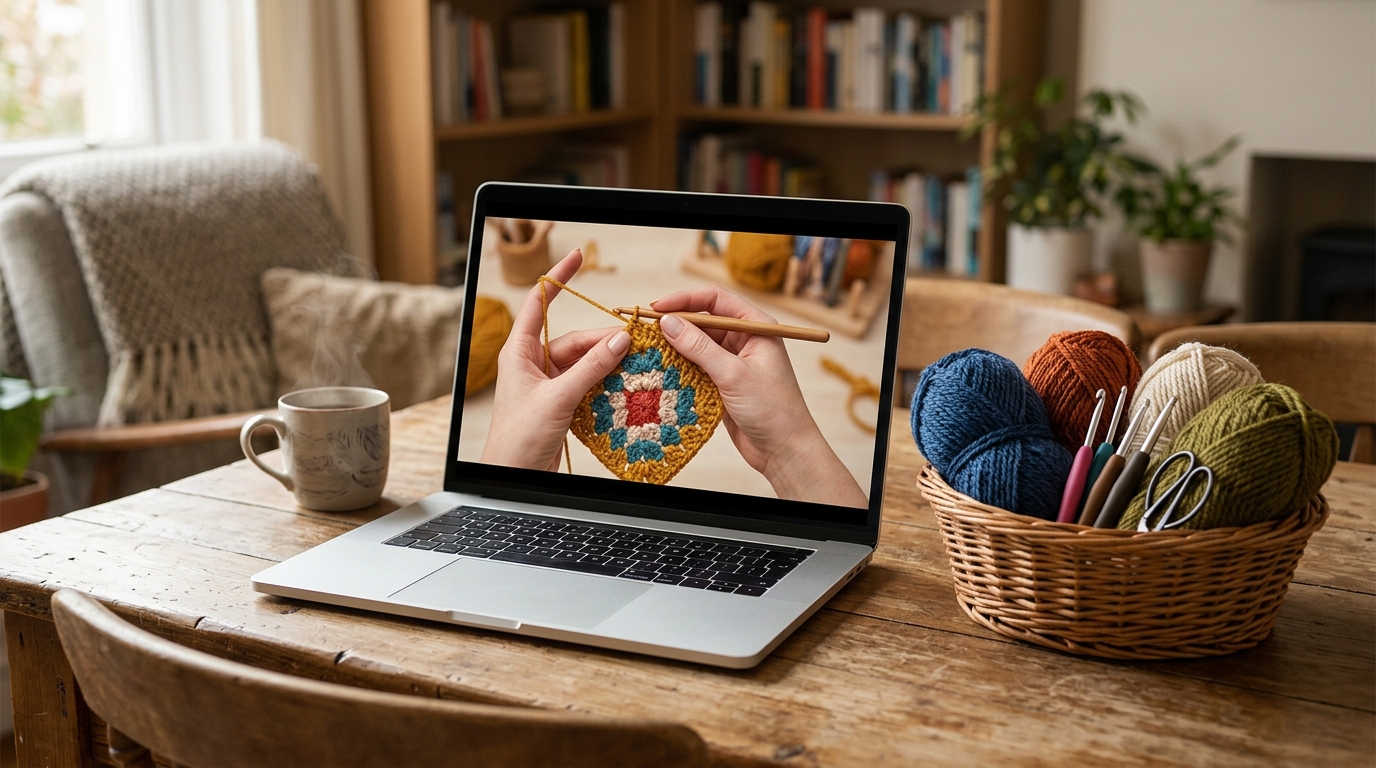
That is where the beauty of virtual crochet workshops comes in. Learning from experts through online classes allows you to bridge the gap between “I want to make this” and “I have officially finished my first project.” Virtual classes offer the perfect balance of convenience and expert guidance, bringing the intimacy of a local stitch group right to your home. You get to pause, rewind, and re-watch complex stitch sequences exactly when you need to. This guide is designed to help you navigate the world of online crochet education, ensuring you find the right workshops to grow your skills, gain confidence with your hook, and find joy in every loop you pull through. Whether you are a total beginner just learning your first chain or an intermediate crocheter looking to master complex cables and garment shaping, there is a virtual community waiting to welcome you.
Quick Overview
This guide is curated for anyone eager to level up their crochet game from the comfort of home. You will learn how to evaluate different types of online instruction, understand which platforms offer the best value for your specific learning style, and discover how to maximize your education to ensure your handmade projects look polished and professional. This information is designed for both absolute beginners who are just starting to gather their supplies and intermediate makers who want to move beyond the basics into advanced colorwork, lace, or clothing construction. Regardless of your experience level, this guide will help you understand how to vet instructors, identify what makes a digital course truly “beginner-friendly,” and how to translate online demonstrations into long-term creative skills.
How Virtual Crochet Classes Work
Virtual crochet education has evolved significantly, moving far beyond simple video tutorials. Today, you can engage with structured curricula that mimic the experience of a traditional classroom, often with the added bonus of lifetime access to your materials.
Live Workshops vs. On-Demand Courses
Live workshops are held in real-time via video conference platforms. These are fantastic if you crave interaction, as you can often ask the instructor questions on the spot and get immediate feedback on your posture or tension. On-demand courses, conversely, are pre-recorded lessons that you can access at any hour of the day or night. These are generally better for those with busy schedules or those who prefer to learn at a slower, more deliberate pace.
Interactive Communities
The best online learning experiences usually include a supportive community component, such as a private group forum or a dedicated chat space. This is where the magic happens—where you can share photos of your progress, celebrate finished projects with your peers, and get encouragement when a pattern feels tricky.
Tools You Need to Get Started
Before you commit to a workshop, you don’t necessarily need a mountain of supplies. In fact, most expert instructors encourage you to start simple.
- A Solid Set of Hooks: Start with a few standard sizes like G (4.0mm), H (5.0mm), and I (5.5mm). Having an ergonomic handle can be a game-changer for your wrist comfort during long video sessions.
- Quality Practice Yarn: Choose a light-colored, worsted-weight yarn. Light colors make it much easier to see your stitches during video lessons, which is essential when you are learning a new technique.
- Digital Setup: A tablet, laptop, or a phone with a stable stand is vital. You want to be able to place your device near your workspace so you can mirror the instructor’s movements without straining your neck.
- Lighting: Proper lighting is an often-overlooked tool. A clip-on desk lamp or a ring light can help you see your work as clearly as the expert on your screen, reducing eye strain and helping you spot dropped stitches early.
Crochet Terms and Key Concepts for Learners
When entering a new virtual class, you will quickly encounter industry-standard terminology. Understanding these concepts before you join a session will help you keep up with the instructor.
The Foundation of Every Project
Every project—whether it is a simple accessory or a complex clothing item—begins with the chain. It is the vital starting point. You will also need to be comfortable with the single crochet, which is the most common stitch in amigurumi, and the double crochet, which provides more drape for clothing or blankets.
Understanding Gauge
One of the most important concepts you will master in an intermediate-level workshop is gauge. This refers to the number of stitches and rows per inch. While you might ignore gauge for a simple scarf, it is the secret to ensuring a hand-knitted or crocheted garment actually fits. Don’t be afraid if your initial gauge samples look a bit wonky; that is exactly what instructors are there to help you fix!
Finishing Techniques
Expert classes often focus heavily on the “invisible” work: weaving in ends properly so your project doesn’t unravel after a few washes, and learning how to join squares or panels with clean, professional seams. These technical details are exactly what separate a “homemade” project from one that looks like it came from a high-end designer.
Helpful Notes for Online Learners
The most successful students in virtual workshops are those who know how to pace themselves. Here are a few tips to ensure you get the most out of your digital learning.
- Test Your Materials: Don’t start an expensive or complex project with a brand-new, luxury yarn. Practice the stitch patterns for an hour with a cheaper yarn so you don’t feel “stressed” if you have to frog—or unravel—your work to fix a mistake.
- The Power of the ‘Pause’ Button: One of the biggest advantages of online lessons is the ability to hit pause. If an instructor is moving through a complicated maneuver, don’t feel pressured to keep up in real-time. Practice the move 10 times until your hands understand it, then hit play.
- Join the Community: If your class comes with a Facebook group or a Discord channel, join it! Posting a question—even a simple one like “Why do my edges look wavy?”—often results in five different helpful tips from fellow students that you wouldn’t get in a static book.
Identifying Quality Instructions
When you are looking for the best virtual workshops, keep an eye out for these specific markers of excellence.
Clear Camera Angles
High-quality workshops prioritize the “crocheter’s perspective.” This means the camera should be positioned so that you see the stitch from the same angle as your own eyes, rather than watching the instructor from the front.
Well-Structured Handouts
A great instructor provides a downloadable PDF that outlines the materials, supplies, and any unique stitch abbreviations. Having this to print out and write notes on is far superior to trying to balance a laptop on your lap during a session.
Responsive Communication
Check the reviews of the course. Do past students mention that the instructor answers questions in the comments? A supportive teacher who replies to student inquiries is worth their weight in gold for a beginner gaining confidence.
Common Mistakes to Avoid
Even seasoned crafters make mistakes, but when you are learning online, some habits can be particularly tricky to break.
- Skipping the Swatch: It is tempting to skip making a gauge swatch, especially if you are excited to start a new project. However, not checking your gauge is the #1 reason why sweaters end up too small or blankets turn into trapezoids.
- The Tight Grip: Many beginners mistakenly grip the hook like a knife and pull the yarn far too tight. This makes it agonizing to insert your hook into stitches during the next row. If your work feels like a stiff board, stop, take a deep breath, and practice holding your yarn with a lighter touch.
- Twisted Foundations: When joining a long starting chain in the round, it is incredibly easy to twist the chain without noticing. Always lay your chain flat on a table before joining to ensure every “v” of the stitch is facing the same direction.
- Miscounting Stitches: Humans are prone to missing the last stitch of a row, which leads to your project slowly tapering into a triangle. Use a stitch marker in the first and last stitch of every row until you are experienced enough to spot them visually.
Pro Tips for Polishing Your Work
Looking to move from “DIY enthusiast” to “pro-maker”? These tips will elevate your finished pieces.
- Blocking is Your Best Friend: Whether it is a delicate lace shawl or a sturdy cotton bag, blocking your finished items—essentially dampening the piece and pinning it into the correct shape while it dries—is the magic secret that turns a slightly puckered square into a professional-looking garment.
- Consistent Tension: If your stitches fluctuate between loose and tight, your projects will look uneven. Practice your tension by making simple squares in different stitches. Focus on the rhythm of your hands. If you feel tense, put the hook down for five minutes.
- Learn to Weave Ends the ‘Correct’ Way: Instead of just tying a knot and snipping the yarn, weave your ends in through the back of several stitches in multiple directions. This ensures your hard work never comes apart in the wash.
Next Steps for Your Crochet Journey
Once you finish your first virtual workshop, don’t stop there! The beauty of crochet is that there is always something new to learn, whether it’s Tunisian crochet, intricate lace, or complex colorwork.
- Celebrate Your Creation: Take a photo of your work and share it. Receiving positive feedback from fellow makers is a huge motivator.
- Organize Your Supplies: As your yarn stash grows, keep a dedicated space for your works-in-progress (WIPs). Labeling your project bags means you can always jump back into a project without having to remember what hook size you were using.
- Find a Niche: You might find you love the meditative pace of blankets, or perhaps you feel a thrill of accomplishment when finishing a complex stuffed animal. Following your passion will keep you excited to log into your next workshop.
FAQ
How do I know if an online crochet class is beginner-friendly?
Look for course descriptions that specifically mention “absolute beginners” or “no prior experience needed.” The best classes will often list the specific techniques taught, such as how to hold the hook and basic chain, single, and double crochet stitches.
Can I really learn to crochet from a video?
Absolutely! The advantage of video is that you can watch the exact hand movements of an expert as many times as you need. It is often more effective than reading a diagram because you can witness the flow and rhythm of the yarn and movement in real time.
What should I do if I get stuck during a lesson?
Most reputable platforms have a way to contact the instructor or a community board. Don’t be afraid to take a screenshot of where you are stuck and post it online. The crochet community is incredibly kind and eager to help newcomers troubleshoot common issues.
Are there free virtual options available?
Yes, many creators offer free beginner mini-courses on platforms like YouTube or their own websites. These are excellent ways to get a feel for an instructor’s teaching style before you decide to invest in a more comprehensive, paid workshop.
How much time should I set aside for a workshop?
This depends entirely on your pace. Many people enjoy breaking sessions into 30-minute chunks. If you are a beginner, it is often better to practice for 30 minutes every day rather than trying to force a four-hour session all at once, as your hands will become fatigued until you build up muscle memory.
Conclusion
Learning to crochet is a journey of patience, beauty, and creativity. By enrolling in virtual workshops, you are giving yourself the gift of expert instruction at your own pace, in your own comfortable space. Remember, every master crocheter today was once a beginner who accidentally skipped a stitch or wrestled with a knot. Embrace the learning process, be kind to yourself when you make a mistake, and most importantly, enjoy the tactile, calming sensation of yarn moving through your fingers. Whether you are creating a gift for a loved one or a cozy piece for your own home, you are carrying on a timeless tradition. Pick up your hook, find a class that sparks your interest, and let your creativity grow one stitch at a time. Your next masterpiece is just a few loops away.