
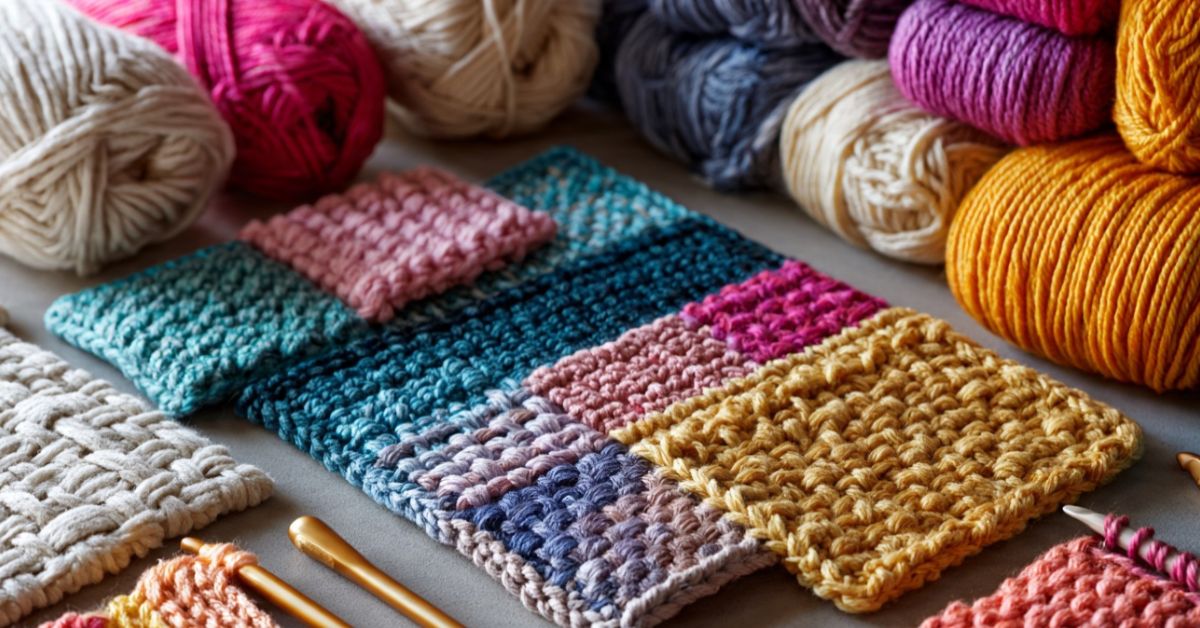
There is something uniquely magical about transforming a single strand of yarn and a hooked piece of metal into a beautiful, functional piece of art. For many of us, crochet is more than just a hobby; it is a creative sanctuary, a way to unwind after a long day, and a method of crafting heartfelt gifts for the people we love. Whether you are picking up a crochet hook for the very first time, feeling a bit overwhelmed by the technical jargon in your latest pattern, or looking to refine your technique to achieve more professional results, you have come to the right place.
Understanding the building blocks of crochet—your stitches—is the key to unlocking your full potential as a fiber artist. When you master the loops, you cease to be a “follower of instructions” and start becoming a “creator of textiles.” This guide is designed to be your friendly companion on that creative journey. We will walk through the foundational loops that every crocheter should know, move into some slightly more advanced techniques that will give your work a polished, high-end look, and equip you with the practical knowledge to tackle any pattern with confidence and grace.
What You Should Know Before You Start
This guide is curated for everyone, from the absolute beginner who is just learning how to hold their hook to the intermediate maker looking to sharpen their skills. You do not need to memorize every stitch overnight; crochet is a tactile skill that develops through consistent, gentle practice.
The most important takeaway is that crochet terminology varies globally, but throughout this guide, we will focus exclusively on standard U.S. crochet terms. This is the “language” most commonly used in patterns found in North America. By understanding the relationship between the chain, the height of your stitches, and the way you loop your yarn, you will soon find that reading patterns becomes second nature. Before jumping into the stitches themselves, remember that crochet is supposed to be relaxing. If you find your hands cramping or your stitches looking uneven, take a breath, set your work down, and come back to it. Our goal today is to make your practice more intentional and your finished projects more beautiful.
Essential Tools and Concepts
Before we dive into the anatomy of the stitches, let’s ensure you have the right mindset and basics. You do not need a vast collection of expensive tools to start. A single hook and a skein of medium-weight (worsted) yarn are all you need to begin your journey.
Understanding Yarn Weight and Hook Size
The rhythm of your crochet work is determined by the compatibility of your yarn and your hook. Most yarn labels include a recommended hook size. If you are a beginner, look for a smooth, light-colored, worsted-weight yarn—it makes seeing your stitch definition much easier.
Why Gauge Matters
“Gauge” is simply the measurement of how many stitches and rows fit into a specific square, usually four inches by four inches. While beginners often want to skip this, understanding gauge is what separates a custom-fitted sweater from one that doesn’t quite sit right. It is a measurement of your personal tension. No two crocheters crochet exactly the same way, and that is okay!
The Foundational Stitches
Every advanced project you see, from intricate lace shawls to heavy, chunky blankets, is built using a few core movements. Mastering these will give you the freedom to experiment.
The Chain Stitch
The foundation of almost every flat project, the chain stitch (abbreviated as “ch”) is your canvas. It creates the starting line. To make a chain, you yarn over and pull the hook through the active loop on your hook. The key here is consistency; try to keep your chains uniform in size. If they are too tight, your first row of stitches will be a challenge to insert your hook into.
The Single Crochet
The single crochet (abbreviated as “sc”) is your bread and butter. It is short, dense, and perfect for projects where you want a sturdy fabric, like amigurumi or dishcloths. To perform a single crochet, insert your hook into the stitch, yarn over, pull up a loop, yarn over again, and pull through both loops currently on your hook. This stitch provides a clean, V-shaped appearance that is the backbone of most crochet textures.
The Half Double Crochet
Think of the half double crochet (hdc) as the “bridge” between the short single crochet and the taller double crochet. It is a versatile, rhythmic stitch that works up faster than a single crochet but still maintains a nice, consistent fabric. To execute it, yarn over before inserting your hook, pull up a loop (you now have three loops on the hook), then yarn over and pull through all three loops at once.
The Double Crochet
The double crochet (dc) is the workhorse of the crochet world. It is taller and faster to build than the previous two stitches. Because it is looser, it creates a lovely drape, making it ideal for sweaters, scarves, and accessories. You yarn over, insert your hook, pull up a loop, yarn over, pull through two loops, yarn over, and pull through the remaining two.
Advancing Your Technique: Texture and Finishing
Once you are comfortable with the basics, you can start looking at more decorative stitches and professional finishing techniques. These are the elements that elevate a handmade item to a boutique-quality gift.
The Slip Stitch
The slip stitch (sl st) is the secret to moving across your work without adding height. It is used for joining rounds, creating invisible seams, and adding decorative edges to your work. A simple slip stitch border can transform a plain blanket into a finished, professional-looking heirloom.
Increasing and Decreasing
To shape your projects—think curves on a hat, the neck of a sweater, or the tapering of a sleeve—you must learn to increase and decrease.
- Increasing simply means working two stitches into the same stitch from the previous row.
- Decreasing involves combining two stitches into one, creating a clean slope or indentation. Mastering these two moves allows you to move from making simple rectangles to crafting three-dimensional pieces.
Working in the Back Loop Only
Sometimes, patterns will ask you to work “in the back loop only” (BLO). In a standard stitch, you see two strands of yarn forming a “V.” By inserting your hook only into the back strand of that V, you create a beautiful raised ridge of texture. This is a brilliant way to add depth to your projects without adding extra bulk.
Common Mistakes and How to Fix Them
We have all been there. You finish a row, count your stitches, and realize, “Wait, where did those extra two stitches come from?” Mistakes happen to every crocheter, no matter their skill level.
The “Shrinking” Row
If your work seems to be getting narrower, you are likely missing the very last stitch of the row. This is the most common pitfall. The final stitch of any row is often nestled right against the starting chain of the row below. Use a stitch marker to mark your first and last stitches until you are confident spotting them.
Tension Troubles
If your project is curling or feels stiff as a board, your tension is likely too tight. If it looks gappy or loose, your tension may be too light. Remember that your yarn should glide through your fingers. If you feel like you are wrestling the yarn, pause, loosen your grip, and perhaps try a slightly larger hook size.
Twisted Starting Chains
There is nothing more frustrating than joining a foundation chain for a round project only to realize it has a twist. To avoid this, crochet your first few stitches along the chain before you join them, or lay your chain flat on a table to ensure it is perfectly straight before you slip stitch it into a round.
Pro Tips for a Polished Result
If you want your projects to look like they came from a high-end studio, start paying attention to the “finishing school” details.
The Power of Blocking
Blocking is the process of gently misting or soaking your finished piece and pinning it into its final shape while it dries. This is a game-changer for crochet. It evens out your stitches, helps your lace patterns open up, and gives your fabric a professional drape. Never skip this step if your project involves garments or delicate motifs.
Weaving in Ends with Care
The best project can be ruined if the ends start unraveling. Always use a yarn needle to weave your ends in back and forth in at least three different directions. This creates a friction lock that keeps your ends secure, even after years of washing and wear.
Building Your Color Confidence
Color choice is deeply personal, but if you struggle with it, look to nature. A photograph of a garden or a sunset often contains a perfectly balanced color palette. If you are doing a multi-colored project, try using three shades of the same color (light, medium, and dark) for an effortlessly harmonious look.
Seasonal and Gift Ideas
Crochet is the ultimate gift-giving craft. Because it is handmade, it carries a sentimental value that is impossible to replicate.
- For Home Decor: Try chunky weight yarn and large hooks to whip up a set of modern coasters or a minimalist basket.
- For Baby Gifts: Always choose super-soft, machine-washable cotton or bamboo blends. A simple granny square baby blanket is a classic that never goes out of style.
- For Seasonal Flair: Accessories like beanies, cowls, and mittens are perfect for the colder months, while lightweight, lacy shawls make for lovely springtime projects.
FAQ
How can I tell if my crochet is too tight?
If your hook is difficult to pull through your stitches, if your finished work feels hard rather than fabric-like, or if your wrists start to ache quickly, your tension is likely too tight. Try relaxing your grip or moving up one hook size.
Which crochet hook material is best?
This is largely a matter of preference! Aluminum hooks are smooth and budget-friendly. Wooden or bamboo hooks are warmer to the touch and prevent the yarn from slipping too much. Ergonomic hooks with rubberized handles are excellent if you find yourself crocheting for long periods.
What does “fasten off” mean in a pattern?
Fastening off is the simple act of cutting your yarn, leaving a small tail, and pulling the end through the last loop on your hook to secure the knot. It marks the finish of that section or piece.
How do I fix a mistake without undoing the whole project?
If you catch a mistake early, the best way to fix it is to “frogging”—a term crocheters use because you “rip it, rip it.” Gently pull your hook out and pull the yarn until you reach the stitch before the mistake, then pick up your loops and continue.
How do I keep my edges straight?
“Turning chains” are the culprit for uneven edges. Make sure you are using the correct number of chains at the start of your row to account for the height of the stitch you are about to work (usually 1 chain for single crochet, 2 for half double, and 3 for double crochet).
Keep Growing Your Skills
The journey of a crocheter is one of constant discovery. Once you have a firm grasp on the basic loops, you can start combining them to create “bobbles,” “shells,” and “clusters,” which are simply variations of the techniques you have already learned. Do not feel pressured to move to intermediate or advanced projects immediately. There is deep joy in mastering the basics and finding the meditative rhythm that works best for you.
Keep a journal of your projects, noting which hook and yarn combinations you loved, and don’t be afraid to pull out a project and start over if it doesn’t feel right. Your hands are the tools, and with every stitch, you are becoming a more skilled and confident crafter. Welcome to this wonderful community—you have all the talent you need to create something beautiful, one loop at a time. Keep your hooks busy and your heart full of inspiration.