
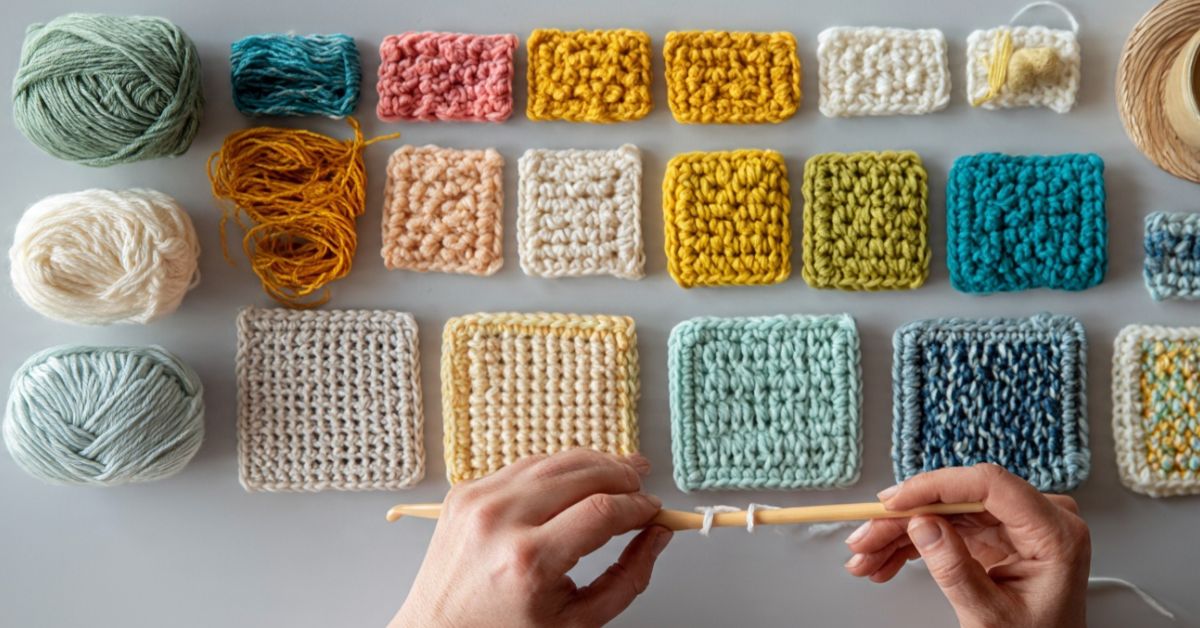
There is something truly magical about picking up a crochet hook and a ball of yarn, knowing that with a few rhythmic loops, you are about to create something beautiful from scratch. Whether you have been dreaming of making your own cozy home accessories or you are simply looking for a peaceful hobby to quiet the mind after a long day, you have come to exactly the right place. Crochet is more than just a craft; it is a gentle art form that allows you to infuse your personality into every stitch.
If you are a total beginner, please take a deep breath and relax. You do not need to be perfect to be a crocheter. In fact, some of the most beautiful projects are made by those who are just starting out. This guide is designed to walk you through the process step-by-step, providing the warmth and encouragement you need to feel confident. We are going to make a timeless “Cozy Hearth Crochet Potholder”—a perfect project that is both decorative and functional. It is a fantastic way to master the foundational skills, and by the end of this journey, you will have a gorgeous piece of handmade decor to brighten up your kitchen.
Quick Project Overview
- Skill Level: Beginner
- Estimated Time: 2–3 hours
- Finished Size: Approximately 7″ x 7″ square
- Best Use: Kitchen essential, housewarming gift, or practice piece
- Why You Will Love It: This project works up quickly, uses only basic stitches, and provides instant gratification. It is a low-pressure way to practice your tension and stitch consistency.
Materials Needed
To create your potholder, you will want to choose the right materials to ensure durability and heat resistance.
- Yarn: 1 skein of 100% Cotton, Worsted Weight (Size 4). Cotton is essential for potholders because it is heat-resistant and absorbent. Acrylic yarn can melt near high heat, so please stick to natural cotton fibers.
- Crochet Hook: Size H/8 (5.0 mm) hook. This size is standard for worsted weight yarn and will give you a nice, tight fabric.
- Tapestry Needle: For weaving in your ends securely.
- Scissors: Any sharp pair will do.
- Optional: A stitch marker to help keep track of your first and last stitches if you are a visual learner.
Stitches and Abbreviations
Understanding these standard U.S. abbreviations will help you read almost any pattern you encounter:
- ch (chain): Yarn over your hook, pull through the loop on your hook.
- sc (single crochet): Insert hook into stitch, yarn over, pull up a loop (two loops on hook), yarn over, pull through both loops.
- sl st (slip stitch): Insert hook into stitch, yarn over, draw through the stitch and the loop on your hook.
- st(s) (stitch/stitches): The individual loops you work into.
- FO (fasten off): Cutting the yarn and pulling the tail through the final loop to secure your work.
Pattern Notes Before You Start
Crochet is largely about tension—how tightly or loosely you hold your yarn. For a potholder, you want your stitches to be relatively snug so that there aren’t large holes where heat could pass through. If you find your stitches are looking very loose, try going down a hook size. If they are so tight that you can barely push your hook through, try to relax your grip or go up a size.
This pattern is worked in rows. You will turn your work at the end of every row, which ensures that both sides look identical and neat. Remember that the “ch 1” at the start of a row does not count as a stitch; it simply gives you the height needed to start your next row.
Full Crochet Pattern
Part 1: The Foundation
Start by making a slip knot and placing it on your hook.
Foundation: Chain 26.
Part 2: The Main Body
Row 1: Sc in the second ch from the hook and each ch across. (25 sts)
Row 2: Ch 1, turn. Sc in each st across. (25 sts)
Rows 3 through 35: Repeat Row 2. Continue until your piece is a perfect square. If you want it a little larger, simply add a few more rows.
Part 3: The Border
To give your potholder a professional, polished finish, you will work one round of single crochet around the entire perimeter.
Round 1: After finishing your last row, do not fasten off. Ch 1, and work one layer of sc evenly around the edges. When you reach the corners, work 3 sc into the same corner stitch to help it turn smoothly without puckering. When you reach the start, join with a sl st to the first stitch.
Part 4: Finishing
Fasten off, leaving a 6-inch tail. Use your tapestry needle to weave this tail back and forth through the stitches on the back side of your work. Weaving in your ends securely is the secret to a project that lasts for years. Do not simply trim the yarn; tuck it in well so it won’t unravel with use.
Step-by-Step Tutorial Explanation
When you begin Row 1, it might feel a bit awkward to stitch into the foundation chain. That is completely normal! Just try to keep a consistent tension. As you progress, look at your work: you are looking for a “V” shape at the top of every stitch. When you move to the next row, you will be inserting your hook under both loops of that “V.”
By the time you reach the middle, you will likely find that your hands have fallen into a rhythm. The movement becomes meditative. If you notice your edges are getting wider or narrower, stop and count your stitches. A common beginner hurdle is accidentally adding a stitch at the end or skipping the last one. Counting your stitches at the end of every row (you should always have 25) is the best way to ensure a perfectly straight, professional edge.
Common Mistakes to Avoid
Even experienced crocheters make mistakes! Here is how to navigate the common ones:
- The “Twisted” Foundation: Keep your chain flat when you start. If it twists, the remaining rows will be uneven.
- Miscounting Stitches: If your rectangle keeps growing into a trapezoid, you are likely adding stitches. Always double-check your count.
- Tight Tension: If your hook feels like it is “fighting” the yarn, you are likely gripping too tightly. Take a breath and loosen your posture. Your hands and wrists should feel relaxed.
- Poor Finishing: Never skip weaving in your ends. It is the invisible work that keeps your project from falling apart in the laundry.
Pro Tips for a More Beautiful Result
- Blocking: If your potholder looks a little wavy after you finish, soak it in cool water, gently squeeze it out (don’t wring it), and lay it flat on a towel, pinning it into a perfect square. Let it dry completely. This is called “blocking” and it works wonders for smoothing out stitches.
- Yarn Selection: If you want to make this a gift, choose a beautiful, solid-colored cotton yarn. A deep sage green or a soft terracotta color looks stunning in almost any kitchen.
- Consistent Hooks: If you find you enjoy this, consider investing in ergonomic hooks. They have softer handles that are much easier on your hands if you plan to crochet for more than 30 minutes at a time.
Variations and Personalization Ideas
Once you have mastered the basic square, your options are endless. You could work the first 15 rows in one color and the final 20 in another for a modern color-blocked look. Or, try adding a decorative loop in one corner by chaining 10, skipping a stitch, and slip stitching back into the corner, allowing you to hang your creation on a hook. For a more intermediate touch, you can even look up how to do a “crab stitch” border, which adds a beautiful, rope-like texture to the edge of your finished piece.
Care Instructions
Since this is made of cotton, it is designed for real life. You can machine wash your potholder on a gentle cycle. For the best longevity, lay it flat to dry. If you ever find it looking a bit “tired” after months of use, a quick wash and a little steam from an iron will make it look brand new again. Avoid using bleach, which can weaken the natural fibers over time.
FAQ
What should I do if I keep losing count of my stitches?
It is very common to lose count! Use a small stitch marker or even a scrap of yarn in a contrasting color to mark the first stitch of every row. This prevents you from accidentally skipping it when you return.
Why is my crochet looking like a triangle instead of a square?
You are likely missing the first or last stitch of each row. This is a very common beginner mistake. Try to count exactly 25 stitches at the end of every single row before you move on to the next.
Can I use acrylic yarn instead of cotton?
For this project, it is strongly recommended to use cotton. Acrylic is plastic-based and can melt if it touches a hot pan. Cotton is heat-safe and much safer for kitchen use.
Is it normal for my hands to hurt while crocheting?
If your hands or wrists are aching, it is a sign that you are holding the hook too tightly or working for too long without a break. Crochet should be gentle. Stop every 20 minutes to stretch your fingers and shake out your wrists.
How do I learn to read a pattern beyond this tutorial?
Reading patterns is a skill that comes with time. Start by looking at “written-out” patterns rather than just video tutorials. Over time, you will start to recognize the pattern shorthand automatically, and you will be able to tackle more complex designs.
Conclusion
Congratulations on beginning your crochet journey! Mastering the basic stitches is the most important step in building a hobby that will bring you joy for years to come. By completing this potholder, you have already practiced chains, single crochets, turning your work, and creating a clean border—these are the building blocks of almost everything you will ever make.
Remember that every single crocheter you admire started exactly where you are today. If your first project isn’t perfect, keep it! It is a beautiful record of your growth. When you look at the stitches that are a bit tighter or the ones that are a bit loose, you aren’t seeing mistakes—you are seeing the progress of your own two hands learning something new.
Feel free to bookmark this guide, and when you are ready, come back here to start your next adventure. Whether you decide to try a scarf, a baby blanket, or a kitchen set, you have the skills you need to succeed. Happy stitching, and remember to enjoy every single loop!