
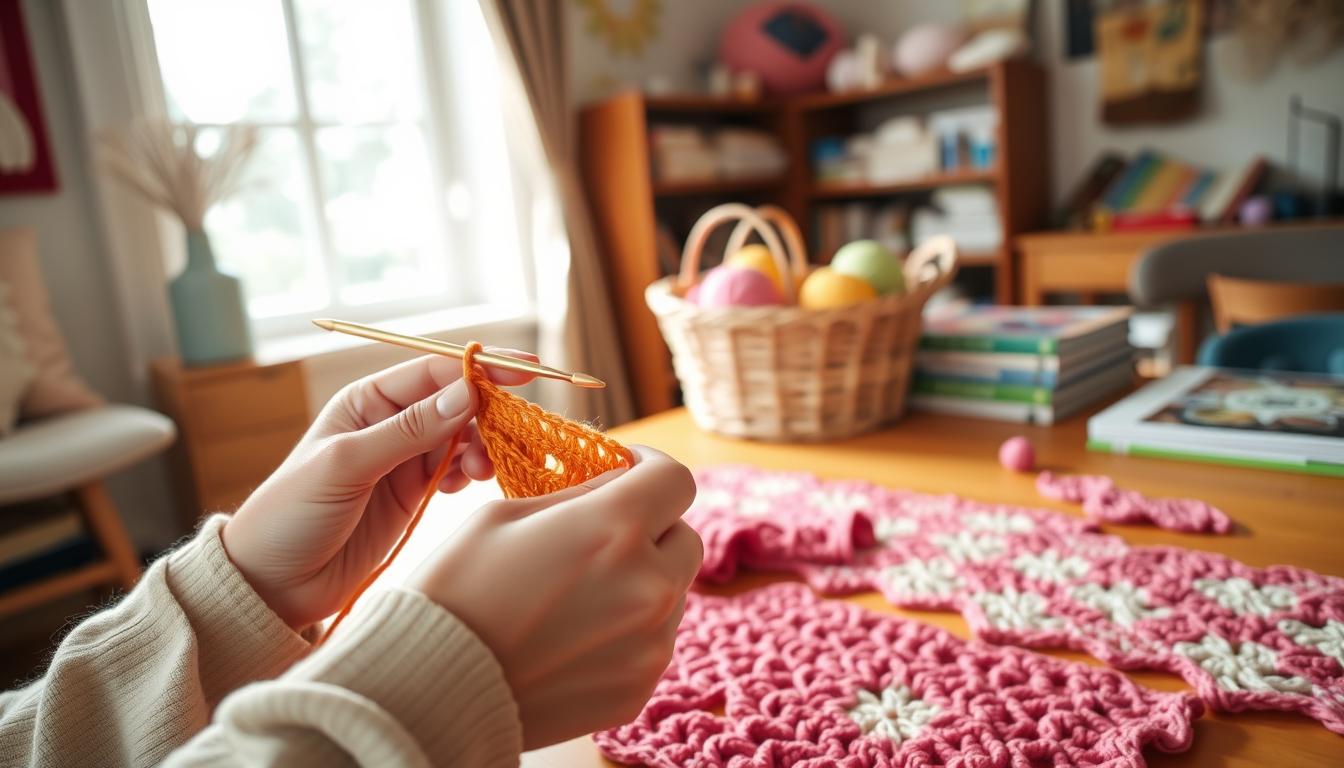
Welcome to a friendly, practical single crochet tutorial for anyone who wants to learn with confidence. This guide explains the single crochet stitch (SC) and why it is important. It forms the backbone of projects like scarves, afghans, amigurumi, and appliqués.
The techniques come from clear demos by makers such as Ashley of The Loopy Lamb. They also include community projects like Warm Up America! You’ll see short videos and picture guides. These work best for right-handed crocheters using American terms.
Start small by practicing on a 7″ x 9″ swatch of worsted-weight yarn. This helps you check gauge and stitch count. Use tools like Clover Amour crochet hooks (5.5mm/I-9) and We Crochet Brava Worsted yarn. Simple supplies and steady practice build muscle memory faster than big projects.
Key Takeaways
- Single crochet (SC) is a core stitch used in many patterns and is essential for other stitches.
- Use clear visual resources from creators like The Loopy Lamb and Warm Up America! for reliable instruction.
- Begin with a small practice swatch (7″ x 9″) in worsted-weight yarn to test gauge and build confidence.
- Clover Amour hooks (5.5mm/I-9) and We Crochet Brava Worsted are great tools and yarns for beginners.
- Patience and repetition help lock in tension and rhythm—a key tip from USA crochet makers for new stitchers.
Getting Started: Supplies, terminology, and basic setup
Before you start a single crochet project, gather some reliable crochet supplies. Choose a mid-tone worsted-weight yarn (size 4) like We Crochet Brava Worsted. This helps stitches show clearly in photos or videos.
Pick a comfortable hook. Many beginners find a Clover Amour hook in 5.5mm (I-9) easy to grip and forgiving for practice.
Keep a yarn needle with a large eye for weaving in ends. Have small scissors, a stitch marker, and a tape measure to check swatch size.
A mid-tone color helps when learning and sharing progress with others.
Recommended supplies for beginners
- Worsted-weight yarn (size 4) for consistent stitch size and easy handling.
- Clover Amour hook, 5.5mm (I-9), or a similar comfortable hook.
- Yarn needle, small scissors, stitch marker, tape measure.
Essential crochet terms and abbreviations
Learn the basic shorthand early. Common crochet abbreviations are SC, CH, and YO. SC means single crochet, CH means chain, and YO means yarn over.
A turning chain (CH 1) is the small chain at the row’s end that helps you reach the next row’s height.
When a pattern says “second chain from hook,” skip the loop on the hook and work into the next chain. Count stitches by the V-shapes on top of the chain or the loops along the edge.
How to hold your yarn and hook for comfort and tension
Find a hold that feels natural. The pencil hold and the knife hold are the two most common styles.
Try both and pick the one that reduces strain.
For steady tension, wrap the yarn around your pinky or loop it over the first two fingers. Small changes in how tightly the yarn rests against your fingers will change stitch size.
These practical tips help you get even rows and predictable swatches.
If your hands cramp, shift finger positions and take short breaks. You can also try making the yarn over with your pointer or middle finger.
Right-handed tutorials are more common. Left-handed crocheters should mirror motions or find left-handed videos when needed.
single crochet tutorial
Start with a clear and calm approach using simple tools. This short guide shows you how to single crochet. It begins with the very first loop and builds rows that shape into a scarf or swatch.
Follow each step slowly. Check your work often to learn tension and stitch placement well.
Step-by-step: make a slip knot and foundation chain
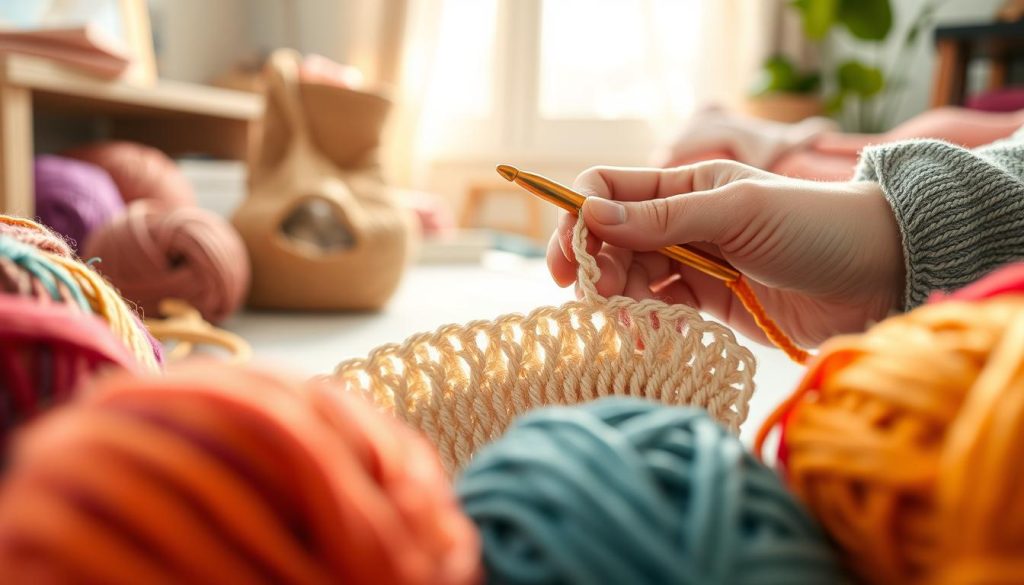
Make a slip knot with a tail about 4″ long so it fits the hook comfortably. Hold the yarn in your non-dominant hand and wrap it around your first two fingers. Cross the working yarn to form an X, insert the hook under the first strand, and pull the second strand through. Tighten by pulling the tail but leave the loop loose enough to move.
To form a foundation chain, follow this simple tutorial: yarn over (YO) by bringing yarn over the hook from back to front. Pull through the loop on the hook to create one chain (CH). Repeat until you have the number of chains needed. For practice, make 11 chains to work 10 single crochet stitches. Remember, the loop on the hook does not count as a chain.
Step-by-step: working the first row of single crochet
Insert the hook into the second chain from the hook. Aim for the center or top of the chain “V” or its back/left side. Yarn over and pull through to have two loops on the hook. Yarn over again and pull through both loops to complete one single crochet (SC).
Work one SC in each chain across, watching the V shapes to count stitches. If you started with 11 chains, you should end with 10 SC stitches. Use this step-by-step rhythm until the row is complete.
Working additional rows and turning your work
To begin row two, chain 1 as your turning chain. Then turn the work so you crochet back across.
Insert the hook under the top of the V of the previous row’s first stitch. Yarn over and pull through, then yarn over and pull through both loops to form a SC.
Repeat the CH 1, turn, SC across sequence until you reach the desired length. Keep an even edge by working into the last stitch of each row.
Common beginner mistakes and how to fix them
Skipping the last chain or missing the first stitch happens often. Recount the V shapes along your chain and inspect both edges carefully.
If you find a mistake, frog back to that spot and rework the row to fix the stitch count.
Tight slip knots or tight stitches can distort your work. Loosen the slip knot and try a larger hook while reworking tight sections.
Practice making chains with gentler tension to create smoother stitches.
Uneven tension shows as wavy edges or uneven stitch size. Try wrapping yarn around your fingers consistently. Switch how you hold the hook. Or use a different hook size for a better look.
Use photo-heavy tutorials from trusted creators like Annie’s or Yarnspirations to compare hand positions and stitch formation.
| Problem | Cause | Quick Fix |
|---|---|---|
| Too few stitches | Missed first or last stitch in chain | Recount V shapes, frog back to the error, rework row |
| Tight rows | Tight slip knot or tight chain tension | Loosen slip knot, use larger hook, practice looser chains |
| Uneven edges | Inconsistent tension or missed turning chain technique | Maintain steady finger wrap, use CH 1 as turning chain, compare photos |
| Stitches too tall or loose | Inconsistent yarn over motion or loose holding | Practice single crochet step-by-step, adjust finger position, try different hook |
| Repeated errors | Skipping visual checks and rushed work | Slow down, count frequently, follow a foundation chain tutorial for accuracy |
Troubleshooting, practice projects, and finishing techniques
Small problems are normal when you learn single crochet. Use simple checks and fixes to keep your work tidy and on size.
A short practice routine will save time and frustration later.
Start with a gauge swatch in worsted-weight yarn and a Size G/5.5mm hook.
A typical practice block measures about 7″ wide by 9″ long. If your swatch is too wide, reduce the beginning chain count.
If it is too narrow, increase the chain. Change hook size one step up for looser stitches or one step down for tighter gauge.
Recount the Vs and make sure you worked into the last chain. Insert the hook into the center of the chain’s V.
Check stitch count visually after each row to catch missed or extra stitches early. This habit prevents rip-outs later.
How to fasten off crochet
Cut the yarn leaving about a 6″ tail. Yarn over and draw that tail through the loop on the hook by pulling the hook straight up.
Pull snug to close the final stitch. Use a yarn needle with a large eye to weave in ends back and forth through stitches.
Weave tails along a neat path parallel to row lines. This creates a clean edge and stops unraveling.
Edge tips
Keep edge stitch tension consistent. When you weave in ends, follow the grain of the rows.
This hides tails and strengthens the border.
Single crochet practice projects
Choose small, rewarding items to build confidence. Simple scarf strips and practice squares are great for learning to maintain stitch count and tension.
Ribbed cowls reinforce consistent rows. Tiny amigurumi pieces and flower appliqués teach shaping and finishing.
Try a deluxe sleep mask, necklace, or gnome ornaments for variety.
Designers like Amelia Makes, The Loopy Lamb, Oombawka Design, and Golden Lucy Designs offer clear patterns for these items.
Join charity efforts by turning practice blocks into donation afghans for Warm Up America! or similar drives.
Helpful resources
Video instruction speeds learning for slip knots and single crochet motion. Search for crochet video tutorials to watch hand position, tension, and rhythm.
Pattern blogs and designer sites often include step-by-step photos and tips.
Communities add feedback and inspiration. The Crochet Guild of America provides education and resources for committed learners.
Ravelry groups, Facebook, Instagram, Pinterest, and YouTube channels let you ask questions and share progress.
Find single crochet practice projects there as well.
| Problem | Quick Fix | Resources |
|---|---|---|
| Swatch too wide | Reduce starting chain or use a smaller hook | gauge swatch examples, crochet video tutorials |
| Swatch too narrow | Increase starting chain or use a larger hook | gauge swatch charts, Ravelry discussions |
| Missing or extra stitches | Recount Vs; insert hook into chain V; fix row before continuing | crochet troubleshooting guides, Crochet Guild of America tips |
| Loose final stitch | Learn how to fasten off crochet and pull tail snug | how to fasten off crochet videos, weaving tutorials |
| Ends showing on edge | Weave in ends along row lines and keep tension steady | weave in ends techniques, pattern notes |
| Need practice plans | Pick beginner-friendly items: scarf, square, cowl, toys | single crochet practice projects, designer free patterns |
Conclusion
Mastering single crochet needs focused practice. Use short daily sessions to build muscle memory. Practice counting stitches until it feels automatic.
Follow single crochet tips, like working several short rows instead of one long marathon. Picture-heavy tutorials make technique easier to learn. They help when tension or stitch placement feels unsure.
After learning single crochet, try half double crochet and double crochet. This grows your stitch vocabulary and expands project options.
These stitches open doors to scarves, granny squares, ribbed cowls, and simple amigurumi pieces. These projects reinforce skills and give small wins.
Starting with small projects builds crochet confidence for beginners. Share your progress with fellow makers on Ravelry or social media. Explore free patterns from designers like The Loopy Lamb, Oombawka Design, Amelia Makes, and Golden Lucy Designs for guided practice.
For ongoing support, check resources like the Crochet Guild of America and picture-first blog tutorials. These help you keep learning and stay motivated while improving single crochet.
FAQ
What supplies do I need to start learning single crochet?
Start with worsted-weight (size 4) yarn—We Crochet Brava Worsted is a good example—and a 5.5mm (I/9) hook such as the Clover Amour.
Add a yarn needle with a large eye, small scissors, a tape measure, and an optional stitch marker.
Choose a mid-tone yarn color so stitches show up clearly in photos or video.
What do common crochet abbreviations mean?
SC means single crochet, CH means chain, YO means yarn over, and CH 1 is the turning chain at the end of a row.
“Second chain from hook” tells you to skip the loop on the hook and work into the next chain.
Count stitches by the V shapes along the top of chains and rows.
How should I hold my yarn and hook for comfortable tension?
Try the pencil hold or knife hold and pick whichever feels natural.
Wrap the yarn around your pinky or the first two fingers of your non-dominant hand to control tension.
If fingers cramp, change positions, take short breaks, or switch which finger you use for the yarn over.
How do I make a slip knot and foundation chain?
Make a slip knot with about a 4″ tail so it fits on the hook.
Hold the yarn in your non-dominant hand and loop it around your fingers, cross the strands, insert the hook under the first strand, pull the second strand through, and tighten so the loop still moves.
Yarn over (YO) by bringing yarn over the hook and pull through the loop to make a chain (CH). Repeat to create the desired number of chains.
The loop on the hook doesn’t count as a chain.
How do I work the first row of single crochet?
Insert the hook into the second chain from the hook (the first working stitch).
YO and pull up a loop (two loops on hook). YO again and pull through both loops to complete one SC.
Continue one SC into each chain across.
For 11 starting chains you’ll have 10 SCs across—count the V shapes to verify.
How do I work additional rows and turn my work?
At the row end, chain 1 (CH 1) as your turning chain, then turn the work.
Insert the hook into the top of the first V of the previous row, YO and pull through (two loops), YO and pull through both loops to make SC.
Repeat CH 1, turn, SC across until you reach the length you want.
Always work into the last stitch to keep stitch count consistent.
What common beginner mistakes should I watch for and how do I fix them?
Common issues include skipping the last chain or missing the first stitch—recount the V shapes and frog back as needed.
Too-tight slip knots or stitches can be loosened by reworking with a slightly larger hook.
Uneven tension improves with consistent wrapping or trying a different hook hold.
Compare your work to picture-heavy tutorials to confirm hand position and stitch shape.
My swatch doesn’t match the expected size. How do I troubleshoot gauge, width, and stitch count?
If your practice block is too wide, reduce the starting chain; if too narrow, add chains.
Try a larger hook for looser stitches or a smaller hook for tighter gauge.
Recount the Vs and be sure you’re inserting the hook into the center/top of each chain’s V.
Verify stitch count after each row.
How do I finish my work and weave in ends neatly?
To fasten off, cut the yarn leaving a ~6″ tail.
Yarn over and pull that tail through the loop on the hook, drawing the hook up to pull yarn through the last loop.
Use a yarn needle to weave the tail back and forth through stitches along row lines for a tidy edge and to prevent unraveling.
What are good beginner practice projects using single crochet?
Start with a small practice swatch or a 7″ x 9″ practice block.
Then try a simple scarf, a square for an afghan, a ribbed cowl, small amigurumi pieces, a flower appliqué, or ornaments.
These projects build muscle memory and confidence and are great for donation drives like Warm Up America!.
Where can I find reliable video and photo tutorials?
Look for picture-heavy, right-handed walk-throughs from makers like Ashley of The Loopy Lamb and designer blogs such as Amelia Makes, Oombawka Design, and Golden Lucy Designs.
Search YouTube for step-by-step videos and use Ravelry, the Crochet Guild of America, and social groups on Facebook and Instagram for community help.
What practice routine helps me improve fastest?
Short daily practice sessions focusing on consistent rows of single crochet speed up muscle memory.
Start with a small swatch, pay attention to tension and stitch count, and compare your work to photo tutorials.
Gradually move to simple finished projects to apply your skills.
What should I learn after mastering single crochet?
After SC, learn half double crochet (HDC) and double crochet (DC) to expand your stitch vocabulary and project options.
These stitches build on the same fundamentals—tension control, counting, and turning chains.
SC mastery makes the transition easier.