
There is something truly magical about the way a simple ball of yarn transforms into an adorable, three-dimensional plushie or a intricate home decor item. If you have ever looked at a crochet pattern for amigurumi and felt intimidated by the opening instruction, “Start with a magic loop,” you are certainly not alone. Many crocheters—both beginners and those who have been crafting for years—have found themselves tangled in yarn, frustrated by loose centers, or confused by the various techniques used to start a project in the round.
The magic loop, also known as the magic ring or adjustable loop, is one of the most transformative skills you can add to your crochet toolkit. It is the secret to achieving that perfectly tight, seamless center that makes your finished projects look professional and polished. By pulling the yarn end to cinch the stitches together, you eliminate that unsightly hole that often appears when starting a round with a traditional chain-stitch method. This guide is designed to be your gentle, step-by-step companion. We are going to demystify the process, turn that “magic” into a reliable technique, and ensure you feel confident and excited the next time you pick up your hook. Let’s create something beautiful together, starting from the very first stitch.
Quick Overview
This guide is designed for any crocheter who wants to master the art of the adjustable start. Whether you are a brand-new beginner looking to dive into your first amigurumi project or an intermediate crafter looking to refine your technique and improve the quality of your finished pieces, this guide is for you.
You will learn what the magic loop is, why it is the gold standard for projects worked in the round, the step-by-step process to create one, and how to troubleshoot the most common hiccups. By the end of this article, you will understand the mechanics of the loop, how to secure it, and how to work your first round of simple stitches with ease. This is the foundational skill that will unlock hundreds of patterns, from tiny crocheted animals to elegant coasters and hats.
Tools You Need to Practice
Before we begin, gather your supplies. You do not need anything fancy to practice this skill. In fact, using a specific type of yarn and hook will make the learning process much smoother.
- Yarn: Opt for a medium-weight (worsted/aran) cotton or acrylic blend. Avoid black or very dark colors; they make it difficult to see your stitch placement. A light, solid color like cream, sky blue, or soft pink is perfect for practicing because it allows you to clearly see the loop and the stitches you are creating.
- Crochet Hook: Choose a hook that corresponds to your yarn weight. For a worsted-weight yarn, an H (5.0mm) hook is a comfortable, standard choice for beginners.
- Stitch Markers: These are your best friend! They are essential for keeping track of where your round begins and ends, which is crucial when working in a spiral.
- Scissors: Just for trimming the yarn tail once you have secured your ring.
Crochet Terms and Concepts
To keep things straightforward, we will be using standard American crochet terminology. Understanding these few concepts will help you feel at home in any pattern:
- Round: Unlike rows in a blanket, which go back and forth, crochet projects that use a magic loop are generally worked in rounds—a continuous spiral or joined loops that form a circular shape.
- Single Crochet (sc): This is the most common stitch used in amigurumi. It creates a dense, sturdy fabric that is perfect for stuffed items.
- Working Yarn: This is the yarn that is actively coming from your skein or ball to your hook.
- Yarn Tail: The loose end of the yarn that is not attached to the ball; this is the “magic” string you will pull to close your circle.
- Stitch Marker: A small plastic or metal tool used to mark the first stitch of a round so you don’t lose your place.
Helpful Notes Before You Start
Mastering the magic loop is not about perfection; it is about muscle memory. If the first one feels clunky, please don’t be discouraged! It often takes a few tries for your hands to get used to holding the loop steady while you make your first few stitches.
- Tension is Key: Keep your grip relaxed. If you hold the yarn too tightly, it becomes difficult to pull the loop closed later. If you hold it too loosely, the loop might slip apart before you are ready.
- Practice with Purpose: Don’t worry about making a finished item during your first session. Grab a scrap of yarn and just practice making the loop, working six single crochet stitches into it, and pulling it closed. Do this ten times, and you will find that the movement becomes natural.
- The “Wait and See” Approach: Many beginners make the mistake of pulling the tail tight immediately after the first stitch. Keep the loop just loose enough to work your stitches comfortably, and save the cinch for when you have finished your first full round.
Step-by-Step Magic Loop Tutorial
Follow these steps slowly. If you find yourself getting confused, stop, breathe, and start over.
Creating the Foundation
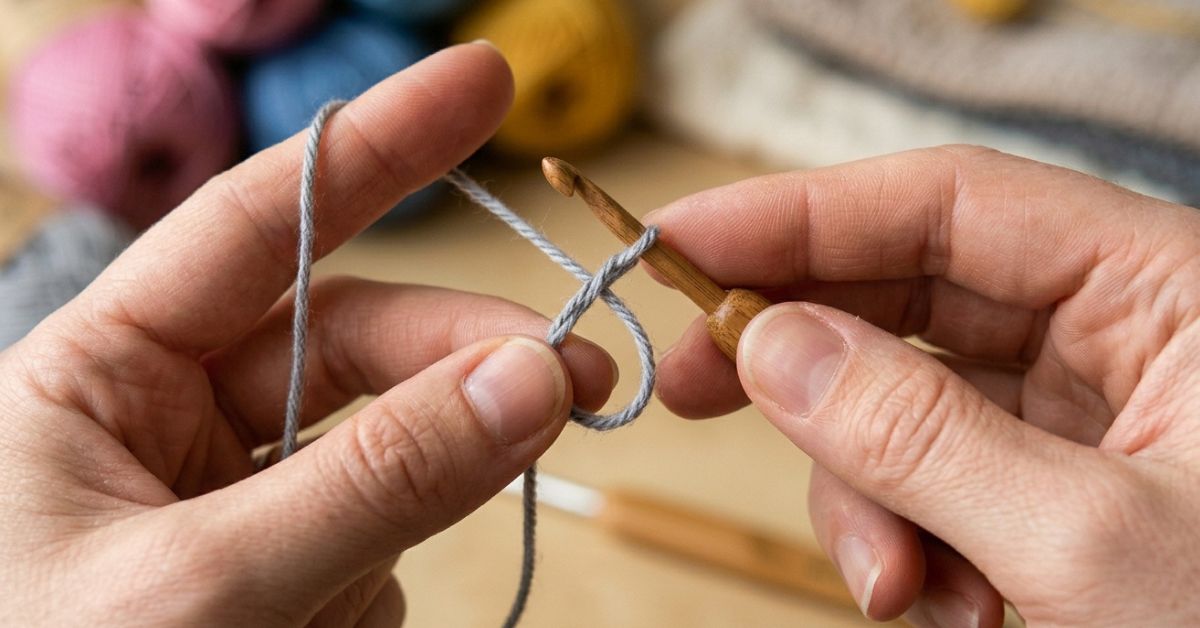
- Place the yarn in your left hand with the tail hanging down toward your palm.
- Wrap the yarn around your index and middle fingers, crossing over to create an “X” on the back of your fingers.
- Ensure the working yarn (the part attached to the ball) is positioned behind your fingers.
- Slide your crochet hook under the first strand of the “X” and hook the working yarn.
- Pull that working yarn through to create a small loop on your hook.
- Secure the loop by doing a simple chain stitch (yarn over and pull through). Your magic loop is now anchored!
Working Your First Round
- With your hook still inside the loop, yarn over and pull through the loop to create your first single crochet stitch. A single crochet usually involves drawing up a loop, then yarning over and pulling through both loops on the hook.
- Repeat this process until you have the number of stitches required by your pattern—usually six for a standard amigurumi start.
- Ensure you are working both the stitches and the yarn tail into the ring. This is what creates that strong, hidden closure.
Closing the Loop
- Once you have completed your required stitches, hold the stitches gently between your thumb and index finger.
- Locate the loose yarn tail. Slowly and gently pull it. You will see the circle tighten and the gap disappear!
- Once the hole is completely closed, you can pull firmly to secure the tail in place.
How to Apply This to Real Projects
Once you have mastered the basic loop, you will find it shows up in almost every amigurumi pattern. Think of the magic loop as the “anchor” of your stuffed creations. Because it is adjustable, you can pull it as tight or as loose as needed, which gives you complete control over the shape of your starting point.
If you are making a small, round plushie, the magic loop prevents the “stuffing” inside from peaking through the middle of the head or body. When choosing between a magic loop and the alternative (chaining 2 and working into the second chain), always prioritize the magic loop for objects that require stuffing or items meant to look perfectly round.
Common Mistakes to Avoid
Even experienced crocheters run into trouble occasionally. Here is how to keep your projects looking clean:
- Releasing the Loop Too Soon: If your loop comes undone, it is likely because you didn’t have enough tension on the stitches or you accidentally pulled the working yarn instead of the tail. Keep a firm grip on the loop until you’ve secured it with the first few stitches.
- Working Over Only One Strand: Ensure your stitches are worked over both the loop and the yarn tail. If you miss the tail, it will hang loose inside the project and won’t effectively close the ring when you pull it.
- Counting Errors: It is incredibly easy to lose count of your stitches in the first round. Use a stitch marker on every single stitch if you have to! A magic loop with 5 stitches instead of 6 will result in a pointier, more uneven base.
Pro Tips for a Polished Professional Finish
If you want your crochet work to look like it came out of a sophisticated boutique, keep these tips in mind:
- Tighten as You Go: If you are working a large number of stitches into the ring, pull the tail slightly halfway through to keep the circle from getting too massive and floppy.
- Weave the Tail Properly: After you have cinched the ring shut, don’t just cut that yarn tail off! Use a tapestry needle to weave it through the base of the stitches on the inside of the work. This prevents the ring from ever “popping” back open over time.
- The “Double Loop” Variation: If you are using a very slippery yarn, wrap the yarn around your fingers twice instead of once. This “double magic loop” is a bit sturdier and less likely to slide open while you are working your first round.
Personalization and Creative Variations
The beauty of the magic loop is that it is just a starter technique; the possibilities for what you can create afterward are endless. You can start a magic loop with different weights of yarn for entirely different effects. Using chunky, velvet-style yarns with a magic loop makes for the softest, most huggable baby toys, while using delicate lace-weight cotton with a tiny hook can create dainty floral appliques for clothing or hair accessories.
Try experimenting with variegated yarns to see how the color transitions look when they spiral out from the center—it often creates a unique, star-like pattern in the middle of your work!
Next Steps for Emerging Crocheters
Now that you have conquered the magic loop, what’s next? If you are feeling bold, look for a beginner-friendly amigurumi pattern—perhaps a simple sphere or an egg shape. These projects are almost exclusively worked in joined rounds using the magic loop, and they are the best way to practice increasing (making two stitches into one) to create shape and structure.
Remember, crochet is a hobby that thrives on practice. If your first attempt at a 3D crochet item looks a bit wonky, that is perfectly okay! That “wonky” project is a map of where you started. Keep your early pieces as a reminder of how quickly you improve with every single stitch.
FAQ
Why does my magic loop keep opening up?
If your loop keeps opening after you’ve pulled it tight, it is likely because the yarn tail wasn’t properly secured. Make sure to weave the tail into the back of your work with a tapestry needle, tying a small knot or weaving through the back loops of the first round to keep it anchored.
Is the magic loop better than the chain-2 method?
In almost every situation involving amigurumi, yes! The chain-2 method intentionally leaves a small hole in the center. The magic loop closes that hole completely. The only time you might prefer the chain method is if you are working with a fuzzy yarn where the loop is difficult to see or find.
What if I’m left-handed?
The steps for a magic loop are the same, just mirrored! Place the yarn on your right hand, and hold the hook in your left. The mechanics of the “X” and the hook movement remain identical—you will simply be working in the opposite direction.
Can I use the magic loop for blankets or flat squares?
Technically, yes, you can, but it isn’t the standard method. For projects that start from the center (like granny squares), a small chain circle is usually preferred. However, there are no “crochet police”! If you like the way a magic-loop start looks for a square, feel free to use it.
My hook keeps snagging on the yarn. Why?
This is often a sign of using a hook that is too small for your yarn. Try moving up one size in hook diameter. This will give you more breathing room to pull the loop through and make the process feel much less strenuous.
Conclusion
Getting comfortable with the magic loop is a major milestone in your crochet journey. It is one of those pivotal skills that separates the “newbie” phase from the confident creation phase. By eliminating those pesky gaps in the center of your work, you have unlocked the ability to create toys, decorations, and gifts that look just as good as the ones you see in books or online boutiques.
Don’t be surprised if you go through a phase where you want to use the magic loop for absolutely everything—it really is that satisfying! Keep practicing, stay patient with your hands, and most importantly, enjoy the therapeutic rhythm of the yarn moving through your fingers. You are building something unique and special, one stitch at a time. Happy stitching!