
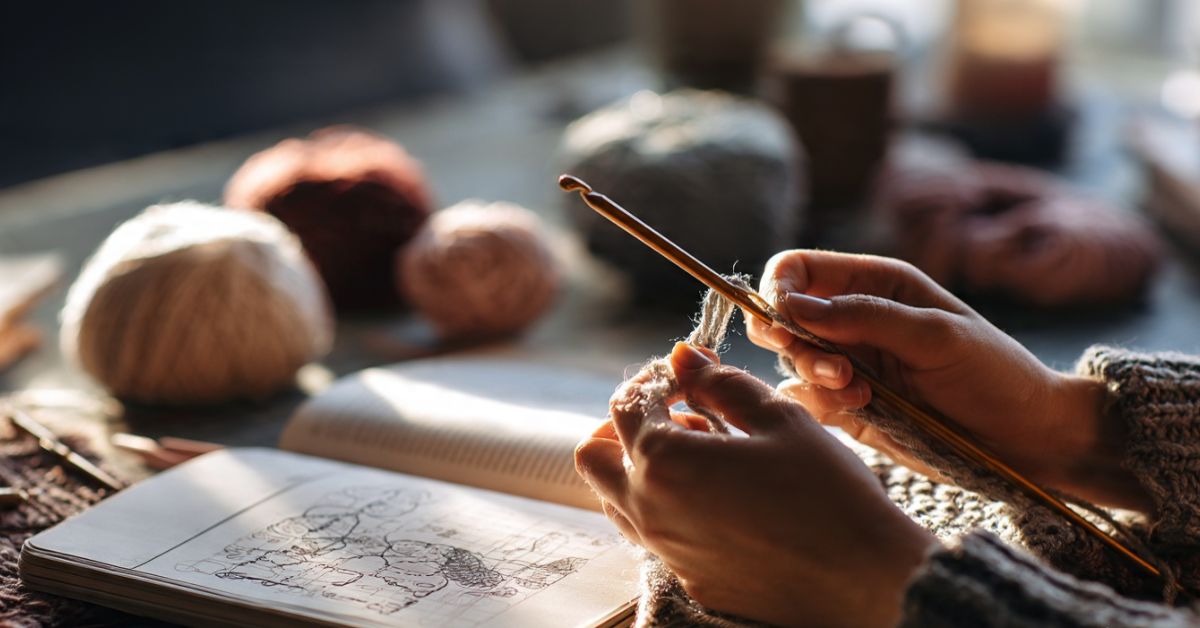
There is nothing quite like the feeling of picking up a fresh ball of yarn and a crochet hook. Whether you are looking for a creative outlet after a long day, wanting to craft a heartfelt gift for a loved one, or simply hoping to find a moment of peace in a busy week, crochet offers a beautiful, tactile way to slow down and create something truly special. If you have ever felt intimidated by the stacks of patterns or the complex terminology filling craft store books, please take a deep breath and know that you are exactly where you need to be.
Crocheting is a rhythmic, gentle art form that anyone can learn. We all start by struggling a bit with our tension or feeling like our fingers are tied in knots, but with a little patience—and the right guidance—you will find your flow. This guide is designed to walk you through the essential foundations of holding your yarn correctly and reading a pattern with confidence, leading you through your first beautiful project: a cozy, textured washcloth that serves as both a functional kitchen staple and a perfect practice piece to hone your skills.
Quick Project Overview
This project is designed with the absolute beginner in mind, though its texture makes it a lovely, quick-make project for intermediate crocheters looking for a meditative session.
- Skill Level: Beginner
- Estimated Time: 1 to 2 hours
- Finished Size: 8 inches by 8 inches
- Best Use: A luxurious addition to your home spa, a thoughtful hostess gift, or a reliable piece of everyday kitchen decor.
- Why You’ll Love It: This project utilizes the “Moss Stitch,” a combination of simple single crochet and chain spaces that creates a squishy, woven-like fabric that feels professional without the headache of advanced techniques.
Materials Needed
To create this project, you will need a few simple tools that you can find at any local craft supply shop.
- Yarn: One skein of medium (worsted) weight cotton yarn. Cotton is preferred for washcloths because it is absorbent, durable, and handles the heat of water well.
- Crochet Hook: Size H/8 (5.0 mm). This is a great “workhorse” hook for beginners.
- Tapestry Needle: For weaving in your ends securely.
- Scissors: Any sharp pair will do.
- Optional: A small stitch marker to help keep track of your first and last stitches if you find yourself losing count.
Stitches and Abbreviations
- ch (chain): Yarn over your hook and pull through the loop on your hook.
- sc (single crochet): Insert your hook into the stitch, yarn over, pull up a loop, yarn over again, and pull through both loops on the hook.
- sk (skip): Move past the indicated stitch without working into it.
- st(s) (stitch(es)): The individual loops or gaps you work your stitches into.
- turn: Turn your work horizontally so you can begin the next row.
Pattern Notes Before You Start
Success in crochet often comes down to tension—that balance of holding your yarn neither too tightly nor too loosely. If your hands feel cramped, take a break! A good rule of thumb is to hold your yarn in your non-dominant hand and the hook in your dominant hand, allowing the yarn to glide through your fingers with consistent pressure. You don’t need a perfect gauge for a washcloth, which makes this the perfect stress-free environment to practice maintaining that steady, rhythmic hold.
Full Crochet Pattern
This pattern is worked in rows. You will notice that the “Moss Stitch” creates little gaps where we place our stitches. Once you get the rhythm of working into those chain-space gaps, the pattern will practically grow itself.
Part 1: The Foundation
Start by creating a slip knot and placing it on your hook. Chain 32 (this gives you a nice, square width; if you want it larger or smaller, simply chain an even number).
Part 2: The First Rows
Row 1: Sc in the 4th ch from the hook. Ch 1, skip 1 ch, sc in the next ch. Repeat from until the end of the row. Turn your work.
Row 2: Ch 2. Sc in the first ch-1 space. Ch 1, skip the sc, sc in the next ch-1 space. Repeat from ending with a sc in the turning chain space from the previous row. Turn your work.
Part 3: The Body
Repeat Row 2 until the piece measures approximately 8 inches from the starting edge. Do not bind off yet.
Part 4: The Border
To give your washcloth a polished, finished edge: ch 1, and work 1 sc into every stitch and chain space around the entire perimeter of the washcloth. Work 3 sc into each corner to help the edges lay flat. When you reach the beginning, slip stitch to the first sc to close the round.
Part 5: Finishing
Fasten off your yarn by cutting a 6-inch tail. Pull the tail through the final loop on your hook and tighten. Using your tapestry needle, weave the tail in and out of the back of your stitches in different directions to ensure it won’t pull out during use. Clip the excess yarn.
Step-by-Step Tutorial Explanation
When you sit down to crochet, imagine your hands are a gentle guide for the yarn. The hook does the heavy lifting, but your non-dominant hand controls the “feed” of the yarn. As you work Rows 1 and 2, watch to see how the single crochet “anchors” the fabric while the chain space creates the “air” or the squish. If you look closely at your piece, you will see a beautiful, alternating texture forming. By the third row, you won’t even need to look at the pattern anymore; you will recognize the “chain space” visually as the little hole where your hook naturally wants to go.
Common Mistakes to Avoid
Even the most experienced crocheters make mistakes! Here are a few to watch out for:
- The “Tight Grip”: If your finished project feels stiff like cardboard, you are likely gripping your yarn too tight. If you find your shoulders are aching, relax them—a loose, supple fabric is much better for washcloths and garments.
- The Twisted Foundation: When working your first row into the chain, make sure your chain isn’t twisted like a necklace. Lay it flat on a table if you need to double-check.
- Counting Errors: The most common culprit for uneven edges is skipping the last stitch or working an extra one into the turn. Always count your stitches at the end of a row to ensure you have the same amount you started with.
- Ignoring the Turning Chain: Beginners often skip the turning chain, which causes the edges of their work to slant inward. Treat that turning chain like a real stitch—it is part of the architecture of your project.
Pro Tips for a More Beautiful Result
A beautiful crochet project isn’t just about following the instructions; it’s about the finishing touches.
- Blocking: This is the “secret sauce” of professional-looking crochet. Once your washcloth is finished, soak it in cool water, gently squeeze out the excess (do not wring it), and lay it flat on a towel while shaping it into a perfect square. Let it dry completely. This relaxes the stitches and makes the pattern look smooth and intentional.
- Consistent Tension: If you struggle with tension, try running your yarn through your fingers in a way that creates a slight “S” curve. This adds light friction, which helps keep the feed of the yarn consistent.
- Weaving Ends: Never just snip your yarn end close to the knot. Weave it in for at least an inch and go back the other way. This hides the tail completely and prevents the washcloth from unraveling after being tossed in the washer.
Variations and Personalization Ideas
Once you master this pattern, the possibilities are endless. You can make a set of three in varying shades of blue for a spa-themed gift, or use a soft, variegated yarn to create a washcloth that looks like a sunset. For a more sophisticated look, use a solid neutral tone like cream or sage green. Because this is a beginner-friendly design, it is also a wonderful base for adding a crochet flower applique or a decorative picot stitch border once you are ready to experiment with more advanced techniques.
Care Instructions
Since this washcloth is made from cotton, it is incredibly easy to maintain. You can toss it in your washing machine on a gentle cycle. To keep it soft and prevent it from becoming “scratchy,” skip the fabric softener, which can coat the fibers and reduce absorbency. Air drying is best for the longevity of the piece, though you can tumble dry on low if you are in a rush.
FAQ
How do I know if my tension is correct?
Your work should feel flexible and soft, not rigid. If the hook is difficult to insert into the stitches, you are likely working too tightly. Conversely, if the stitches look messy or overly large, you may need to apply a bit more tension to the yarn.
What should I do if I drop a stitch?
Don’t panic! It happens to everyone. If you catch it immediately, simply pull back (or “frog”) your work stitch by stitch until you reach the mistake, then re-insert your hook and continue.
Why does my piece look like a triangle instead of a square?
This usually means you are dropping stitches at the end of every row. Make sure you are working into the very last stitch of each row to maintain a straight edge.
Can I use acrylic yarn instead of cotton?
While you can, acrylic is not very absorbent. If you are making a washcloth for cleaning or bathing, cotton is much better. If you are making a decorative “towel” for a visual display, acrylic works just fine!
How do I hold my yarn so it doesn’t hurt my fingers?
Experiment with weaving the yarn through your pinky, ring, and index fingers. There is no “right” way—only the way that is comfortable for you. The goal is to create just enough friction so the yarn doesn’t slip off, without cutting off your circulation.
Conclusion
Learning to crochet is a journey of discovery, and you have just taken the first, most important steps. Don’t worry if your first few rows aren’t perfectly square or if your edges look a little wobbly; that is the character of handmade art. Every “mistake” is actually a lesson, and every completed project is a testament to the time and care you put into your craft.
Take your time, enjoy the cozy rhythm of your hook, and remember that there is no rush. Crochet is meant to be a joyful respite from the world. If you found this tutorial helpful, you might consider trying a different color palette for your next piece or perhaps exploring a slightly larger project like a hand towel or a kitchen coaster. The world of yarn is vast and welcoming, and you are officially a part of it now. Happy stitching!