
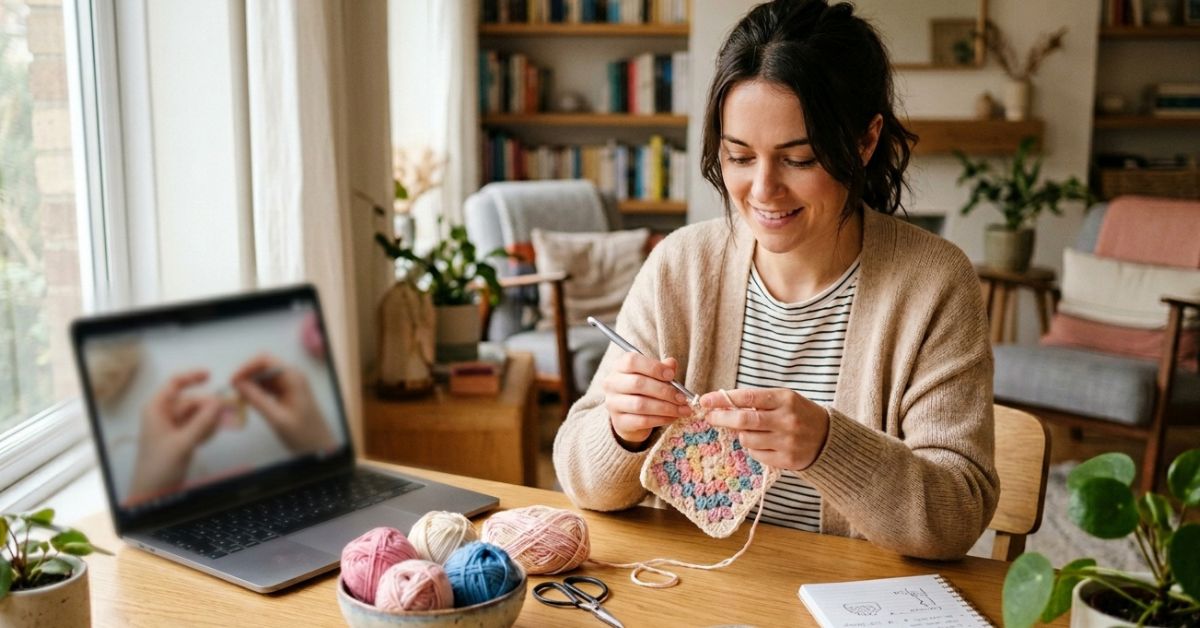
There is something truly magical about holding a hook for the first time. You look at a simple ball of yarn and a slender piece of metal or bamboo, and suddenly, you realize you have the power to create fabric from thin air. If you have been wondering how hard it is to learn to crochet, I want to start by offering you a gentle reassurance: it is much easier than it looks, and the journey is far more rewarding than you can imagine. Many beginners worry about coordinating their hands or holding the tension just right, but like any beautiful craft, crochet is a language of muscle memory. Once your fingers learn the rhythm, it becomes a meditative escape from the hustle and bustle of everyday life.
Whether you are dreaming of crafting a cozy heirloom blanket for your living room, a soft accessory to gift a loved one, or simply looking for a new creative outlet, you are in exactly the right place. Today, we are going to walk through the basics by creating a “Cozy Everyday Cotton Washcloth.” This project is the quintessential starting point for any maker. It is small, manageable, and teaches you the foundational stitches—the single crochet and the chain—that will serve as the bones of every single project you tackle in the future. Let’s pick up those hooks and begin this lovely journey together.
Quick Project Overview
This project is designed specifically for those dipping their toes into the fiber arts. It is a quick, satisfying “win” that allows you to see progress within just one afternoon.
- Skill Level: Absolute Beginner
- Estimated Time: 1 to 2 hours
- Finished Size: Approximately 8 x 8 inches
- Best Use: Use this as your first practice piece, a thoughtful handmade housewarming gift, or sustainable home decor for your bathroom or kitchen.
- Why You Will Love It: It uses only one basic stitch, which helps you master your tension without the stress of complex counting or increasing.
Materials Needed
To keep things simple, we are sticking to the basics. You don’t need a mountain of supplies to start crocheting—just a few essentials.
- Yarn: One skein of medium (worsted weight) 100% cotton yarn. Cotton is preferred for washcloths because it is absorbent, durable, and easy to wash.
- Crochet Hook: Size H/8 (5.0 mm). This is a standard, “middle of the road” size that is comfortable for beginners to handle.
- Tapestry Needle: Used for weaving in your yarn ends once the project is finished.
- Scissors: Any sharp pair will do.
- Measuring Tape: Optional, to ensure your square stays consistent.
Stitches and Abbreviations
Before we jump in, let’s get familiar with the shorthand. You will see these abbreviations throughout many patterns in your future.
- ch (chain): This is the foundation of most projects. You wrap the yarn over the hook and pull it through the loop already on your hook.
- sc (single crochet): Insert your hook into the stitch, yarn over, pull up a loop (two loops on the hook), yarn over again, and pull through both loops.
- st(s) (stitch(es)): The individual loops you create.
- YO (yarn over): Simply bringing the yarn over your hook from back to front.
Pattern Notes Before You Start
Crocheting is all about “tension”—how tightly or loosely you hold your yarn. As a beginner, your biggest hurdle is usually keeping that tension consistent. If you find your work curling or feeling stiff, try to relax your shoulders and hold the yarn a bit more loosely. Conversely, if your work feels holey or loose, try to wrap the yarn around your fingers to create a bit more resistance. Gauge is not critical for a washcloth, so don’t stress if your square isn’t perfectly square. The beauty of handmade items is in their individuality.
Full Crochet Pattern
This pattern is worked in rows flat, back and forth.
Starting Chain
Start by making a slip knot and placing it on your hook. Chain 32. This gives you a starting width of about 8 inches.
Rows 1 through 30
Row 1: Insert your hook into the second chain from the hook. Yarn over and pull up a loop. Yarn over and pull through both loops on the hook (this is your first single crochet). Place one single crochet in each chain across to the end. You should have 31 stitches total. Turn your work.
Row 2: Chain 1 (this is your turning chain and does not count as a stitch). Place one single crochet into the very first stitch and every stitch across the row. You should still have 31 stitches. Turn your work.
Rows 3 through 30: Repeat Row 2. Continue working back and forth until the fabric measures approximately 8 inches square, or until you are satisfied with the height.
Finishing
Once you have finished your final row, cut the yarn, leaving a 6-inch tail. Pull the yarn tail all the way through the final loop on your hook to secure it. Use your tapestry needle to weave that tail back and forth through the stitches on the back side of the washcloth to hide it securely. Repeat this process for your starting tail.
Step-by-Step Tutorial Explanation
If you are currently looking at your piece and wondering if it looks “right,” here is what you should see. As you work your first row, the single crochets will appear as a series of small, V-shaped knots lined up horizontally. When you turn your work at the end of a row, you are essentially starting the next layer of “V” stitches right on top of the old ones.
As you progress, try to look at the top of your work. You should see two loops (the front loop and the back loop) forming a braid-like pattern. When you start your next row, you will be inserting your hook under both of those loops. If you accidentally miss one, the fabric might look slightly different, but don’t panic—this is how we learn! Each row you add builds on the last, and by the time you reach row 15, you will likely find that your hands are moving much more fluidly than they were when you started.
Common Mistakes to Avoid
Even the most famous designers started with these exact hurdles. Don’t feel discouraged if you encounter them.
- The “Vanishing” Stitch: Beginners often accidentally skip the very first or very last stitch of a row, causing their piece to lean inward like a trapezoid. Use a stitch marker (or even a small scrap of different colored yarn) to mark the first stitch of every row so you know exactly where to go.
- Tight Tension: If you find it nearly impossible to push your hook through the loops on the second row, your starting chain was likely too tight. Try using a hook one size larger just for the foundation chain to keep it loose.
- Twisted Chain: Sometimes your starting chain twists like a spiral as you work. Take a moment to lay it flat on a table before you begin your first row of single crochet to ensure it is straight.
Pro Tips for a More Beautiful Result
Once you have mastered the basics, here are a few ways to elevate your projects from “handmade” to “professional.”
- Consistent Tension: Practice is your best friend. Set aside 10 minutes a day to do a few rows. Your muscle memory will develop much faster with short, daily practice sessions than with one long, exhausting marathon.
- The Power of Blocking: Many beginners don’t know that after a project is finished, you can “block” it. Simply dampen your washcloth with cool water, lay it flat on a towel, and gently stretch it into a perfect square, pinning it in place as it dries. This simple trick makes your stitches look uniform and professional.
- Weaving Ends: Don’t just trim your tails short! Weave them in at least an inch in one direction, turn, and weave them back in the other direction. This ensures they won’t poke out after the item has been through the wash.
Variations and Personalization Ideas
While a simple washcloth is perfect as-is, you can easily adapt this pattern for other occasions.
- Seasonal Colors: Use warm earth tones for a cozy fall vibe, or bright, cheerful pastels for a spring-themed bathroom set.
- Adding Texture: Once you feel comfortable with the single crochet, try alternating a row of single crochet with a row of double crochet. This subtle change in stitch height creates a beautiful, rippled texture.
- Gift Sets: Crochet three washcloths in coordinating colors, tie them with a piece of natural twine and a sprig of dried lavender, and you have the perfect handmade gift that feels luxurious and thoughtful.
Care Instructions
Since we used cotton, caring for your washcloth is simple. You can machine wash it in warm water with like colors. For the best longevity, I recommend tumbling it on low heat or, even better, laying it flat to air dry. This prevents the cotton fibers from breaking down too quickly and keeps the fabric soft for your skin. Avoid using heavy fabric softeners, as they can sometimes coat the cotton fibers and make them less absorbent over time.
FAQ
How do I know which size hook to use?
Every yarn label comes with a recommendation for a hook size. Start by following that. If you find your stitches are too tight, move up by 0.5 mm. If they are too loose, move down.
Is crochet expensive to start?
Not at all. A single skein of high-quality cotton yarn and one hook will cost you less than a coffee and a snack at many cafes. It is one of the most accessible hobbies available.
Why does my work look different than the photo?
“Handmade” means it will look like yours, not like a factory-made product! Differences in tension and yarn choice define your personal style. Embrace those differences.
How do I fix a stitch if I mess up?
Don’t be afraid to “frog” it (a term crocheters use for undoing stitches; you just “rip-it, rip-it”). Simply pull the yarn gently to undo your stitches back to where you made the error and start again.
Can I crochet if I am left-handed?
Absolutely! The mechanics are the same, just mirrored. Many learners find success by watching video tutorials in “mirror mode” or simply searching for “left-handed crochet tutorial” on search platforms.
Conclusion
I hope this walkthrough has helped answer the question of how hard it is to learn to crochet by showing you that it is, above all, a process of kindness toward yourself. You aren’t just learning to make a washcloth; you are learning to cultivate patience, focus, and a new way to express your creativity. Whatever your hook touches next, remember that every master was once a beginner who refused to put their hook down. Keep practicing, be gentle with your progress, and most importantly, enjoy the cozy rhythm of every loop. When you finish your first piece, hold it for a moment—you created that with your own two hands, and that is something truly special. Happy hooking!