
Introduction
If you have spent any time browsing crochet patterns or watching tutorials, you have likely come across the term “dummy” or “dummy project.” For many beginners, this causes a little bit of anxiety—are these projects intended for actual babies, or is there a hidden meaning? The truth is much simpler, and once you understand it, a whole new world of skill-building will open up for you. In the world of crochet, “dummies” are essentially practice pieces. They are the low-stakes, stress-free swatches and mini-projects that allow you to master a new stitch, test a yarn, or figure out a tricky pattern construction without the pressure of ruining a large, expensive blanket or a perfectly fitted garment.
We all want our crochet projects to turn out beautifully, but even the most expert designers started by making “dummies.” Embracing this practice is not a sign of inexperience; it is a sign of a thoughtful creator who values the process as much as the result. Whether you are struggling to keep your tension consistent, trying to decipher a complex lace motif, or simply wanting to see how a specific colorway works up, creating dummy projects is the secret to crochet confidence. This guide is designed to clear up every bit of confusion surrounding these practice pieces. By the end of this article, you will feel empowered to pick up your hook and turn your “mistakes” into masterful learning opportunities. Let’s dive into the cozy, pressure-free world of crochet practice and get those hands moving with ease!
Understanding the Purpose of Crochet Dummies
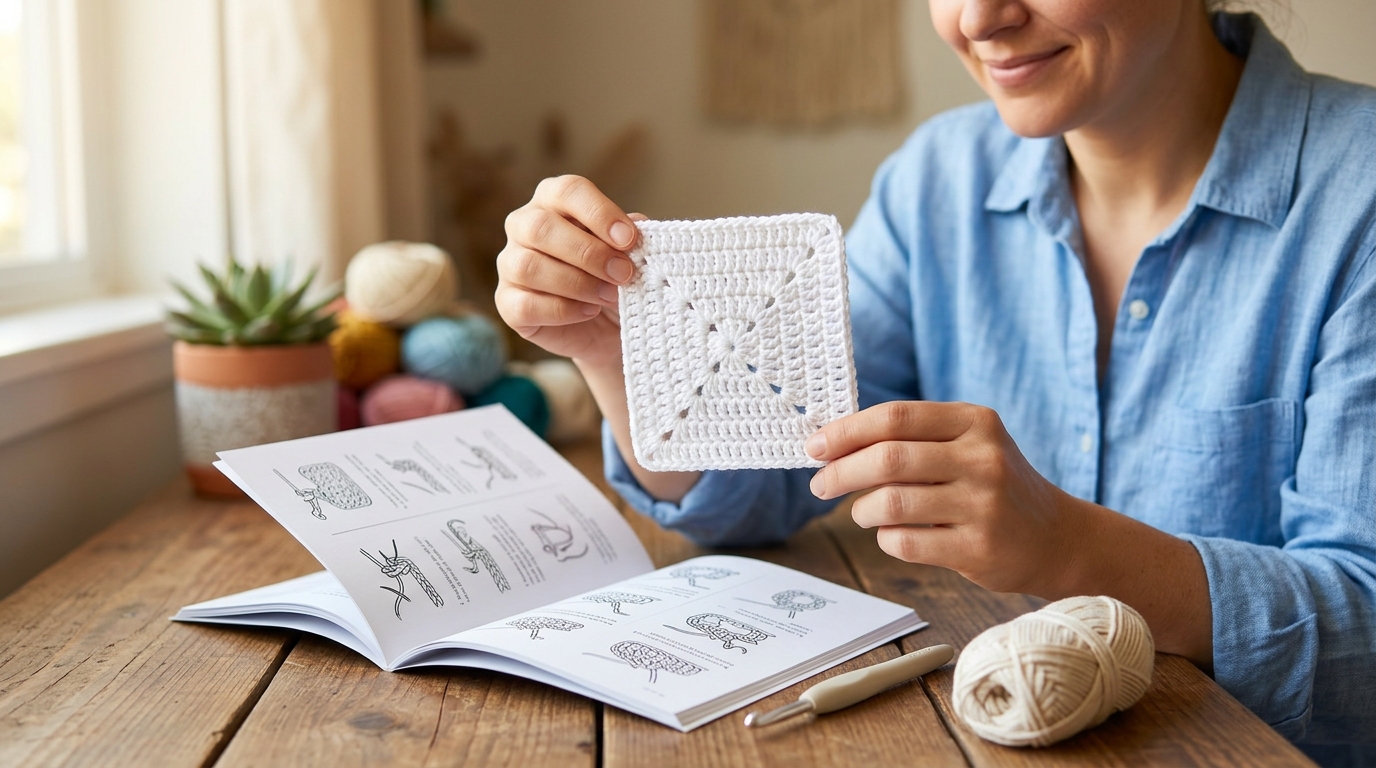
In our community, a “dummy” is shorthand for a practice element. Because crochet is a tactile and visual craft, it is often difficult to understand how a stitch will behave just by looking at a diagram. A dummy project allows you to test your materials and your hands against the pattern instructions.
What you will learn in this guide is how to use these practice rounds intentionally. This is for the beginner who is terrified of starting their first big project, as well as for the intermediate crocheter who wants to perfect their finishing techniques. We believe that every yard of yarn is a lesson, and “dummies” are the best way to make sure that lesson sticks. This guide matters because it removes the fear factor from the craft. When you aren’t worried about the outcome, you are free to experiment with tension, hook sizes, and stitch variations.
Essential Tools for Practice Pieces
While you might reach for your favorite ergonomic hook for a heirloom project, your dummy pieces are the perfect place to use different tools.
- Stitch Markers: These are non-negotiable for practice. When you are testing out a new, complex stitch, stitch markers help you keep track of your first and last stitches so you don’t inadvertently increase or decrease your count.
- Yarn Scraps: There is no need to crack open a brand-new, expensive skein of alpaca for a dummy. Reach for those “orphan” balls of cotton or acrylic that you have in your stash. It is the perfect way to declutter while learning.
- Variable Hooks: If you are unsure whether a 4.0mm or a 4.5mm hook will suit a specific yarn’s drape, make a small dummy swatch with both. Comparing them side-by-side will teach you more about gauge than any written explanation ever could.
- A Notebook: Keep a small journal alongside your crochet supplies. Note the yarn weight, hook size, and your own observations about how the dummy turned out. This becomes your personalized reference library.
Key Crochet Concepts for Beginners
Before you start your first practice piece, it is helpful to brush up on a few fundamental concepts that often trip people up.
- Tension: This is the magic word in crochet. It refers to the tightness or looseness of your stitches. A dummy is the best tool to regulate this. If your piece looks “gappy,” your tension is likely too loose or your hook is too large. If the fabric is stiff and difficult to work into, your tension is too tight.
- The Turning Chain: Understanding how your turning chain functions—does it count as a stitch, or is it just a spacer?—is vital. Use your dummy to practice different ways of starting your rows to see which creates the cleanest edge.
- Stitch Placement: Beginners often struggle to identify where to put the hook for the next stitch. Practice makes this second nature. Focus on recognizing the “V” shape at the top of each stitch; that is your gold standard for consistent work.
Helpful Notes Before You Start
- Embrace the “Ugly”: Your first practice piece might look a little uneven, and that is perfectly okay. We call this a “success” because you successfully identified a technique you now know how to refine.
- Keep Patterns Accessible: Don’t try to memorize everything at once. Keep the written instructions close by and check off every row as you complete it.
- The Power of Comparison: Try making two dummies using the same pattern but different hooks—one smaller and one larger than recommended. You will instantly see how your fabric reacts. This is the most practical way to learn about the “drape” of a finished item.
Why Practice Pieces are Secret Weapons for Success
You might wonder, “Do I really need to spend time making a dummy?” The answer is a resounding yes. Think of it as a dress rehearsal. When you practice a tricky segment—like a cluster stitch or a double crochet decrease—on a smaller scale, you are training your muscle memory. By the time you reach that part in your final, beautiful project, your fingers will know exactly what to do without you having to overthink it.
Furthermore, these practice pieces are incredible for testing how yarn looks when worked up. Often, a yarn looks vibrant and perfect in the skein, but once it transitions into stitches, the color distribution might change. By making a small swatch, you can decide if the yarn is truly right for the pattern before you commit hours of labor.
Simple Example of a Practice Routine
To get started, consider this simple routine for any new pattern you buy:
- The Row Repeat: Take a small section of the pattern (usually only 4–6 rows) and work it three times. The first time, focus on just finishing the stitches. The second time, focus on your tension. The third time, focus on the count.
- The “Oops” Test: Deliberately drop a stitch or miscount in your dummy. Then, try to fix it. Knowing how to troubleshoot a mistake in a practice piece is miles better than having to “frog” (rip out) five inches of a real project later.
- The Finishing Phase: Practice your border on your dummy. If the pattern calls for a delicate picot edge, try it on your practice swatch first to see how it sits.
Common Mistakes to Avoid
Even in practice, it is easy to pick up bad habits. Here is what you should avoid:
- Ignoring the Swatch: Many crocheters skip this because it feels like “wasted” time. Trust me, it is the opposite. It is an investment in your final project’s success.
- Using “Frustrating” Yarn: For your dummy pieces, avoid dark-colored or fuzzy/hairy yarns. You need to be able to see your stitches clearly to learn effectively. Stick to light-colored, smooth, medium-weight yarns.
- Not Counting: It is easy to think, “I’ll just eyeball it.” Do not eyeball your practice. Count every stitch. Muscle memory is formed by correct—not imprecise—repetition.
- Holding too Tightly: If your hands hurt after ten minutes, you are holding your hooks too tightly. Use your dummy time to practice a “relaxed grip.” If you are holding the hook like a dagger, try shifting to a pencil grip.
Pro Tips for a Better Result
- Blocking: Even if it’s just a practice dummy, try blocking it! Pin it down on a foam mat, mist it with water, and let it dry. You will be shocked at how much better your stitches look once they are “set.”
- Seaming Practice: If you are working on a project that requires joining, use your dummy to practice your mattress stitch or whip stitch. A bad seam can ruin a professional-looking project, so master it here first.
- Yarn Tails: Practice weaving in your ends securely. The rule of thumb is to weave in the same direction for a few inches, then change direction. Doing this on a dummy ensures your ends won’t pop out later.
Personalization Ideas for Your Practice Pieces
Who says practice has to be boring? Turn your dummies into something useful:
- Coasters: Practice your rounds by making small crochet circles. They make excellent, practical home decor.
- Patchwork Projects: Keep your best practice squares and eventually join them together to make a “memory blanket.” Each square serves as a record of a stitch or technique you once learned.
- Gift Tags: Use a small practice piece as an elegant ribbon or label for a handmade gift. It adds a lovely, rustic touch that the recipient will adore.
Care, Storage, and Next Steps
Once your practice piece has served its purpose, don’t just throw it in the trash. Place it in a small box or a labeled folder. When you feel frustrated in six months, pull it out. Seeing that physical evidence of how far you’ve come is incredibly motivating.
When you feel confident with your practice, your “next steps” should involve taking on a project that utilizes the specific stitch you just mastered. If you practiced a simple granny square or a double crochet row, look for a beginner-friendly throw or a simple tote bag pattern. You will be surprised at how much faster the “real” work goes!
FAQ
Is it necessary to wash my practice dummy?
Yes, it is highly recommended! Washing your dummy helps you see how the yarn behaves after it has been through the wash. It will tell you if the yarn will shrink or bleed color, which is vital information for the final, larger project.
How big should a practice piece be?
For a standard gauge, a 4×4 inch square is perfect. It is large enough to show you how your tension holds up over time but small enough that you won’t feel like you are wasting time.
Why do my edges look wavy?
This is a very common beginner issue! It usually happens because you are either missing the first or last stitch of a row or because your tension is inconsistent at the turn. Your dummy is the perfect place to focus on making that final stitch of every row crisp and straight.
Should I unravel my dummies?
That is a personal choice. Some people like to keep them as a record of their progress, while others prefer to keep their yarn stash small and reusable. Unraveling them is a great way to learn how to identify the anatomy of a stitch.
Can I use different yarn weights for one dummy?
While you can, it might not give you the best data. It is better to use the same yarn weight and hook size as the project you intend to make, so you can get an accurate idea of the finished result.
Conclusion
Crocheting shouldn’t be about perfection from the very first loop. It should be a journey of discovery, color, and texture. By embracing the concept of the crochet “dummy,” you are giving yourself the greatest gift an artist can have: the freedom to learn without consequence. You no longer have to fear making mistakes, because every small square or row you work is building the steady hands and experienced eyes you need for your future masterpieces.
The next time you see a complicated pattern that intimidate you, stop for a moment. Instead of jumping right in with your best yarn, grab a bit of scrap, create a dummy, and find your rhythm. You are capable of making beautiful, professional-quality items, and this practice-first approach is the quickest way to get there. Keep your hooks steady, your yarn close, and never underestimate the power of starting small. Happy stitching!