
There is something truly magical about the moment you cast on a new project. You have your favorite skein of yarn, a comfortable hook, and a vision for the beautiful piece you are about to create. However, many of us have faced that common frustration: you finish a long, tedious starting chain, only to find that the very first row is tighter than the rest, causing the bottom edge of your blanket, scarf, or sweater to pull and pucker. It can feel like your hard work is compromised before you have even really begun.
That is exactly why the single crochet foundation stitch—often called the foundation single crochet—is a complete game-changer. By working your foundation chain and your first row of stitches simultaneously, you create a base that is inherently flexible, stretchy, and perfectly tensioned. No more wrestling with chains that are too tight, and no more guessing if your base will fit the rest of your garment. Whether you are a beginner looking to skip the struggle of counting chains, or an intermediate maker seeking a professional finish for your clothing and home decor projects, this technique will quickly become your go-to method. It is sturdy, elegant, and provides a polished look that makes every handmade treasure feel that much more special.
Quick Project Overview
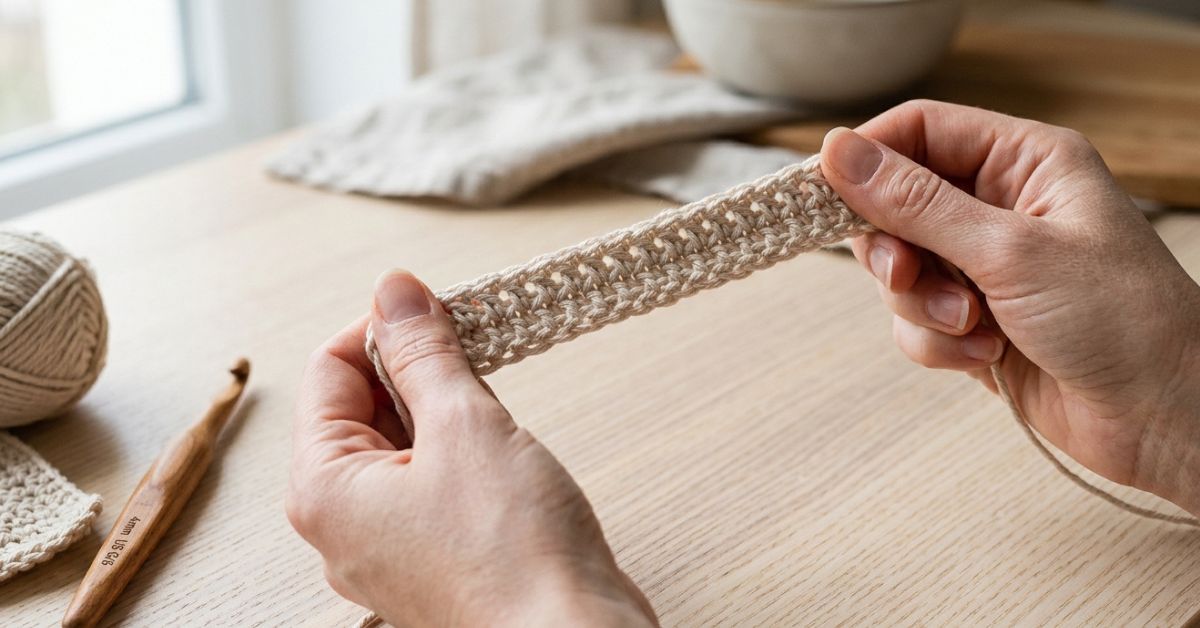
To help you master this technique, we will be using it to create a “Cloud-Soft Everyday Headband.” This project is the perfect way to practice the foundation single crochet because it is small, quick to complete, and teaches you how to work a beautiful, stretchy edge that will sit comfortably on your head without squeezing or stretching out of shape.
- Skill Level: Beginner-Friendly Intermediate
- Estimated Time: 45 to 60 minutes
- Finished Size: Customizable to any head circumference (approx. 3.5 inches wide)
- Best Use: An everyday accessory for yourself or a cozy handmade gift.
- Why You’ll Love It: You will learn a high-level skill that elevates every other project you make, and you will walk away with a stylish accessory that is seasonless and practical.
Materials Needed
To create your Cloud-Soft Everyday Headband, you will need a few simple supplies. Feel free to use what you have in your stash!
- Yarn: Approximately 60–80 yards of Worsted Weight (Category 4) yarn. A soft wool blend or a high-quality acrylic works beautifully.
- Crochet Hook: Size H/8 (5.0 mm). If you find your stitches are naturally very tight, consider bumping up to an I/9 (5.5 mm) hook just for the foundation row.
- Tapestry Needle: For weaving in your yarn ends securely.
- Scissors: Any sharp pair will do.
- Measuring Tape: To ensure a custom fit.
Stitches and Abbreviations
- ch: Chain
- sc: Single Crochet
- fsc: Foundation Single Crochet. This is the star of our show. It creates a chain stitch and a single crochet stitch at the same time.
- st(s): Stitch(es)
- yo: Yarn over
Pattern Notes Before You Start
When working the foundation single crochet, your tension is everything. Because you are essentially creating a row of “live” stitches, it is common for the foundation to feel a little loose compared to standard chain-based rows. Do not worry! This is exactly what gives the piece its elasticity. As you work, keep your rhythm consistent. If you are a beginner, take your time with the first few stitches. It might feel like you need an extra set of hands during the first inch, but your muscle memory will kick in quickly. Remember, the final piece will be stretched while worn, so the “give” in this starting row is your greatest asset.
Full Crochet Pattern
The Foundation Row
We are going to start directly with the fsc.
- Start with a slip knot on your hook.
- Ch 2.
- Insert hook into the first chain made, yo, and pull up a loop (you now have 2 loops on the hook).
- yo and pull through one loop only (this creates the base “chain” stitch).
- yo and pull through both loops on your hook (this completes your first single crochet stitch).
- For the next stitch: Insert your hook into the base of the stitch you just created (look for the “V” shape at the bottom of the previous stitch), yo, pull up a loop.
- yo, pull through one loop.
- yo, pull through two loops.
- Repeat steps 6–8 until your headband reaches your desired head circumference minus about half an inch (as crochet grows with wear).
Working the Body
Once you have reached your desired length, it is time to work in the round to create a seamless, cozy finish.
- Slip stitch to the first fsc to join, being careful not to twist the piece.
- Round 1: Ch 1, sc in each st around. Join with a slip stitch to the first sc.
- Rounds 2–6: Repeat Round 1.
- Final Polish: Work one round of slip stitches into the top of each stitch from Round 6. This creates a beautifully sturdy edge that won’t curl.
Finishing
Fasten off, leaving a 6-inch yarn tail. Using your tapestry needle, weave the tail through the back of your stitches three times in alternating directions to ensure it is perfectly secure. Gently pull on the headband to align the stitches.
Step-by-Step Tutorial Explanation
If the pattern instructions feel a bit technical, let’s break down the fsc process visually. Imagine you are building a wall. Instead of laying all the foundation bricks (the chain) and then building the first row on top, you are placing the foundation brick and the wall brick down at the exact same moment.
When you insert your hook into that bottom “V,” you are creating a link that acts as a secure anchor. Because you are working the single crochet into a loop created by the yarn-over-and-pull-through-one technique, there is no pull or tension constraint. The “chain” portion of the stitch has room to breathe because it isn’t being stretched by the tension of the hook against a rigid chain. Once you complete the first five stitches, you will notice that the piece is already flexible and has a lovely, professional drape.
Common Mistakes to Avoid
- The “Twist”: When joining your foundation row, the single biggest mistake is accidentally twisting your work. Lay the foundation row flat on a table before joining to ensure the bottom edge is perfectly straight.
- Variable Tension: Because the foundation can feel “fiddly” at first, beginners often accidentally loosen their grip as they get more confident. Try to keep the same amount of tension on every stitch.
- The “Loop Trap”: In the fsc technique, it is easy to accidentally pull through too many loops. Keep calm, count your loops, and keep your movements deliberate.
- Tight Finish: If you work your joining slip stitch too tightly, you will create a “bump” in your headband. Keep your final slip stitch join loose and relaxed.
Pro Tips for a More Beautiful Result
The best way to elevate your crochet is to embrace the “finishing school” approach. After your headband is complete, blocking is your best friend. Even if it is just a small headband, dampen it slightly with a spray bottle, reshape it on a flat surface, and let it dry. This settles the stitches and makes the foundation row look completely uniform.
For yarn choice, try a smooth, plied yarn. Fuzzier yarns, like mohair or certain unspun wools, can make it difficult to see the “V” where you need to insert your hook for the foundation stitch. Save those for projects where the stitch definition matters less. Finally, if you want a really chic, professional look, consider using a contrasting color for just the final round of slip stitches. It gives the piece a “boutique” effect that looks intentional and high-end.
Variations and Personalization Ideas
This foundation stitch is incredibly versatile. You can use it to start:
- Scarves: It creates a starting edge that matches the final bind-off edge perfectly.
- Sweaters: Use it for the bottom hem of a sweater body or the cuffs of sleeves to ensure they fit comfortably over hands and hips without being restrictive.
- Color Blocking: Start your foundation row in a neutral color, work the body in a bright accent color, and finish with a complementary neutral edge.
- Baby Blankets: Since baby gear needs to be soft and non-constricting, this method is perfect for keeping blankets gentle.
Care Instructions
Since this headband will be worn close to your hair and skin, you want to ensure it stays fresh. If you have used a wool blend, hand wash it in cool water with a gentle wool wash. Avoid wringing or twisting it; instead, roll it in a clean, white towel to press out excess moisture and lay it flat to dry. Do not hang it while wet, as this can stretch the elastic foundation you worked so hard to create. If you used an acrylic blend, you can generally machine wash it on a delicate cycle, but a mesh wash bag is highly recommended to keep it from getting tangled with other items.
FAQ
Is the foundation single crochet really better than a starting chain?
Yes! It is superior because it provides a much higher degree of elasticity. Standard starting chains are essentially made of locked loops, which do not stretch well. The foundation single crochet creates a chain-like appearance that has the structural integrity of a double-layered stitch, allowing it to move with you.
What should I do if my foundation row looks uneven?
Unevenness in a foundation row is almost always a sign of inconsistent tension. Practice on a scrap piece of yarn for 10-15 stitches. Focus on pulling the loop through the single stitch with the same rhythmic tug each time. With a little practice, your row will look like a perfectly machine-knit edge.
Can I use the foundation stitch for double crochets?
Absolutely. The logic is identical, but you add an initial yarn-over before inserting your hook. Once you master the foundation single crochet, the foundation double crochet (fdc) will feel like a natural next step.
Do I need to count the stitches during the foundation row?
Yes, it is vital. Because you are creating the base and the row simultaneously, it is much easier to miscount than you think. Use a locking stitch marker every 10 stitches so you don’t have to count the whole length more than once.
Can I use this technique for a project that works in rows instead of rounds?
Definitely! You can work back and forth using this method just as easily as in the round. Simply complete your desired number of fsc, turn your work, and continue in rows as normal. It provides a beautiful, clean finish for the cast-on edge of any flat piece.
Conclusion
Learning the foundation single crochet is truly a rite of passage for any crocheter who wants to move from “following patterns” to “mastering construction.” It adds a layer of professional quality to every project, ensuring that your handmade items are as comfortable and durable as they are beautiful.
Don’t be discouraged if your first attempt feels a bit awkward—every single crocheter has had to practice this technique to get those stitches looking consistent and lovely. Once you get the rhythm, you will find yourself using this method for almost everything. It saves time, it looks better, and it solves the age-old problem of the “tight chain blues.” Enjoy the process of creating your Cloud-Soft Headband, and remember that every stitch you make is an expression of your creativity. Keep your hook moving, reach out if you have questions, and be sure to try this technique on your next big project—you will be amazed at the difference it makes. We would love to hear how your headband turned out! Happy stitching!