
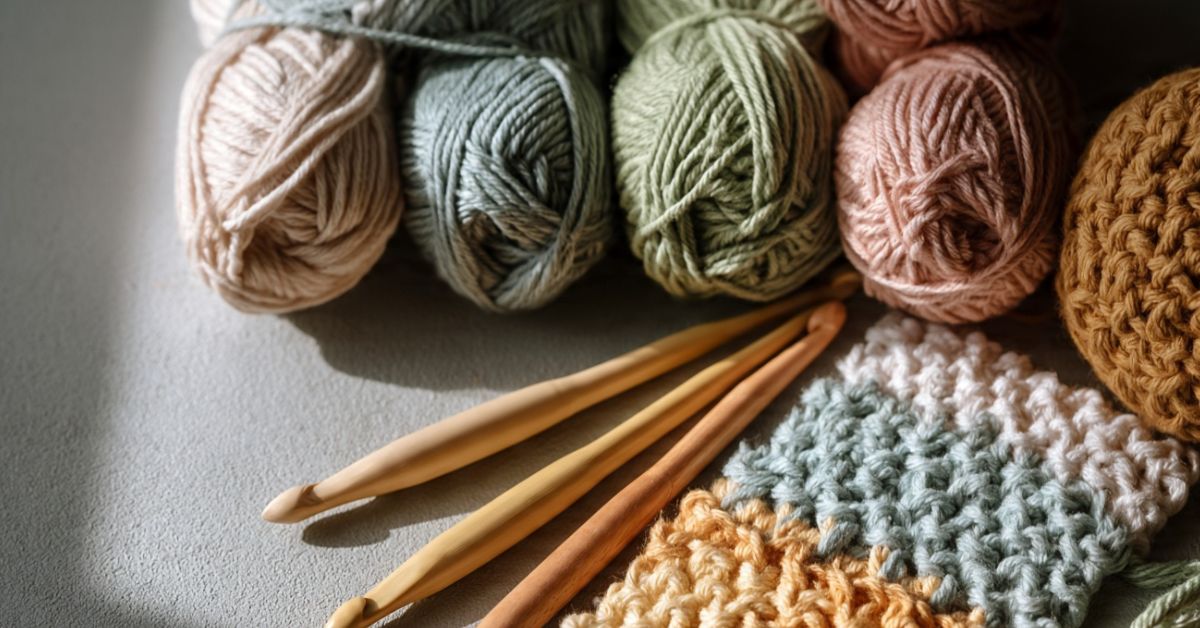
There is something truly magical about picking up a crochet hook for the first time. The rhythmic loop-and-pull motion is meditative, and the ability to turn a simple strand of fiber into a functional, beautiful object is deeply rewarding. However, many beginners find themselves discouraged early on, not because they lack skill, but because they chose the wrong materials. Have you ever tried to learn a new stitch only to have your yarn fray, split, or turn into a fuzzy mess? It is a common frustration that has led many talented people to set their hooks down far too soon.
The secret to a successful crochet journey lies in your foundation, specifically the yarn and the hook you choose to start with. When you are just learning, you want a yarn that is smooth, easy to see, and forgiving. By selecting materials that don’t split, you can actually focus on your tension, your stitch placement, and the joy of creating. This guide is designed to help you navigate those initial choices with confidence, providing you with a high-quality beginner pattern that will build your skills and your stash of handmade treasures simultaneously. Whether you are creating a gift for a loved one or a cozy piece for your own home, you deserve a start that feels as good as the finished product looks.
Quick Project Overview
To put your new knowledge into practice, we are going to craft a “Cozy Keepsake Coaster.” This project is the quintessential starting point for any crocheter.
- Skill Level: Beginner
- Estimated Time: 30 to 45 minutes
- Finished Size: Approximately 4.5 inches square
- Best Use: Perfect as an introduction to basic stitches and a lovely handmade gift for a housewarming, a teacher appreciation gift, or a quick addition to your own coffee table.
- Why you will love it: It works up quickly, uses very little yarn, and allows you to practice keeping your edges straight and your tension consistent without the pressure of a large, long-term commitment.
Materials Needed
For this project, we are focusing on materials that are “beginner-friendly,” meaning they are easy for your eyes to track and your hook to manipulate.
- Yarn: A worsted weight (Category 4) acrylic-wool blend or a smooth 100% cotton yarn. Look for a yarn that is tightly plied (the strands are twisted together well). A solid, light-to-medium color (like sage green, soft mustard, or heathered gray) makes it much easier to see your “V” stitches than black or dark navy.
- Crochet Hook: Size H/8 (5.0 mm). This is a standard size that feels comfortable in the hand. Opt for an ergonomic hook with a soft-grip handle if possible.
- Tapestry Needle: For weaving in your finished ends.
- Scissors: Any sharp pair will do.
- Measuring Tape: To ensure your square is coming along symmetrically.
Stitches and Abbreviations
We will be using standard American crochet terminology.
- Ch (Chain): Yarn over hook and pull through the loop on your hook.
- Sc (Single Crochet): Insert hook into the next stitch, yarn over, pull up a loop (two loops on hook), yarn over, and pull through both loops.
- Sl St (Slip Stitch): Insert hook into the stitch, yarn over, and pull through both the stitch and the loop on your hook.
- St (Stitch): Referring to the base you are working into.
Pattern Notes Before You Start
Tension is the most common hurdle for beginners. If your crochet feels stiff as a board, you are pulling the yarn too tightly. If it feels wavy or holey, you may be working too loosely. Aim for a relaxed grip on your hook—it should glide through the stitches rather than fighting them. Remember that your first project is a practice run! If you need to “frog” (untangle) your work to fix a mistake, do not feel discouraged. Professionals do it all the time.
Full Crochet Pattern
Part 1: The Foundation
Start by making a slip knot and placing it on your hook.
Chain 16.
Part 2: The Body
Row 1: Skip the first chain from the hook. Single crochet in each of the remaining 15 chains. Chain 1 and turn your work. (You should have 15 stitches).
Rows 2 through 15: Single crochet in each stitch across the row. Chain 1 at the end of each row, and turn your work.
Part 3: Finishing the Edges
Once you have completed 15 rows, do not fasten off just yet. We are going to place a simple border around the square to give it a polished look.
Work 2 single crochet stitches into the corner space where you just finished, then move down the side of your coaster, working one single crochet into the side of each row. When you reach the next corner, place 2 single crochets again. Continue this around the entire perimeter of the square.
Part 4: Fastening Off
Once you meet your starting point, slip stitch into the first single crochet of your border. Cut your yarn, leaving a 6-inch tail. Pull the tail through the loop on your hook entirely to secure the knot. Use your tapestry needle to weave the remaining end back and forth through the stitches on the back side of the coaster until it is hidden and secure.
Step-by-Step Tutorial Explanation
When you look at your “Cozy Keepsake Coaster,” you should see a series of “V” shapes forming on the surface. These are the hearts of your stitches. In the first row, you are working into the chains, which can feel a bit tight. Don’t worry—this is the most difficult part of the entire project! By the time you reach row 5, you will notice that your hand has found a rhythm.
If your square starts to look like a triangle or a trapezoid, it means you have accidentally increased (added a stitch where you shouldn’t) or decreased (skipped a stitch). Always count your stitches at the end of every row to ensure you still have 15. It is a simple habit, but it is the secret to a professional-looking finish.
Common Mistakes to Avoid
Even though crochet is simple, there are common traps that every beginner falls into.
- The Twisted Chain: When starting your foundation chain, make sure all your loops are facing the same direction. If the chain is twisted, your entire project will spiral.
- Tight Tension: If you cannot insert your hook into your stitches, relax. Try using a slightly larger hook, or consciously loosen your grip on the yarn.
- Ignoring the Turning Chain: Many beginners forget that the chain you make at the beginning of a row can be tricky to work into. If you are struggling with “missing” the last stitch of a row, place a stitch marker in that final stitch so you know exactly where to put your hook on the return trip.
- Skipping the Counting: We mentioned it before, but it bears repeating—counting is your best friend. Even if you think you have it perfect, do a quick “1, 2, 3…” check.
Pro Tips for a More Beautiful Result
Once you have mastered the basics, how do you make your work look “store-bought” and polished?
- Blocking: This is a game-changer. Once your coaster is finished, dampen it slightly with clean water and pin it flat onto a towel or a foam mat. Allow it to air dry. This relaxes the stitches and makes your edges look uniform and crisp.
- Yarn Selection: Avoid fuzzy yarns (like standard mohair or eyelash yarn) when starting. These yarns hide your stitches and make it impossible to see where the hook should go. Stay with smooth, high-twist fibers for your first few months.
- Consistent Hooks: If you find that your hands ache after a few minutes, you are likely gripping the hook with a “death grip.” Take a five-minute break every half hour to stretch your fingers.
Variations and Personalization Ideas
The beauty of a simple square is that it is a blank canvas.
- Color Blocking: Switch your yarn color every 3 rows to create a modern, striped look. Just remember to carry your new yarn color up the side of your work to avoid excessive ends to weave in.
- Texture Play: As you get more confident, try working in the “back loop only” (BLO) of every stitch. This creates a beautiful ribbed effect that looks elegant and professional.
- Seasonal Styling: Use cotton yarn in bright, cheery colors for a summer coaster, or utilize deep, rich wool blends for a cozy winter mug warmer.
- Gift Embellishment: Add a small wooden button in one corner after you finish the border. It turns a simple coaster into an heirloom-quality gift.
Care Instructions
Since you put time and effort into your crochet, you want it to last. If you used cotton yarn, these coasters are generally machine washable on a gentle cycle, though hand washing in room-temperature water with a mild soap is always safer. Lay them flat to dry on a clean towel. Never wring or twist your crochet while it is wet, as this can permanently stretch the fibers and distort your hard work.
FAQ
Why does my crochet piece keep curling?
Curling often happens because of tension issues—usually, your tension is too tight. Try going up a hook size or focusing on keeping your yarn flow loose and even.
How do I know when I have reached the end of a row?
The last stitch can often look like it’s drooping over the side. When you reach the end, count your “V” shapes. If you started with 15 and see 14, look closely at that last “droopy” stitch—that’s usually the culprit!
Is acrylic or cotton better for beginners?
Both have merits. Acrylic is very soft and forgiving, while cotton has great stitch definition, making it easier to see exactly where you are placing your hook. Cotton is highly recommended for beginners who want to learn exactly how a stitch is formed.
Why are my ends coming undone?
Always leave a tail of at least 4 to 6 inches after you fasten off. Weave the tail in and out of your work in at least three different directions. This “locking” motion ensures that the yarn has enough friction to stay in place.
Can I fix a mistake without undoing the whole project?
If you realize you missed a stitch four rows down, you usually have to undo your work back to that point. It feels daunting, but it teaches you more about the structure of the fabric than anything else. Think of it as a crochet “undo” button!
Conclusion
Starting your crochet journey is an act of self-care. It is a slow, tactile, and rhythmic way to disconnect from the digital world and create something real with your own two hands. While the beginning might feel a little clumsy, remember that every master artisan you admire today started with the same tangled yarn and the same uncertain stitches.
By choosing smooth, high-quality materials and mastering the basic single crochet, you have already built the most important part of your foundation. Use these coasters as a way to practice, experiment with color, and find your own unique style. Once you have made your first dozen squares, you will be surprised at how naturally your hands move. Keep your hook close, practice whenever you have a quiet moment, and most importantly, be gentle with yourself as you learn. Happy crocheting!