
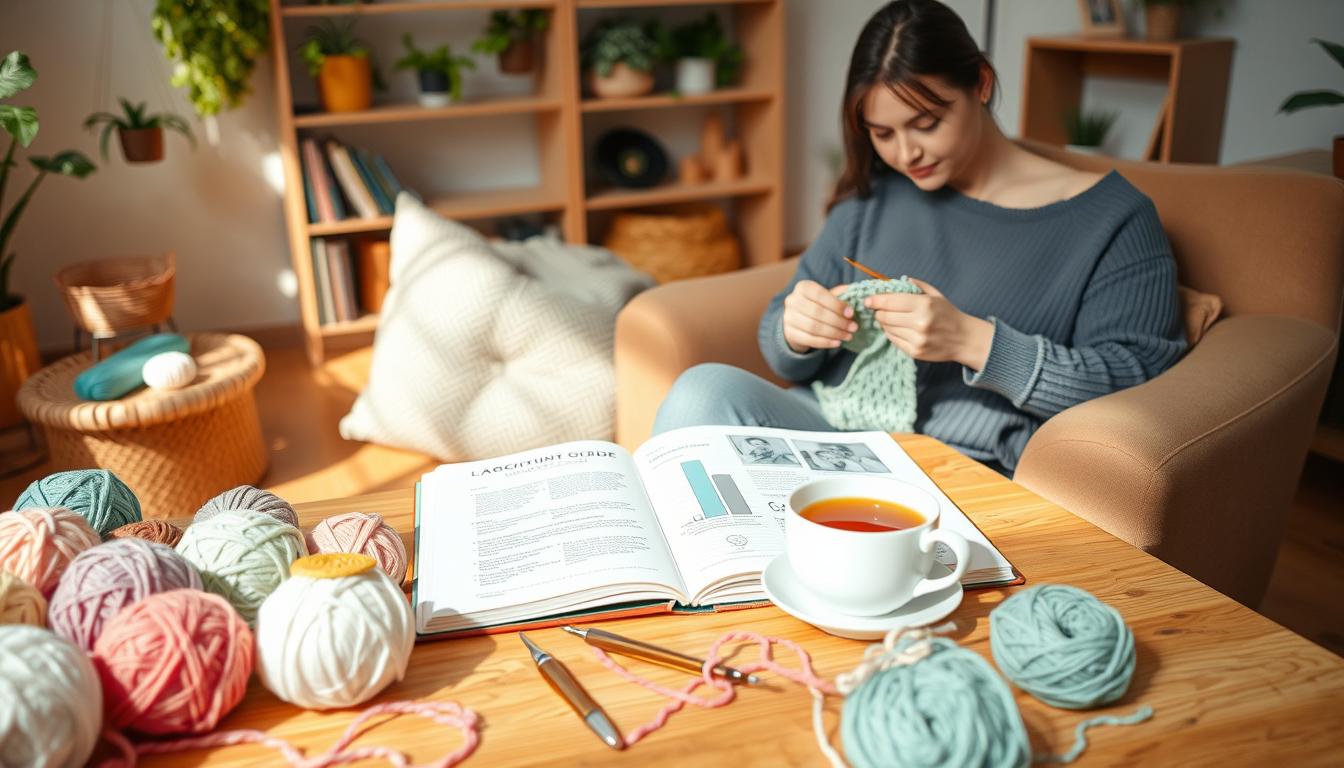
Crochet is a hands-on craft that uses a hooked needle and yarn to make interlocking loops.
This beginner guide covers basics: holding the hook, making a slip knot, and creating a foundation chain.
It also teaches the single crochet stitch. Practicing small squares builds tension control and muscle memory faster than large projects.
For beginners, pick medium-weight, light-colored yarn. Use the hook size suggested on the yarn label.
Many size 4 yarn labels recommend a 5.5 mm (I-9) hook. Brands like Lion Brand and Red Heart are beginner-friendly.
Start with the pencil or knife grip to find what feels natural. Make a slip knot, chain about 21 stitches, then work single crochet into each chain.
Turn your work consistently as you go. Watching clear crochet tutorials on YouTube can speed learning.
Videos help new makers see hand placement and rhythm. Make several 4–5 inch swatches and weave in ends with a yarn needle.
Save your squares to join into a blanket once your tension evens out.
Key Takeaways
- Start with medium-weight, light-colored yarn and the hook size on the label.
- Learn the slip knot, foundation chain, and single crochet first.
- Practice small squares to build tension and muscle memory.
- Use brands like Lion Brand or Red Heart for beginner-friendly yarns.
- Supplement practice with a clear crochet tutorial video for hand techniques.
Getting Started: Tools, Yarn Choices, and Hook Recommendations
Begin with a short shopping list to make your first projects stress-free. Start with yarn, a recommended hook, sharp scissors, and a yarn needle for weaving ends.
Pick a medium weight yarn and check the label for the hook size. For example, a size 4 (worsted) yarn often suggests a 5.5 mm / I-9 hook.
Choose smooth, light or medium colors so your stitches are easy to see.
Essential starter supplies
Basic crochet supplies set you up to practice many skills. At minimum, get a few yarn skeins in light shades, scissors, a yarn needle, and a small ruler or measuring tape for gauge checks.
Add stitch markers to keep track of rows and increases.
Buy a modest stash from reliable brands like Lion Brand, Bernat, or Red Heart for consistent results. Local shops and stores such as Joann, Michaels, and Hobby Lobby carry many options if you like to feel yarn before buying.
Which yarn to pick for beginners
Choose the best yarn for beginners by focusing on weight and texture. Start with worsted weight yarn or size 4 yarn to match common pattern recommendations.
A light-colored cotton or a worsted-weight acrylic yarn gives clear stitches and easy handling.
For practice, buy two yarns: a 100% cotton in a light or medium shade and a worsted-weight acrylic in a light or medium shade.
Avoid boucle, eyelash, or very dark colors until you gain confidence. Read the yarn label to confirm recommended hook size and care instructions.
Crochet hook types and recommended sets
Hook material affects grip and stitch flow. Metal hooks like Clover Amour glide through yarn, plastic or Susan Bates hooks feel lightweight, and bamboo or wooden hooks offer warmth and more control.
Try a few to see what feels best in your hand.
Many beginners find value in a complete hook set or buying sizes printed on yarn labels. A basic set with sizes covering H-8 (5.0 mm) through J-10 (6.0 mm) handles most worsted projects.
Trusted brands include Clover Amour, Boye, and Susan Bates.
| Item | Why it helps | Recommended brands |
|---|---|---|
| Size 4 / worsted weight yarn | Easy to see stitches, ideal for learning gauge | Lion Brand 24/7, Red Heart Super Saver, Vanna’s Choice |
| 100% cotton (light color) | Clear stitch definition for practice and dishcloths | Bernat Handicrafter, Lily’s Sugar & Cream |
| Acrylic worsted-weight skein | Soft, affordable, forgiving for mistakes | Paintbox Simply Aran, Red Heart, Vanna’s |
| Hook set or individual hooks | Match hook to yarn label; sets cover common sizes | Clover Amour, Boye, Susan Bates |
| Scissors and yarn needle | Trim ends cleanly and weave in tails neatly | Any sharp craft scissors; tapestry needles included in most kits |
| Stitch markers and measuring tape | Track repeats and measure gauge for sizing | Plastic or metal markers; retractable tape measures |
learning how to crochet
Crochet is a hands-on craft. It uses a single hooked needle to make interlocking loops of yarn. Think of fabric built one loop at a time.
Beginners often start with small swatches like 4–5 inch squares, washcloths, or scarves. These help build confidence before trying blankets or toys.
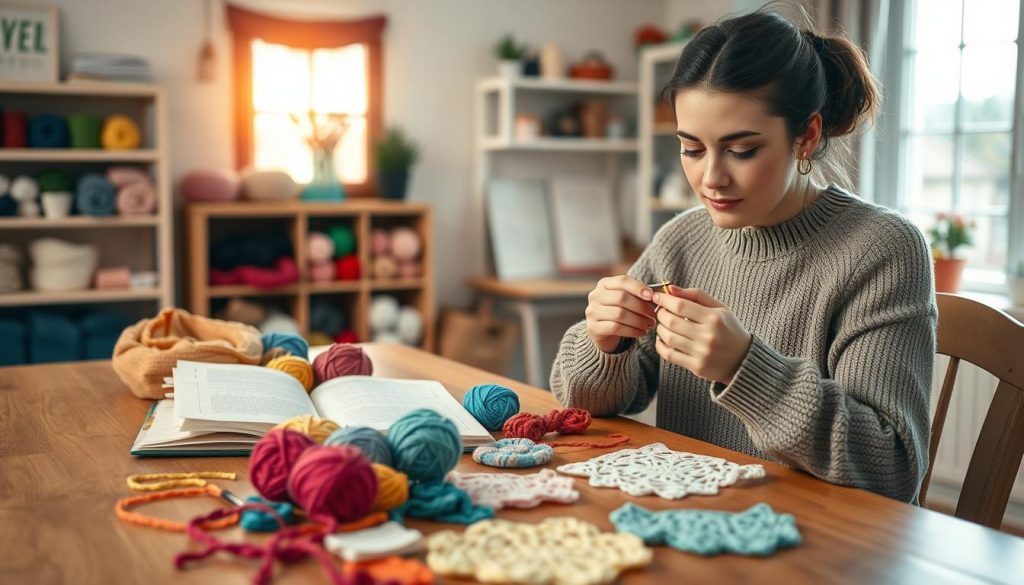
What crochet is and what you can make
Crochet turns yarn into fabric by pulling loops through loops. Simple projects for beginners include dishcloths, headbands, and sample squares.
These small items teach stitch structure and make neat gifts from brands like Lion Brand or Caron.
Basic grips: how to hold the hook and yarn
There are two common ways to hold the hook: the knife hold and the pencil hold. Neither is wrong. Pick the grip that feels comfortable and stick with it.
To control yarn tension, wrap the yarn around your pinky and bring it over your index finger. Squeeze gently between fingers to steady the yarn.
Learning to hold the hook and yarn properly helps produce even stitches. It also prevents tight chains.
Core beginner stitches and techniques to learn first
Start with a slip knot, a foundation chain, and the single crochet. For a slip knot, measure about three inches of tail. Loop the yarn twice around your finger, pull the back loop over the front loop, tighten, and orient the tail toward the hook.
To make a chain stitch, yarn over from back to front and pull through the slip knot. Repeat until you have a row of even loops.
Practice until chains are loose enough to see through and easy to work into. Remember, the loop on the hook does not count as a chain.
For single crochet, skip the first chain, insert the hook into the next chain. Yarn over and pull through so two loops remain on the hook.
Yarn over again and pull through both loops. Turn with a chain 1 and work into the V shape at the top of each stitch to keep edges straight.
As you practice, try swatches of rows using these basics. Videos from trusted teachers and steady repetition build muscle memory.
This helps make crochet for beginners feel natural.
Practice Steps: Simple Exercises, Troubleshooting, and Finishing
Start with a clear, short crochet practice plan to build steady habits. Make several small swatches. Follow a simple sequence: slip knot, chain foundation to 21, then work 20 single crochets across.
Chain 1 as a turning chain. Turn the work and repeat rows until the square measures about 4–5 inches. Repeat this routine to build muscle memory and confidence.
Beginner practice plan
Begin by watching one short tutorial from a trusted teacher such as Annie’s Craft Store or Craftsy. Practice five focused minutes a day. Then extend sessions as coordination improves.
Move from swatches to washcloths, scarves, and small blankets when your rows stay even.
Counting, turning, and working into chains
Counting crochet stitches starts with the chain: do not count the loop on the hook. Work the first stitch into the second chain from the hook unless a pattern says otherwise. Use a stitch marker or a contrasting scrap to mark the first stitch or end of row.
Use chain 1 as a turning chain for single crochet rows and chain 3 for double crochet rows. Turning the work the same way each row keeps edges straighter and reduces mistakes.
Common beginner mistakes and quick fixes
Missing or extra stitches happen when you skip the first V or add an extra at the end. Count at the end of each row. Place a stitch marker in the first stitch so you can see it easily.
Tension that is too tight makes chains hard to work into. Try a larger hook or relax your grip. If stitches look loose, switch to a smaller hook. Use light-colored yarn and bright lighting to see stitches better.
Finishing techniques: finish off and weave in ends
To learn how to finish crochet, yarn over as if making a chain 1. Pull the loop outward about an inch. Cut the yarn leaving roughly 2–6 inches.
Then pull the tail through the loop to secure. Pull gently so the edge stays flat.
Weave in ends with a blunt yarn needle by passing the tail through the back row stitches for several inches. Weave in directions that follow stitch paths to hide tails and avoid bulk.
Trim close to the fabric without cutting through yarn strands.
| Practice Step | Why It Helps | Tip |
|---|---|---|
| Make 4–5 inch swatches | Builds consistency in stitch size and row tension | Use worsted weight yarn and a size H/8 (5.0 mm) hook |
| Count at row end | Prevents missed or extra stitches | Use a stitch marker on the first stitch |
| Turn work same way | Keeps edges even and predictable | Chain 1 for SC, chain 3 for DC |
| Adjust hook for tension | Makes chains easier to work into and evens fabric | Go up one size if chains are too tight |
| Finish off and weave in ends | Secures project and gives a neat edge | Leave 2–6 inches tail, weave through back stitches |
Conclusion
Learning how to crochet is simple with a few basic supplies. Use medium-weight light yarn, the right hook, scissors, and a yarn needle. These tools help you quickly make useful pieces.
Start by mastering the slip knot, chain, and single crochet stitches. Practice by making multiple 4–5 inch swatches. These squares help build tension control and muscle memory.
You can turn these practice swatches into a blanket or gift them as practice pieces. They make great beginner projects.
Next, move from swatches to simple projects like washcloths, scarves, and small blankets. Use recommended hook sets from Clover or Boye if you want reliable starters. Choose yarns from Lion Brand or Red Heart for best results.
Watch guided video tutorials and follow step-by-step patterns closely. Visit local craft stores or yarn shops to get hands-on help. This support boosts your learning experience.
Crochet encouragement: mistakes are part of the learning process. Count your stitches and use stitch markers to track your progress. Try a larger hook when tension feels tight.
Pick light-colored yarn to see stitches more easily. Practice regularly and follow tutorials to improve your skills. Join online groups or local meetups to share your work and learn more.
Enjoy making handmade items. Persistence pays off — thousands of beginners learned by repeating these steps, and so can you.
FAQ
What is crochet and what can I make with it?
Crochet is a craft using a hooked needle and yarn to make fabric by interlocking loops. Beginners often start with simple projects like washcloths, scarves, and small blankets. As skills grow, you can create garments, toys, home decor, and lacework.
What essential starter supplies do I need?
Start with yarn, the right hook, scissors, and a yarn needle. Extras include stitch markers, a measuring tape, and a row counter or yarn bowl. Choose smooth, light or medium yarn colors to see stitches easily.
Which yarn should a beginner buy first?
Begin with medium-weight (worsted/size 4) yarn in light or medium colors. Cotton and acrylic yarns are easy for beginners to use. Suggested brands include Lion Brand 24/7, Bernat Handicrafter, and Lily’s Sugar & Cream for cotton. For acrylic, try Red Heart Super Saver, Vanna’s Choice, or Paintbox Simply Aran/Chunky. Avoid textured or dark yarns until you’re more comfortable.
What crochet hooks are recommended for beginners?
Use hook sizes recommended on yarn labels; size 5.5 mm (I-9) suits many worsted yarns. Good brands include Clover Amour, Boye aluminum, and Susan Bates. Buying a basic hook set is useful, or pick sizes to match your yarns.
How do I hold the hook and yarn?
Two common hook grips are the pencil hold and the knife hold; choose what feels best. For yarn tension, wrap the yarn under fingers, usually under the pinky and over the index. Feed the yarn over the index finger to control tension. Changing your grip or yarn placement affects tension.
What core stitches and techniques should I learn first?
Start by making a slip knot and a foundation chain. Then learn single crochet (SC). Next, learn double crochet (DC) and how to turn rows using turning chains (chain 1 for SC, chain 3 for DC). Practice stitching into the V of chains and working into top loops or front/back loops for effects.
How do I make a slip knot, chain, and single crochet?
Make a slip knot by looping yarn and tightening it on the hook with a short tail. Chain by yarning over, pulling through loops; don’t count the loop on the hook. For single crochet, insert hook into the chain, yarn over, pull up a loop (two loops on hook), yarn over, and pull through both. Practice by making 21 chains and 20 single crochets as a starter.
What practice plan should a beginner follow?
Watch beginner videos in order, then make several 4 to 5 inch practice squares. Repeat slip knot, foundation chain, and single crochet rows to improve tension and muscle memory. Move on to small projects like washcloths, scarves, and joined squares.
How do I count stitches and work into chains correctly?
Count chains carefully; exclude the loop on the hook. Most patterns say to insert into the second chain from the hook. Mark the first stitch with a stitch marker or contrasting yarn if needed. If chains are tight, try a larger hook to help work into stitches.
What are common beginner mistakes and how do I fix them?
Tight or loose tension is common; adjust your yarn wrap or try a different hook size. Missed or extra stitches occur; count stitches at the end of each row and use stitch markers. Switch to light-colored yarn and use good lighting if you can’t see stitches clearly. Go slow and rewatch tutorials; repetition builds skill.
How do I finish off and weave in ends neatly?
To fasten off, yarn over like making a chain and pull the loop to about an inch. Cut the yarn leaving a 4–6 inch tail. Pull the tail through the loop to secure it. Weave the tail through stitch backs with a yarn needle, avoiding tight pulls to stop curling. Trim close after weaving in.
Should I block my finished pieces?
Blocking is optional but helps even stitches and set shape. Use wet or steam blocking depending on fiber type. Cotton and acrylic behave differently. Follow yarn care guidelines and use pin mats or blocking boards for best results.
Where can I buy supplies and find learning resources?
Buy yarn and hooks at Joann, Michaels, Hobby Lobby, Walmart, or local yarn shops. Amazon and craft stores carry good hook sets. For learning, watch YouTube tutorial series and attend local yarn shop classes. Practice along with videos to build skill and confidence.