
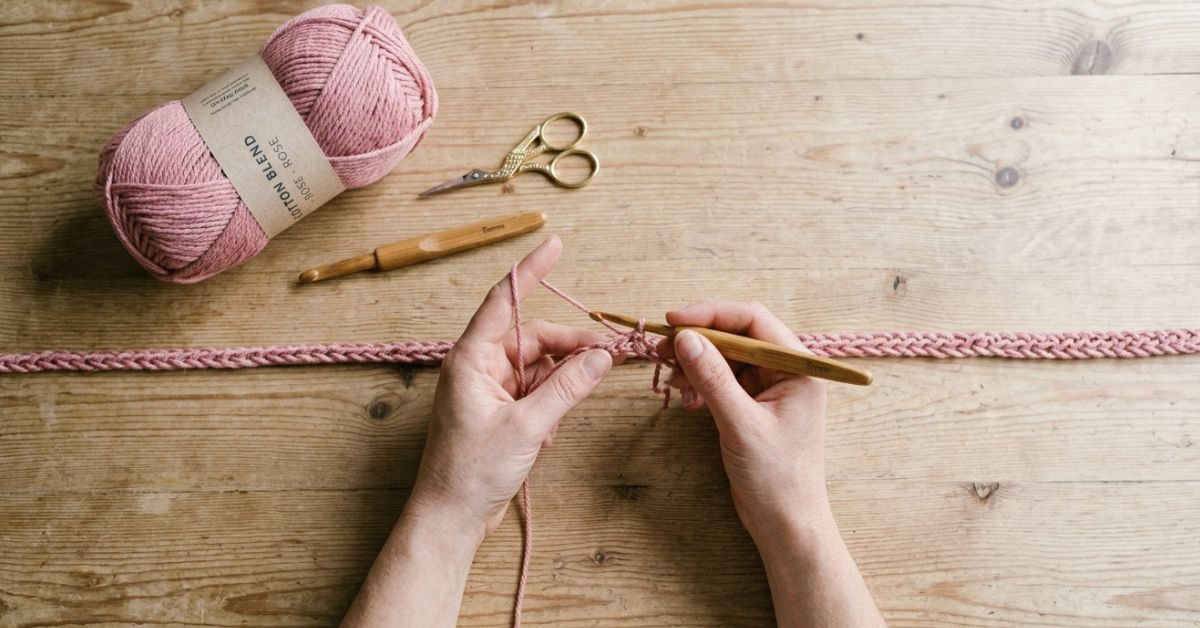
There is something truly magical about that very first moment of a new project. You grab your hook, feel the softness of the yarn, and prepare to create something beautiful from a simple string of loops. For many of us, the journey begins with the foundation chain. While it might seem like a simple task, getting those starter rows even, flat, and professional-looking is the hallmark of a seasoned crocheter. Whether you are crafting a cozy baby blanket, a delicate shawl, or a sturdy market bag, the foundation chain sets the standard for everything that follows.
If you have ever felt frustrated because your work curls at the edges or your chains look a bit uneven, please know that you are not alone. It is a common hurdle that every crocheter encounters. The good news is that with a few mindful shifts in technique and some gentle encouragement, you can achieve a polished finish every time. In this guide, we are going to explore the art of the perfect foundation chain. We will dive into a beautiful “Everyday Texture Scrubby” project that serves as the perfect canvas to practice these skills, ensuring your stitches are uniform and your edges remain beautifully flat. Let’s enjoy this creative process together.
Quick Project Overview
- Skill Level: Beginner-friendly.
- Estimated Time: 30–45 minutes.
- Finished Size: Approximately 6 inches by 6 inches.
- Best Use: A practical DIY gift, a sustainable home decor item, or a relaxing evening knit-to-crochet practice piece.
- Why You Will Love It: This project is designed specifically to help you master the relationship between your starting chain and your first row of stitches. It’s small, manageable, and yields a high-quality result that you can use in your kitchen or bath immediately.
Materials Needed
To create this project, you will need a few simple supplies. I always recommend keeping a small basket of these essentials nearby.
- Yarn: One ball of 100% cotton worsted weight yarn. Cotton is ideal because it holds its shape well and is absorbent.
- Hook: Size H/8 (5.0 mm) crochet hook. Choose one with a comfortable grip to help your hand stay relaxed.
- Tools: A pair of sharp scissors and a medium-sized yarn needle with a bent tip for easier weaving of ends.
- Extras: Removable stitch markers (optional, but highly recommended for beginners to keep track of your first and last stitches).
Stitches and Abbreviations
Understanding your shorthand is the first step toward confidence. We will use standard U.S. terminology throughout.
- Ch (Chain): Yarn over and pull through the loop on your hook.
- Sc (Single Crochet): Insert hook into stitch, yarn over, pull up a loop, yarn over, and pull through both loops on the hook.
- Hdc (Half Double Crochet): Yarn over, insert hook into stitch, yarn over, pull up a loop, yarn over, and pull through all three loops on your hook.
- St(s) (Stitch(es)): The individual loops through which you work your stitches.
- FO (Fasten Off): Cut the yarn and pull the tail through the final loop to secure your work.
Pattern Notes Before You Start
Tension is the secret language of crochet. If your foundation chain is too tight, your entire project will pull inward, creating a curved “banana” effect. If it is too loose, it will look gappy and untidy. For this project, we want a happy medium.
Pro Tip: If you struggle with tension, hold your crochet hook slightly looser, as if you were holding a delicate pen. Also, ensure you are working your chain stitches with the same consistent pressure you use for your stitches in the rows. Many people accidentally chain tighter than they crochet, so being aware of this tendency is half the battle.
Full Crochet Pattern
This pattern is worked in flat rows, turning at the end of each row. We will be using a combination of single and half double crochet stitches to create a lovely, nubby texture that is as durable as it is pretty.
Part 1: The Foundation
Start with a slip knot and place it on your hook. Chain 22. Take care to keep your tension consistent. Ensure you are not twisting the chain as you work.
Part 2: Working the First Row
Row 1: Single crochet in the second chain from your hook and in each chain across. You should have 21 stitches total. Turn your work.
Part 3: Establishing the Texture
Row 2: Chain 2 (this does not count as a stitch). Half double crochet in each stitch across. Turn your work.
Row 3: Chain 1 (does not count as a stitch). Single crochet in each stitch across. Turn your work.
Part 4: The Main Body
Repeat Row 2 and Row 3 until your piece measures approximately 6 inches in height, ending on a Row 2 repeat.
Finishing
Once you reach your desired size, chain one and tie off, leaving a 6-inch tail. Weave your ends securely back into the project using your yarn needle. To ensure an even edge, be sure to catch the yarn through the back loops of the stitches.
Step-by-Step Tutorial Explanation
When you sit down to start Row 1, look at your chain. Each chain stitch has a “V” shape on the top, but if you turn the chain slightly, you will see a little bump or “back ridge” on the underside. For the most professional results, I recommend working your first row of stitches into these back ridges. This leaves the pretty “V” of the chain along the bottom edge, giving it a finished, professional look that mirrors the top edge of your work.
As you work your first few stitches, look down frequently. Does the foundation line look straight against your non-dominant hand? If it looks like it is pulling tight, stop, unravel, and try using a hook one size larger specifically for the chain row—this is a classic trick used by designers to prevent the “tight start” problem.
Common Mistakes to Avoid
The most common mistake beginners make is the “twisted start.” When you make your foundation chain, lay it flat on a table before inserting your hook for the first row. Ensure that all the “Vs” are facing the same direction. If you see a twist, unravel that small section and re-chain.
Another common issue is losing stitches at the ends of rows. Many crocheters accidentally add or subtract a stitch, causing the sides of the project to lean inward or outward. You can prevent this by counting your stitches at the end of every single row. If you are supposed to have 21 stitches, count them aloud or use a stitch marker in the first and last stitch of every row until you become more comfortable with spotting those edge stitches.
Pro Tips for a More Beautiful Result
- Mind the Gap: When working your first row (Row 1), if you find your stitches are too loose, pull up less yarn when you pull through the chain. This keeps the base of your project sturdy.
- The Power of Blocking: Even a simple scrubby benefits from a quick wash in warm water and a flat lay to dry. This “blocks” the fabric, relaxing the fibers and ensuring everything lies perfectly flat.
- Weaving Ends: Don’t just cut your tail short. Weave it in several directions—up, down, and across. This ensures that even after many uses and washes, your project won’t unravel.
- Color Choices: If you are making these as gifts, choose a color palette that matches the recipient’s bathroom or kitchen decor. A soft sage green or a creamy ivory is always a sophisticated, timeless choice.
Variations and Personalization Ideas
Once you have mastered this basic pattern, the sky is the limit for personalization. You could create a set of three in varying shades of blue to create an ombre effect. For a holiday gift, consider using red and white cotton yarn to create a seasonal striped version.
If you want to make the item more functional, you could add a small loop to one corner. To do this, at the very end of your final row, chain 8, and then slip stitch into the same space before fastening off. This creates a sweet little hanging loop so the scrubber can dry out properly between uses. For those who want more texture, you can alternate between a row of single crochet and a row of a different stitch like a moss stitch (chain 1, skip 1, single crochet in the next).
Care Instructions
Since this project uses cotton yarn, it is designed to be washed repeatedly. You can simply toss it into the washing machine on a gentle cycle with similar colors. To keep it looking its best, dry it flat rather than putting it in a high-heat dryer, which can cause the cotton fibers to shrink or become misshapen. If it starts to look a bit tired after many months of use, a quick soak in warm water with a drop of vinegar can help refresh the fibers and keep them feeling soft.
FAQ
Why does my foundation chain always curl?
Usually, this occurs because your tension on the chain is much tighter than the tension of your subsequent rows. Try consciously loosening your grip or using a half-size larger hook specifically for your chain row.
Should I always work into the back ridge of the chain?
It is not mandatory, but it is highly recommended if you want a professional-looking, “knitted” finish on the bottom edge. It mimics the look of the top selvage and creates a cleaner starting line.
How do I stop losing stitches at the end of every row?
The best way to fix this is to use a stitch marker in the first stitch of every row. When you come back around, you will know exactly where your last stitch needs to go, preventing it from hiding in the turn.
Can I change the width of this project?
Absolutely! To change the width, simply chain a different number of stitches in your foundation chain. As long as you maintain that same number of stitches in every row, your piece will remain a perfect rectangle.
Is it normal for my rows to look slightly different on each side?
Yes, this is normal. When you turn your work at the end of a row, the perspective of the stitch changes slightly. If you want both sides to look identical, you would need to work in continuous rounds, but for flat row-by-row crochet, this subtle difference is part of the charm of the craft.
Conclusion
Mastering the foundation chain is a rite of passage, and I am so glad you chose to practice these techniques today. By focusing on your tension, taking the time to count your stitches, and choosing the right materials, you have elevated your crochet practice to a new level of precision. Every beautiful crochet garment or blanket you ever make in the future will benefit from the care you put into your chains today.
Take a moment to hold your finished work. Feel the texture, look at the even edges, and appreciate the time you dedicated to your craft. Whether you keep this piece for your own home or tuck it away as a surprise gift for someone dear, remember that you created it one loop at a time. I hope this guide has made the process feel gentle, approachable, and truly enjoyable. Keep the yarn flowing, stay creative, and don’t be afraid to try new techniques—each project is simply another step in your beautiful crochet journey. Happy making!