
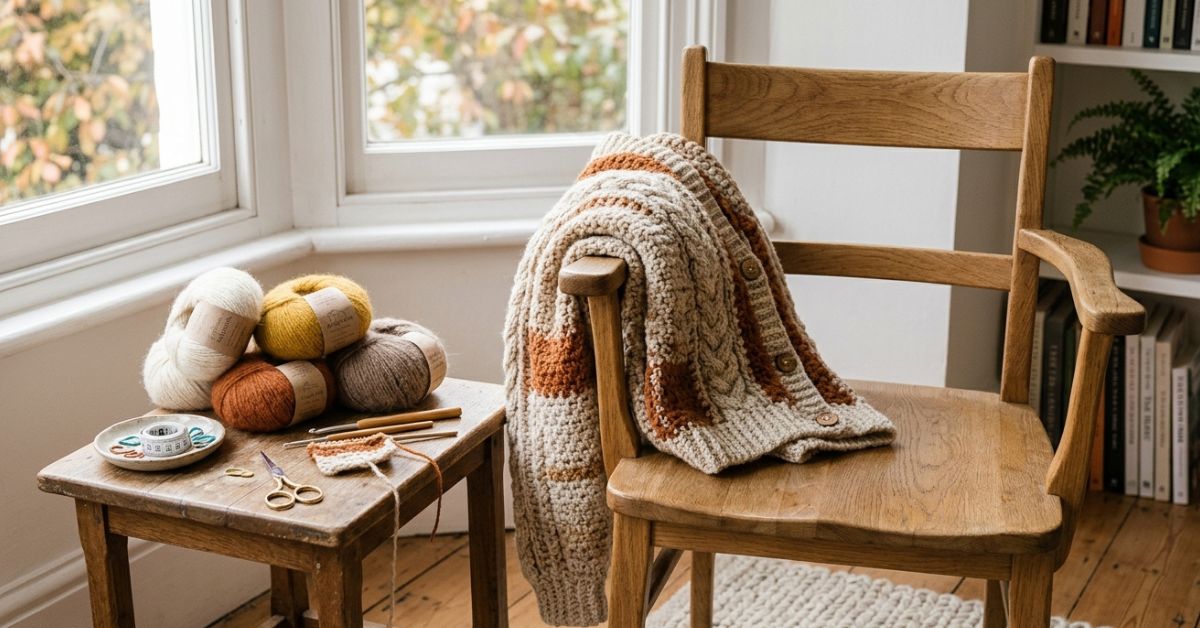
There is something profoundly soul-soothing about wrapping yourself in a handmade garment as the air turns crisp and the leaves begin their velvet descent. Creating your own cardigan is a rite of passage for many crocheters—it is the moment you move from making flat squares and accessories to creating wearable art that tells a story. This cozy, stylish cardigan is designed to be your best friend during those chilly days. Whether you are sipping hot cider on your porch or curling up with a book on a rainy afternoon, this piece brings a sense of accomplishment and comfort that you simply cannot find in a store-bought sweater.
I have designed this pattern with both the steady hands of an intermediate maker and the ambitious heart of a beginner in mind. We will be focusing on a classic, relaxed silhouette that feels modern, chic, and incredibly soft. Do not let the idea of making clothing intimidate you; we will take this stitch by stitch, row by row, until you are holding a finished cardigan that fits perfectly and feels like an embrace.
Quick Overview
- Skill Level: Beginner-Friendly Intermediate
- Estimated Time: 15–20 hours
- Finished Size: Customizable (S/M/L)
- Best Use: Everyday layering for fall and winter
- Why You Will Love It: It features a simple, meditative stitch pattern, minimal shaping, and a sophisticated drape that elevates any outfit in your wardrobe.
Materials or Tools Needed
To create your sweater, you will need a few essentials. Please feel free to lean into your personal preferences, but these recommendations will help achieve that soft, cozy “cloud-like” feel.
- Yarn: Approximately 1,200 to 1,500 yards of Category 4 (Worsted) weight yarn. A wool-blend or a high-quality acrylic blend works beautifully. Look for something with a slight “halo” or fuzz for extra warmth.
- Crochet Hook: Size H/8 (5.0 mm) is the standard for this weight, but do a gauge swatch to ensure your stitches are not too stiff.
- Stitch Markers: These are vital for keeping track of your rows and defining your armhole openings.
- Tapestry Needle: For weaving in your ends and seaming the sides together.
- Measuring Tape: To ensure your sweater meets your body’s unique needs.
- Scissors: A sharp pair makes all the difference when finishing your work.
Crochet Terms and Key Concepts
We will use standard U.S. terminology throughout. If you are new to these terms, take a moment to refresh your memory:
- Chain (ch): The foundation for your project and used to create height.
- Single Crochet (sc): A compact stitch that adds structure.
- Half Double Crochet (hdc): A slightly taller stitch that is excellent for creating a flexible, squishy fabric.
- Double Crochet (dc): A taller stitch that works up quickly and creates a bit of drape.
- Slip Stitch (sl st): Used for joining seams and finishing edges.
- Gauge: This is the most crucial step! It is a small swatch intended to match the tension of the designer. If your swatch is smaller than 4×4 inches, try a larger hook; if it’s larger, try a smaller one.
Helpful Notes Before You Start
Crochet garments thrive on patience and consistency. My biggest tip is to maintain your tension throughout the project. If you find your hands tightening up as you get into a rhythm, set your work down, take a sip of tea, and reset your grip. This pattern is worked in three simple rectangular panels—a back panel and two front panels—which are later seamed together. This method is incredibly forgiving and perfect for anyone who wants to avoid the complexity of raglan or circular construction.
The Pattern: Cozy Weekend Cardigan
This cardigan is constructed to have a relaxed, slightly oversized fit. The stitch pattern is a variation of the moss stitch, created by alternating half double crochets and chains.
Part 1: The Back Panel
Chain 60 (or an even number to reach 20 inches wide).
Row 1: Hdc in the third ch from hook, ch 1, skip next ch, hdc in next ch; repeat from to until end of row. Turn.
Row 2: Ch 2 (counts as first hdc), hdc in the first ch-1 space, ch 1, skip next st, hdc in next ch-1 space; repeat from to until end. Turn.
Continue these rows until the panel measures 26 inches in height. Fasten off and set aside.
Part 2: The Front Panels
Repeat instructions for the back panel, but only chain 30 (or half your back panel width). You will make two of these. Follow the same stitch pattern until the panels match the height of your back panel.
Part 3: Assembly
Lay your back panel flat on a clean surface. Place the two front panels on top of the back panel, ensuring the outside edges align. Using your tapestry needle and a length of matching yarn, whip stitch the shoulder seams together. Then, measure about 8 inches down from the shoulder to mark your armholes. Sew the side seams from the bottom hem up to the armhole marker.
Part 4: The Sleeves
Join your yarn at the center of the armhole opening. Work in the round.
Round 1: Hdc evenly around the armhole, join with a sl st to the first hdc.
Round 2: Ch 2, continue in the pattern established until the sleeve reaches your wrist.
Note: If you prefer a tapered sleeve, decrease by one stitch every 4 rows.
Part 5: The Finishing Touch
For the collar, join your yarn at the bottom corner of one front panel. Work a row of single crochet evenly up the front edge, around the back of the neck, and down the other front edge. Work two rows of hdc to give it a nice, thick texture. Weave in all your ends securely, ensuring you trim them close to the fabric, hidden behind a stitch.
Step-by-Step Explanation
Think of this cardigan as building a house. The back panel is your foundation—it is the biggest piece and sets the stage for everything else. By working the panels separately, you don’t have to carry the weight of a giant blanket while you work. When you get to the assembly, don’t rush. Sewing the sides with a simple whip stitch is meditative. Just align your hdc rows carefully so the texture looks seamless across the seam. When you start the sleeves, joining in the round often confuses beginners, but just remember to treat the “armhole” as its own new project. You are essentially just building a tube that sprouts from your shoulder!
Common Mistakes to Avoid
- Ignoring Gauge: I know it’s tempting to skip the swatch, but if you don’t, your sweater could end up fitting a doll or a giant! Take the 20 minutes to knit that 4×4 square; your future self will thank you.
- Counting Errors: In this pattern, we skip stitches. Beginners often accidentally work into the chain spaces of the row below. Count your hdc stitches at the end of every row to ensure your piece doesn’t accidentally widen or shrink.
- The Twisted Cast-On: When starting your foundation chain, lay it flat on the table and run your finger along the chain to ensure it isn’t twisted before you join or begin your first row.
- Uneven Seaming: If your seams look bumpy, use clover-shaped pins to hold the panels together before sewing. This prevents the fabric from creeping while you stitch.
Pro Tips for a Better Result
Blocking is your secret weapon. Once your panels are done—and even once the whole sweater is finished—give it a gentle soak in lukewarm water with a small amount of wool wash. Lay it flat on a clean towel, stretch it slightly to the desired dimensions, and let it air dry. This “sets” the stitches, makes the fabric significantly softer, and gives your cardigan a professional, high-end finish that looks like it came from a boutique. Also, play with color! Using a variegated yarn for the body and a solid color for the sleeves can give your cardigan a modern, color-blocked feel.
Variations and Personalization
- Pockets: Who doesn’t love pockets? You can crochet two smaller squares using the same stitch pattern and sew them onto the front panels about a third of the way up from the hem.
- Length: This pattern provides a standard length, but you can easily make it a duster by simply adding more rows to the panels.
- The Closure: If you want a functional sweater, sew three large wooden buttons along the interior edge. You can use an extra-large crochet loop as a buttonhole, or simply use the existing spaces in the hdc pattern.
Care and Storage
Because this is a handmade treasure, treat it with love. Hand washing is best. When storing, fold your sweater rather than hanging it; hanging can stretch out the shoulders of crochet garments over time. If you notice any light pilling after a season of heavy wear, use a fabric shaver to keep the yarn looking crisp and new.
FAQ
Can a total beginner make this cardigan?
Yes! If you know how to chain, single crochet, and double crochet, you have all the skills needed. The most important thing is staying consistent with your tension.
How do I make sure it fits me properly?
The best way is to measure a cardigan you already own and love. Check the length of the back panel and the width of the front panels against your favorite garment.
What if my gauge is off?
If your swatch is larger, switch to a smaller hook. If your swatch is smaller, use a larger hook. Don’t worry—most crocheters take a few tries to get the gauge just right!
Is it okay to use a different yarn weight?
You can use a different weight, but it will significantly change the size and drape of the sweater. If you are a beginner, I highly recommend sticking to the suggested worsted weight yarn for your first go-around.
Should I block my sweater pieces before sewing?
Absolutely! Blocking the individual panels before you sew them together makes the edges much easier to align, which results in a much neater, more professional seam.
Conclusion
Creating your own clothes is a radical act of self-care. It reconnects you with the slow, deliberate pace of craftsmanship and provides you with a garment that is truly one-of-a-kind. As you work through the rows of this cardigan, I hope you find the same peace and joy that I have found in every stitch. Remember: there is no “wrong” way to be a creator. If your edges aren’t perfectly straight, or if you make a little mistake, that is just the mark of a human hand. Don’t be afraid to pull it back and try again—that is part of the journey. Once you finish that final row, pull your new cardigan on, embrace the cozy weight of it, and wear it with the pride of knowing you made it yourself. Happy crocheting!