
Introduction
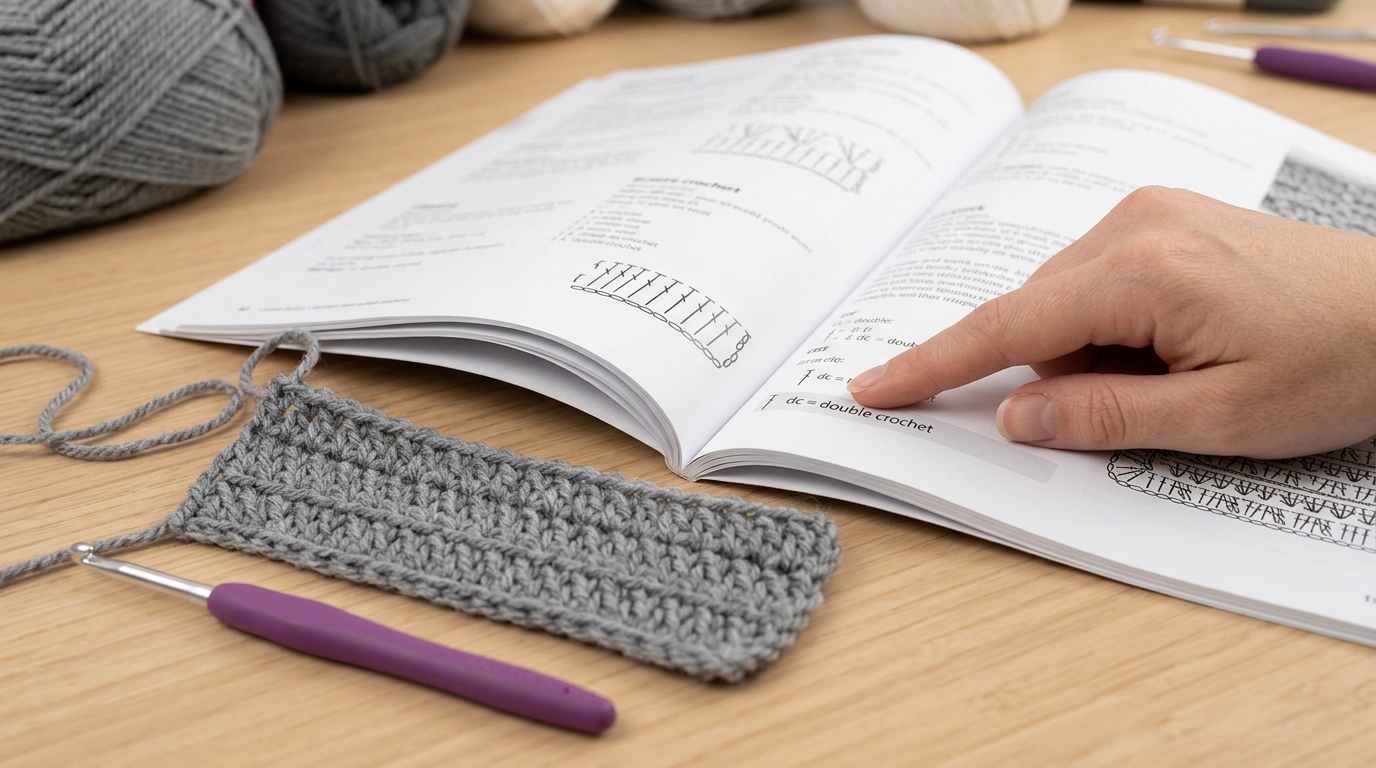
Welcome to the wonderful, rhythmic world of crochet! If you have recently picked up a hook and some yarn, you might be feeling both excited and a little overwhelmed by the sheer number of abbreviations found in modern patterns. It is completely normal to stare at a pattern and wonder exactly what those letters mean. One of the most fundamental building blocks you will encounter on your journey is the double crochet stitch, abbreviated as “dc.”
Learning to decode standard abbreviations is like learning a new language—a secret code that unlocks an infinite library of cozy sweaters, beautiful blankets, and charming gifts. Once you understand the “dc,” you have mastered a versatile, hardworking stitch that serves as the foundation for countless classic designs. My goal for this guide is to demystify this essential term, show you exactly how it functions, and give you the confidence to tackle your next project without any hesitation. Whether you are aiming to create a delicate accessory or a chunky home decor piece, mastering the double crochet will bring you one step closer to complete creative freedom. Let’s pull up a chair, grab our supplies, and get cozy while we break down exactly what “dc” means in your crochet life.
Quick Overview
This guide is designed for both the brand-new beginner and the intermediate crocheter looking to brush up on their technical knowledge. In this article, you will learn:
- What the abbreviation “dc” specifically represents in American terminology.
- How to differentiate between “dc” and other common foundational stitches.
- The technical mechanics of the stitch and how to execute it properly.
- Why the height of a double crochet stitch is a game-changer for your projects.
- How to avoid common pitfalls that lead to uneven edges or “gaps.”
- Tips for reading patterns that require multiple double crochet stitches in a single space.
This guide is perfect for anyone wanting to move beyond the basics of single crochet and start creating “fabric” that works up quickly, drapes beautifully, and invites texture into their handmade work.
Understanding the “DC”: What Does it Mean?
In American crochet terminology, “dc” stands for double crochet. It is a medium-height stitch that is taller than a single crochet (sc) and a half double crochet (hdc), but shorter than a treble crochet (tr). Because of this height, it creates a flexible, airy fabric that is perfect for garments, scarves, and blankets.
When you see “dc” in a pattern, it is instructing you to perform a specific sequence involving a yarn over before you even insert your hook into your foundation. This distinguishes it from shorter stitches where you typically insert the hook first. The double crochet is the “workhorse” of the crochet world. It is the stitch used in the classic granny square, the backbone of many vintage-inspired cardigans, and the go-to stitch when you want to make quick progress on a large project. Understanding this abbreviation is the first step toward reading almost any pattern you might find in a bookstore or online.
The Foundation of Crochet Terminology
Before we dive into the “dc,” it is helpful to place it in the context of the standard American terminology. When you read a pattern, you will often see a list of abbreviations at the beginning. Recognizing these allows you to interpret the designer’s intent immediately.
- ch (chain): The starting point for most flat projects.
- sc (single crochet): The shortest, tightest stitch.
- hdc (half double crochet): A mid-height bridge between single and double.
- dc (double crochet): Our focus today—a tall, efficient stitch.
- tr (treble crochet): A much taller, looser, and more open stitch.
When a pattern asks for a “dc,” it usually implies that you are creating a stitch that represents two “yarn overs” in terms of how many loops you pull through as you finish the stitch. While the terminology can vary slightly if you happen to view a pattern from a British designer (where they call this a “treble crochet”), stick to American guides to keep your skills consistent and your projects sized correctly.
Helpful Notes Before You Start
Crocheting is a craft of tension and patience. Before you attempt your first row of double crochets, keep these points in mind to ensure your practice leads to success:
- Tension is Queen: The double crochet is slightly looser than a single crochet. If you feel like your stitches are becoming too holey or “gappy,” try going down half a hook size. Smaller hooks make for tighter, more structured fabric.
- The Turning Chain: When working in rows, you will almost always work a “turning chain” to get your hook up to the height of the next row. For double crochet, this is usually 3 chains. Those 3 chains often count as your first stitch of the new row. Pay close attention to your pattern notes, as some designers prefer not to count the chain as a stitch.
- Yarn Weight: Start your practice with a worsted-weight (#4) yarn in a light, solid color. This makes it much easier to see the “V” shapes at the top of your stitches, which is where you will insert your hook for the next row.
- Hook Selection: Use the size recommended on your yarn label. It’s usually an H-8 (5.0 mm) or I-9 (5.5 mm) hook for most beginner-friendly yarns.
How to Execute a Double Crochet Stitch
Executing a “dc” involves a specific, rhythmic set of movements. Once you practice these five steps a few times, it will become muscle memory.
- Yarn Over (YO): Loop the yarn over your crochet hook from back to front.
- Insert: Insert your hook into the designated stitch or space (usually the next available stitch in the row).
- Pull Up a Loop: Yarn over again and pull the yarn through the stitch. You should now have three loops on your hook.
- First Pull Through: Yarn over again and pull through the first two loops on your hook. You will be left with two loops on your hook.
- Second Pull Through: Yarn over one more time and pull through the final two loops. You are now left with a single loop on your hook, and your double crochet stitch is complete!
Step-by-Step Learning Guide
To fully master the “dc,” I recommend creating a small practice swatch. This is the best way to see how the stitch behaves without the pressure of finishing a full project.
Practice Row 1
Start by chaining 20. In the 4th chain from your hook, perform your first double crochet. Continue to perform a “dc” in each chain across until you reach the end. You will notice that your fabric begins to grow vertically much faster than it would with a single crochet.
Practice Row 2
At the end of your first row, chain 3. This is your turning chain. Turn your work so the back is facing you. You will skip the first base stitch (since your turning chain counts as that stitch) and perform your next “dc” into the second stitch.
Checking Your Work
Pause and count your stitches. A common mistake is accidentally missing the end of a row. Ensure that you have a “dc” in that final turning chain of the previous row. This is the secret to getting perfectly straight, clean edges on your scarves and blankets.
Common Mistakes to Avoid
Even experienced crocheters occasionally trip over the basics. Here are the most common mistakes associated with the double crochet stitch:
- Missing the Last Stitch: The most common issue is forgetting the stitch at the very end of the row. This leads to a piece that slowly tapers inward, creating a triangle shape instead of a rectangle. Always count your stitches at the end of every row.
- Tension Inconsistency: If your first, middle, and last stitches look different, take a breath. It’s likely due to your hands tightening up as you progress. Relax your grip on the yarn and let the hook do the work.
- Confusion with Turning Chains: Always read the “Pattern Notes” section. If the pattern says “ch 3, dc in the same stitch,” it means the chain does not count as a stitch. If it says “ch 3, skip the first stitch, dc in the next,” the chain does count. Mixing these up is the quickest way to accidentally increase your stitch count.
- Splitting the Yarn: Make sure you are pulling your hook through the stitch cleanly. Sometimes, the hook can pierce the yarn fibers themselves, making the finished stitch look messy.
Pro Tips for a Better Result
The difference between a “homemade” look and a “hand-crafted” treasure is in the details.
- Blocking: Once your piece is finished, it often looks a bit rumpled. Gently washing and pinning your item (blocking) makes the stitches even out and sets the drape. For natural fibers, this is a game-changer.
- The Invisible Join: When working in the round, consider using a standing double crochet stitch rather than a chain-3 start. It creates a seamless look that hides the “seam” of the round.
- Yarn Choice: If you are working on a blanket, look for a soft acrylic or a wool-blend. The “drape” of the double crochet allows these fibers to move gracefully. If the yarn is too stiff, your double crochet fabric might feel a bit like a coaster.
Variations and Personalization
Once you are comfortable with the standard double crochet, the world of crochet expands. You can easily modify the technique to create different textures:
- Front Post Double Crochet (FPdc): Instead of inserting the hook into the “V,” you wrap the hook around the body of the stitch itself (the post). This creates a raised, ribbed texture popular in cables and beanies.
- Double Crochet Increase (2dc in next st): This is how you make your circles larger. By putting two double crochets into the same hole, you cause the fabric to expand outward.
- V-Stitch: By working a (dc, ch 1, dc) into the same space, you create an elegant, open lace pattern that is wonderful for spring shawls.
Care and Storage
Because double crochet creates a slightly open fabric, it is important to treat it with care. Always check the label on your yarn for washing instructions. Most modern acrylics are machine washable, but keep your crochet items in a mesh laundry bag so they don’t snag on zippers or buttons in the washer. For handmade wool or luxury fibers, hand wash in lukewarm water with a gentle wool wash and lay flat on a towel to dry. Never hang a heavy crochet blanket, as the weight will cause it to stretch out of shape over time. Fold it neatly and store it in a cool, dry place.
FAQ
Is double crochet the same as single crochet?
No, they are quite different. Single crochet is shorter and creates a dense, tight fabric, while double crochet is taller and creates a more flexible, open fabric. A double crochet stitch is roughly the height of two single crochet stitches combined.
Why does my work have holes in it when I use double crochet?
Some space is normal for a double crochet because it is a taller, more airy stitch. However, if the holes look too large, you might be using a hook that is too big for your yarn. Try using a slightly smaller hook to tighten up your tension.
How do I know if the turning chain counts as a stitch?
Always check the “Notes” or “General Information” section at the beginning of your pattern. If it does not specify, a good rule of thumb is that in most modern patterns, a chain 3 for a double crochet row counts as the first stitch.
Can I use double crochet for amigurumi?
Amigurumi (stuffed toys) is almost exclusively worked in single crochet because you want a tight fabric so the stuffing doesn’t show through. Double crochet would result in a very loose fabric that wouldn’t hold the shape of the toy well.
Is “dc” the same as “tr” in British patterns?
Yes! If you are following a pattern written in British (UK) English, what they call a “treble crochet” is exactly the same as what we call a “double crochet” in American (US) English.
Conclusion
Mastering the double crochet abbreviation might seem like a small step, but it is a giant leap in your journey as a maker. You now possess the knowledge to identify, execute, and troubleshoot this essential stitch in any pattern you pick up. Whether you are creating a gift for a loved one or a cozy accessory for yourself, remember that every stitch you make is part of your unique creative signature. Don’t be afraid to make mistakes—they are simply proof that you are learning and growing. Keep your hook, your yarn, and your enthusiasm close by, and you will find that there is no project too complex for you to tackle. Happy crocheting, and may your stitches always be straight and your tension perfectly consistent!