
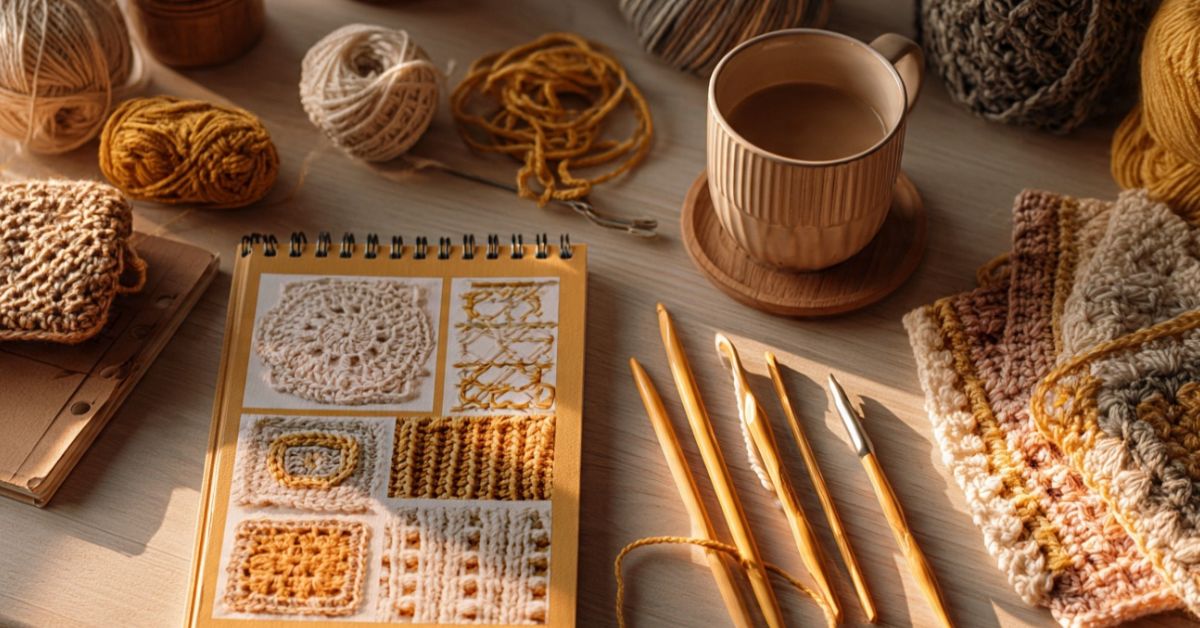
There is something uniquely comforting about the rhythmic click of a crochet hook and the soft weight of yarn resting in your lap. Whether you are a brand-new enthusiast just learning to hold your hook or a seasoned maker who has lost track of how many scarves you have gifted over the years, we all reach that same moment of frustration: you are in the middle of a beautiful row, the house is quiet, and suddenly you realize you have forgotten exactly how to transition from a half double crochet to a double crochet decrease. Or perhaps you are traveling, far away from your reliable Wi-Fi, and suddenly, your memory fails you when it comes time for that tricky shell stitch.
This guide is designed to be your permanent, reliable companion. By curating your own essential pocket reference of crochet stitches, you are essentially building a safety net that allows your creativity to flow without interruption. We are going to explore the fundamental stitches, the logic behind stitch height, and the best ways to keep this information handy for offline crafting. You don’t need to memorize the entire dictionary of crochet; you simply need to know where to find the bridge to your next project. Grab a cup of warm tea, settle into your favorite chair, and let’s organize your crochet knowledge into a portable, practical format that will serve you for years to come.
What You Will Learn in This Guide
This guide is crafted for the crocheter who values self-reliance and preparation. Whether you are a beginner feeling overwhelmed by the variety of stitches or an intermediate crafter looking to streamline your technique, this guide serves as an educational roadmap. You will learn how to identify essential stitches, understand the standard abbreviations used in United States patterns, and gain practical advice on creating a reference manual—whether that’s a digital PDF on your tablet or a physical binder kept in your project bag. This isn’t about rote memorization; it is about building a toolkit that helps you grow into a more confident and fluent crochet creator.
Organizing Your Essential Crochet Reference
The best way to ensure you always have your stitch details with you is to create a “Cheat Sheet” or a dedicated project PDF. Because crochet is a tactile, visual craft, your reference guide should prioritize clarity over complexity.
Deciding Between Digital or Physical
If you are an “on-the-go” crocheter, a digital document stored on your phone or tablet is invaluable. You can take a screenshot of your favorite stitch tutorial pages or save a curated PDF that you’ve compiled yourself. A digital file allows you to zoom in on intricate stitch diagrams, which is a game-changer for learning complex patterns.
However, many makers find that a physical, printed guide kept in their yarn bag works best. There is something grounding about flipping through a few laminated cards or a small binder while you work. When compiling your guide, include the basics first, then expand into your favorite textures.
Keeping It Simple and Concise
When building your pocket guide, don’t worry about including long-winded paragraphs. Focus on the anatomy of the stitch: the name, the abbreviation, and a quick, bulleted step-by-step description. Visual learners often benefit from adding small color-coded diagrams of where to insert the hook. If you find a particularly clear photo series of a stitch on a blog, save that specific set of images.
Foundational Stitches Every Crocheter Needs
Every project, from the most delicate lace shawl to the thickest winter blanket, is built upon the same set of core movements. Even if you have been crocheting for months, having a quick reference for these will keep your work polished and uniform.
The Chain (ch)
The foundation of almost every flat project. Beginners often worry about tension here; the secret is to keep your chain stitches slightly looser than you think you need. A tight starting chain will cause the bottom edge of your work to pucker and pull inward, ruining the drape of your final piece.
Single Crochet (sc)
The workhorse of the crochet world. It is dense, sturdy, and vital for amigurumi and structured accessories. Remember that in U.S. terminology, the single crochet has a specific height—it is about as tall as the width of your yarn.
Half Double Crochet (hdc)
The perfect middle ground. Many crocheters overlook the half double crochet, but it offers a beautiful, slightly airy drape that is softer than single crochet but more substantial than double crochet. It is a fantastic stitch for baby blankets because it works up quickly but remains warm.
Double Crochet (dc)
This is the building block of sweaters, afghans, and most garments. Learn to control your yarn-over and your pull-through; the double crochet is where tension changes become the most visible. Consistent tension here is the difference between a professional-looking cardigan and an uneven, messy one.
Understanding Common Crochet Abbreviations
One of the greatest hurdles for beginners is learning to “speak” pattern language. When you prepare your reference guide, include a legend of these common abbreviations so you can translate any pattern instantly.
- st (stitch): The loop on your hook or the individual unit of your work.
- yo (yarn over): The act of wrapping the yarn over your hook; the foundation of every major stitch.
- sk (skip): Skipping a stitch in the previous row to create gaps or lacy patterns.
- inc (increase): Working two stitches into the same space to make the work wider.
- dec (decrease): Combining two stitches together into one, often used for shaping necklines or arms in clothing.
- fo (fasten off): The final step of cutting your yarn and pulling the tail through the last loop to secure the piece.
Practical Tips for Offline Crafting Success
When you are crafting away from the internet, you don’t have the luxury of clicking a link if a pattern instruction confuses you. This is why having your own “notes” or a PDF reference is so critical.
The Power of Stitch Markers
Never underestimate the power of a stitch marker. When working in patterns with long rows, place a marker every 20 or 50 stitches. If you find yourself in a quiet cabin or on a long flight without your laptop, you won’t have to count from the beginning if you lose your place. Your reference guide should include a note to yourself about “troubleshooting counts”—how to check if you have accidentally added or dropped a stitch at the end of a row.
Gauge Is Your Best Friend
We often want to skip the gauge swatch, but when you are working on a project that requires a fit—like a hat or a sweater—the gauge is your map. If you are creating your own reference PDF, include a small “Gauge Checklist.” It should remind you to measure your stitches over a 4-inch square. If your stitches are too large or too small compared to the pattern requirement, you must adjust your hook size. Recording your personal gauge for different yarn weights in your pocket guide is a pro-level move that will save you from ripping out hours of work down the line.
Common Mistakes to Avoid
Even experienced crafters fall into these traps. Keep this list in your digital or physical reference to ensure your project stays on track.
The Twisted Foundation
Have you ever started a long, flat row only to realize the chain was twisted around your hook from the very first stitch? It’s soul-crushing! Always lay your foundation chain flat on a table for a few seconds before joining or beginning your first row. This tiny pause prevents a spiraling mistake that is impossible to fix once you’ve worked a few rows.
The “U.S. vs. U.K.” Confusion
This is the most common pitfall for the modern, internet-savvy crafter. Many patterns available today are written in U.K. terms, where a “double crochet” is actually a “single crochet” in U.S. terms. If you are ever unsure, check the pattern notes for a description of the stitches. If the pattern says “dc,” see if the instructions describe inserting the hook and pulling up a loop without a yarn-over. If it does, you are looking at a U.K. pattern. Note this in your reference guide immediately so you don’t accidentally make a project twice as tall as it needs to be.
Ignoring Tension Changes
It is common for tension to tighten when we are stressed or tired. If you realize your crochet looks tighter at the end of a long evening, stop. Put the project down. Crochet is intended to be a joy, and your tension will mirror your mood. A tighter stitch creates a stiffer fabric, which can change the size of your garment significantly.
How to Apply Knowledge to Real Projects
Once you have your pocket reference ready, practicing is how you turn symbols and text into muscle memory. Don’t feel pressured to make a complicated item immediately. Start by creating small swatches of each stitch. If you are learning the half double crochet, make a small 4×4 inch square using that stitch exclusively. Attach a tag to it with the hook size and yarn weight you used. Now, you have a physical reference for how that yarn behaves. Keep these in a small pouch; over time, your pouch of swatches becomes a tactile library of your own progress.
Variations and Personalization Ideas
Your reference guide should be a living document. As you discover new techniques, such as the “foundation single crochet” (a technique that replaces the starting chain for a stretchier, more professional edge), add them to your guide.
If you primarily make baby items, include a specific page regarding yarn safety—reminding yourself to use soft, washable fibers that are free of loose threads. If you prefer home decor, add a page with instructions on how to join squares or how to weave in ends invisibly. The most useful reference guide is one that reflects the types of projects that bring you the most happiness.
Care and Next Steps for Your Craft
Once you complete a project, the final step is often the most overlooked: finishing. Even if your stitches are perfect, poor finishing techniques can make a handmade gift look home-spun rather than professional. Your reference guide should include a section on blocking. Blocking—gently steaming or wetting your finished project and pinning it to shape—is the secret to turning a “homemade” item into a “handmade” heirloom.
Now that you have the tools to build your essential guide, take a moment to look at your collection of yarn. Which stitch do you love the most? Which one still challenges you? Start by documenting the stitches you use in your current project. Before you know it, you will have a comprehensive, personalized library that makes you feel confident and capable, no matter where your creative journey takes you.
FAQ
How do I remember which stitch is which when I am learning?
For beginners, the best way is to focus on the structure of the stitch rather than just the name. Use your reference guard to observe the “height” of the stitch. A single crochet is short and tight, while a double crochet is taller and creates a more “fluid” fabric. Labeling your swatches with the name of the stitch and the date you learned it can provide a wonderful sense of progress.
Is it necessary to learn advanced stitches right away?
Not at all. In fact, most of the world’s most beautiful crochet projects are made using only the four basic stitches: chain, single, half double, and double. Master these four, and you can create almost anything, from intricate shawls to complex garments.
Why do my edges look wavy instead of straight?
This is usually caused by an inconsistent number of stitches in each row. Always count your stitches at the end of every row for the first several rows of a project. Using stitch markers at the beginning and end of your rows can help show you exactly where the last stitch should be placed.
What is the best yarn for practicing new stitches?
For practice, always choose a light or medium-colored yarn in a worsted weight (Category 4). Avoid black, navy, or dark gray yarns, as they make it incredibly difficult to see your stitch placement. A smooth, light-colored acrylic or cotton-blend yarn is the perfect choice for learning.
How often should I check my gauge?
If you are working on a wearable project like a sweater or cardigan, you should check your gauge at the beginning of the project and again after a few inches. If your tension changes as you get more comfortable, you may need to adjust your hook size to maintain the intended fit of the garment.
Conclusion
Building your own pocket reference guide is an act of self-care. It honors the time and effort you put into your craft by ensuring that your skills are preserved and easily accessible. Crochet is a journey of quiet growth, filled with the satisfaction of turning a single strand of yarn into something warm, useful, and beautiful. By taking the time to organize your knowledge, you are clearing the path for more creativity. Whether you are currently working on a cozy winter scarf or planning a delicate baby blanket for a gift, remember that the most important part of the process is the joy you feel while the yarn is in your hands. Keep your guide close, trust your instincts, and continue exploring the wonderful world of crochet. You are the architect of your own handmade creations.