
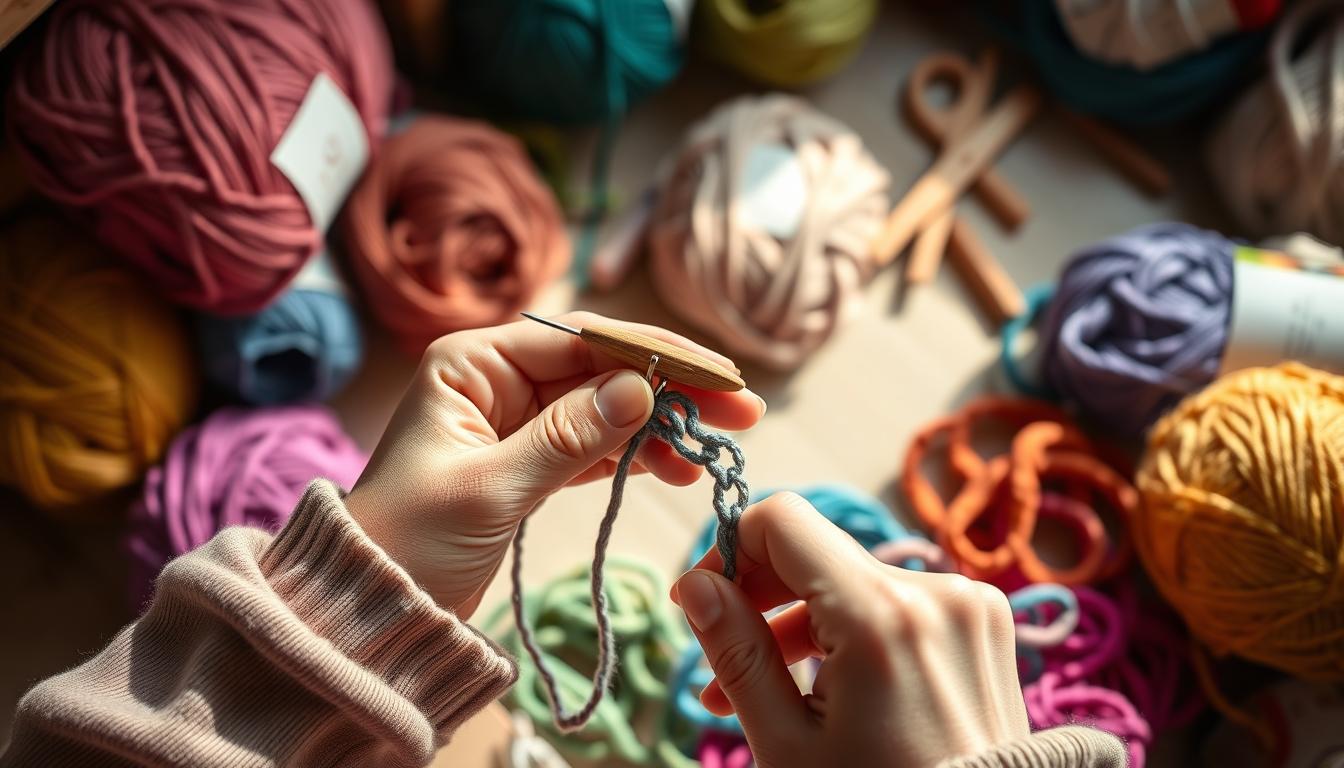
This beginner crochet guide shows you how to make chains that are even and strong. Crochet chains form the foundation for most patterns. Learning a good chaining technique saves you time and frustration.
This introduction explains what you will learn and why perfect crochet chains matter.
We’ll cover tools like hooks and yarn, plus simple terms such as slip knot and yarn over. You will also learn hand positions to keep tension steady. The tutorial gives clear, photo-friendly steps to tie slip knots and form consistent chain stitches.
It also shows how to finish a neat chain row.
If you want to make headbands, necklaces, or blankets, chaining is the first step. By the end of the guide, you’ll count stitches with confidence and fix common mistakes. You will also learn to use chains for foundation rows and in-pattern elements.
Key Takeaways
- Crochet chains form the foundation chain for most projects.
- This chaining tutorial teaches slip knots, yarn over, and consistent tension.
- Good tools and hand position make a perfect crochet chain easier.
- Practice counting and simple exercises build reliable stitch counts.
- Mastery of chains lets you start headbands, necklaces, and larger pieces confidently.
Getting Started with Crochet Chains: Tools, Terms, and Setup
Before you begin, gather basic crochet tools and clear your workspace. Use a smooth hook and scissors to stay tidy. Choose medium or worsted weight yarn that shows each stitch well.
Keep a stitch marker or tapestry needle ready if you plan to join chains into a loop.
https://www.youtube.com/watch?v=oRXQx7VraVU
Essential tools and yarn choices
Check the yarn label and use the recommended hook size for best results. Medium-weight yarn shows stitches clearly and helps make easy chains. Avoid fuzzy or very thin yarns until confident.
Try affordable brands like Lion Brand or Red Heart for testing tension and stitch size. Keep yarn snips handy to trim ends cleanly after finishing a chain.
Key crochet terms you’ll see
A slip knot secures yarn to the hook and creates the first loop.
This slip knot loop does not count as a chain stitch.
Yarn over (yo) means moving the yarn over the hook to pull it through a loop. Patterns use “ch” to show how many chain stitches, like ch 20.
The foundation chain is the starting row of chains in a project. You may see sl st used to join chains into a loop when a round is needed.
How to hold your hook and yarn for consistent tension
Find a grip that feels natural. Hold the hook in your dominant hand and the yarn in the other if you are right-handed. Left-handed crocheters reverse this.
Wrap the working yarn loosely around a finger to guide it. Many use the pinky and ring finger to anchor yarn, the index finger to feed it. Use the way that makes even loops.
If chains look loose, try a smaller hook. If they are too tight, go up a hook size. Adjust early instead of forcing tight or loose rows.
Practice helps your tension become more even. Video lessons from Craftsy or YouTube show hand positions and yarn movement until your chains become consistent.
How to Crochet Chains: Step-by-Step Instructions for Perfect Chains
Start with a clear workspace and your chosen yarn and hook. A short warmup helps steady your hands. Follow these steps from a slip knot to finishing a chain row.
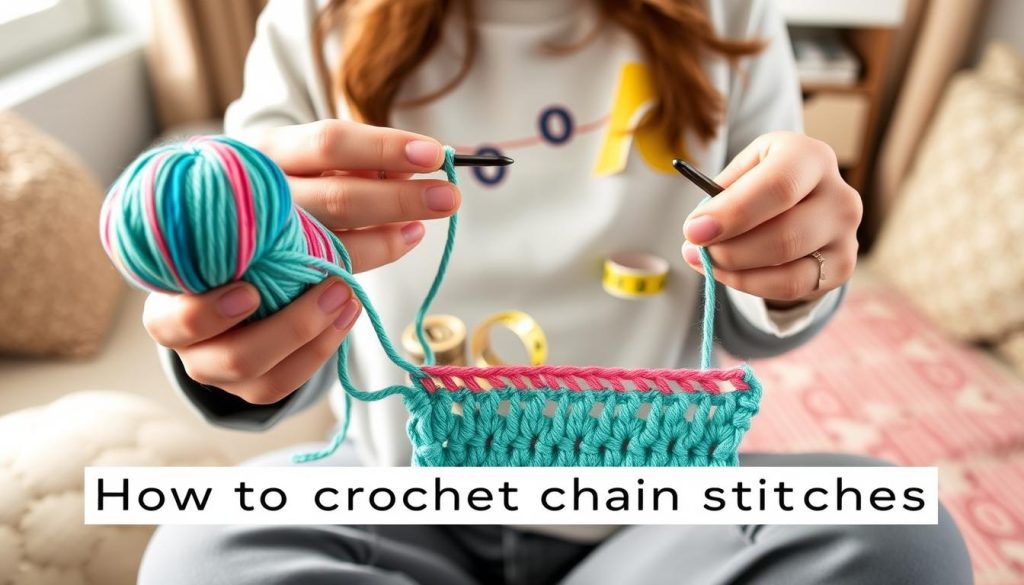
Tie a slip knot and position your hook
Find the yarn tail and form a loop with it over the working yarn. Insert the hook under the top strand, then bring it up through the loop. Catch the straight strand behind and pull it through the circle.
Pull both ends to tighten, then gently tug the longer tail so the loop sits snugly on the hook shank. This slip knot secures your start and lets the loop move while working.
Crochet a chain stitch: yarn over and pull through
Hold the hook in your dominant hand and the working yarn in the other. Move the working yarn from back to front over the hook, catching it from underneath. This is called the yarn over technique.
Pull the yarn through the loop on the hook to make the first chain stitch. Repeat yarn over and pull through for each chain. Count each “V” as one chain; do not count the slip knot loop on the hook.
Finishing a chain row and creating a loop
To finish, cut the yarn leaving a 2-inch tail. Yarn over and pull the tail through the loop on the hook to secure the last stitch. Weave in the tail to tidy the edge.
To join chains into a loop, make the needed chains and slip stitch into the first chain. This forms a flat circle for hats or motifs and shows how to finish chain row joins cleanly.
Common mistakes and how to fix them
Counting errors happen when stitch heads are mistaken for the slip knot. Count only the “V” shapes. If the count is wrong, pull the tail to undo stitches and re-chain.
Uneven tension causes loose or tight chains. Change your grip or try a different hook size to even out the row. If a chain twists before joining, undo the join and lay the chain flat. Then slip stitch again to avoid a misshapen loop.
| Problem | Cause | Quick Fix |
|---|---|---|
| Loose first stitches | Slip knot too loose or tail not snug | Tighten slip knot gently on the shank; keep tail secure |
| Too tight chains | Grip too firm or small hook | Relax your hand, try a larger hook for practice |
| Miscounted chains | Counting the loop on the hook | Count “V” shapes only; undo and re-chain if needed |
| Twisted chain when joining | Chain not laid flat before joining | Untwist, flatten chain, then slip stitch to join |
| Skipped stitch on first row | Wrong insertion point for single crochet | Work into the correct part of the “V” or the second chain from hook |
Practice, Counting, and Using Crochet Chains in Projects
Getting steady with chains makes every project easier. Below are clear tips for how to count crochet chains.
You’ll also find simple chaining exercises to build speed. Learn how to use chains as foundation and decorative elements.
Try the short drills and quick project ideas. These help turn practice into habit.
Counting chain stitches reliably
Only count the completed V shapes when counting crochet chains. Do not count the slip knot on the hook.
When making a foundation chain, call the first full V after your yarn over chain #1. If a pattern says “ch 20,” count each V until you reach twenty.
Compare your chain to photos or video if something looks off.
In charts, chain stitches often appear as small ovals. A dot can mark a joining slip stitch in looped chain diagrams.
Use those symbols to match your work to the pattern quickly.
Exercises to master crochet chains
- Exercise 1 (written pattern practice): ch 15, remove the hook, pull the tail to undo. Repeat until your tension stays even.
- Exercise 2 (chart reading): follow a chart marking 11 chains. Chain to that count, undo, and repeat until chart symbols feel familiar.
- Exercise 3 (self-challenge): pick a target number and tie a slip knot. Count aloud while chaining, remove stitches, and repeat to build muscle memory.
Use video tutorials from creators like The Crochet Crowd or Bella Coco. Watching skilled hands speeds learning.
Repetition and visual cues help when practicing crochet chains.
Using chains as foundation chains and in-pattern chains
Foundation chains start a project and require a slip knot. You will work the first row into that base.
In-pattern chains follow other stitches and create gaps or decorative spaces without a new slip knot.
Learn the difference between foundation chains and in-pattern chains. This helps you choose the right start and placement for shaping and lace.
When a row calls for chains mid-pattern, keep tension consistent with surrounding stitches. For foundations, check that your first V sits flat so the row lies smooth.
Quick project ideas using chains
- Simple accessories: make headbands or crochet necklaces by chaining lengths and joining ends for a lightweight, custom fit.
- Practice swatches: short strips of chains test hook and yarn combinations before larger work.
- Decorative trimming: add chain cords to pillows, sweaters, or toys for neat ties and accents.
- Starters for scarves, blankets, or amigurumi: use chains to begin and practice integrating them into larger pieces.
Share progress on Ravelry or Instagram to get feedback and new chain project ideas. Regular chaining exercises make counting and tension second nature.
Conclusion
Mastering chains starts with the right tools and clear steps. Use an appropriate hook and yarn. Learn core terms like slip knot and yarn over. Practice consistent hand positions.
This perfect crochet chains guide shows that repeating the chain motion and counting turns awkward loops into even rows.
Next steps are simple and practical. Follow the three practice exercises—pattern chaining, chart-based chaining, and self-set targets. Keep practicing until you produce steady rows.
Then move on to single crochet, half-double, and double crochet using your foundation chain. If tension feels off, try a different hook size. Switch how you hold yarn to ease hand cramps and improve stitch consistency.
Chains often look uneven at first. Keep practicing crochet and use videos and photo-heavy tutorials with written steps. Join communities like Ravelry or follow designers and bloggers for patterns and visual examples.
With steady work, the basics become automatic. This opens the door to making garments, blankets, and small accessories.
This beginner crochet conclusion reminds you that chains are the foundation of many projects. Learn crochet chains well and practice patiently.
You’ll build confident skills that let creativity flow. Keep practicing crochet and enjoy the process as your stitches improve.
FAQ
What tools and yarn should I use to learn chains?
Start with a smooth, medium-weight (worsted/medium/4) yarn and the hook size on the yarn label. A smooth acrylic or cotton yarn makes the “V” shapes easy to see. Keep scissors or yarn snips nearby, and optionally a stitch marker or tapestry needle if joining chains into a loop.
What is a slip knot and do I count it as a chain?
A slip knot secures yarn to the hook at the start. It sits on the hook but is not a chain stitch. Count only the completed “V” shapes made after you yarn over and pull through.
How do I yarn over and make a basic chain stitch?
Hold the hook in your dominant hand and the working yarn in the other. Move the yarn from back to front over the hook (yarn over), then pull it through the loop. Each yarn-over-and-pull-through creates one chain stitch. Repeat until you reach the number you want.
How tight should my slip knot and chains be?
The slip knot should fit snugly on the hook shank but move freely. Chains should be even—not loose or too tight. If chains are too loose, try a smaller hook. If too tight, use a larger hook. Adjust your grip and yarn-guiding finger for consistent tension.
How do I finish a chain row so it won’t unravel?
For an open strip, cut the yarn leaving about a 2-inch tail. Yarn over and pull the tail through the loop to secure the last stitch. Then weave in the tail.
To make a loop, work the needed chains and join with a slip stitch into the first chain. Follow the pattern’s joining instruction.
Why is my chain twisted when I try to join it into a loop?
A twisted chain usually happens when you turn the chain before joining. Lay the chain flat on the table and check if it is rotated. If joined, undo the slip stitch join, flatten the chain, and join again.
How do I count chain stitches correctly?
Count the completed “V” shapes across the chain. Do not count the loop on the hook (slip knot). When patterns say “ch 20,” count twenty “V” shapes. For help, compare your chain to a photo or video showing the first few chains next to the hook.
Where do I insert my hook when working the first row of single crochet?
For single crochet, start in the second chain from the hook. This is the first “V” after the loop on the hook. Some patterns specify the back loop or a part of the “V.” Follow pattern instructions to avoid skipped stitches.
What are common chaining mistakes and how can I fix them?
Common problems include miscounting (remember the slip knot isn’t counted), uneven tension, and chains that are too tight or loose. Also watch for twisted chains when joining. Fix miscounts by pulling the tail to undo stitches and re-chaining to the correct count.
Adjust your grip or finger guide to fix tension. Change hook size if chains are too tight or loose. Lay chains flat and rejoin if twisted.
How can I practice to get even, consistent chains?
Do short, focused exercises: chain 15 repeatedly until your tension is steady. Follow a chart and chain the exact number it shows. Pick a target number and chain while counting aloud.
Remove stitches and repeat until muscle memory builds. Video tutorials and photo-heavy guides help visual learners.
What’s the difference between a foundation chain and in-pattern chains?
A foundation chain is the starting row you make after a slip knot. It forms the base for the first row of stitches.
In-pattern chains are made mid-row or round to create spaces or motifs. They are worked without a slip knot because the hook is already in the project.
Can I use chains to make simple projects right away?
Yes. Chains are great for quick accessories like headbands and simple necklaces. Make the desired length and tie or join the ends.
Chains also make useful practice swatches, decorative trims, or starting rows for scarves and blankets.
My hands cramp while chaining—what should I do?
Try switching your yarn-holding method. Many wrap the yarn around the pinky and guide it with the index finger. Others hold the work between thumb and pointer, then yarn over with the middle finger.
Take regular breaks, stretch your hands, and try using a slightly larger hook to reduce strain.
How do I join multiple-color chains for a headband or necklace?
Make separate color chains and secure ends by tying or slip-stitching together. You can also use a tapestry needle to weave in and sew tails.
Braid or twist chains, or join them with slip stitches at intervals for multi-strand effects.
Where can I find visual help and community support?
Use video tutorials on YouTube and photo guides from crochet bloggers. Join communities like Ravelry or Instagram crochet groups.
These groups let you share progress, ask questions, and find beginner-friendly patterns and examples.