
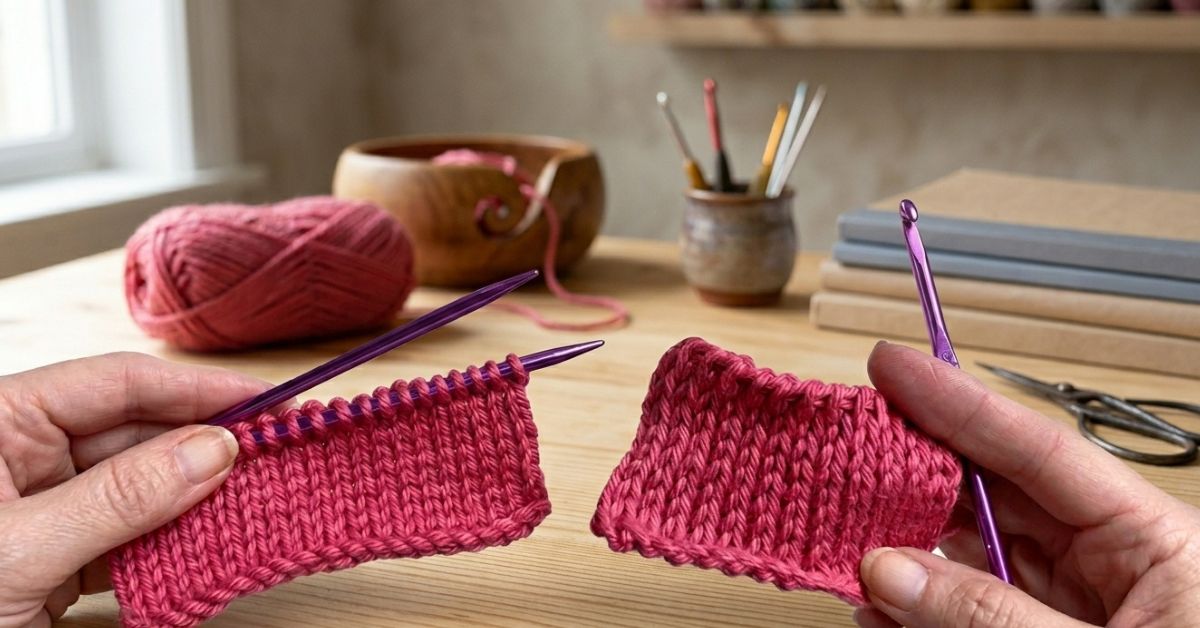
While you cannot follow a knitting pattern stitch-for-stitch using a crochet hook, you can use crochet to replicate the exact look of iconic knitting styles like Stockinette, Garter, and Ribbing by utilizing specialized “knit-look” stitches.
The record for achieving this crossover lies in understanding stitch orientation: whereas knit “V” stitches stack vertically, standard crochet stitches stack horizontally—but by changing your hook placement and work direction, you can force crochet stitches to mimic that vertical knit alignment perfectly.
Essential Materials for Knit-Look Crochet
To successfully fake the knit look, you will need the following tools:
- Crochet Hooks: A standard hook (ideally one size larger than your yarn recommends) and a Tunisian Crochet Hook for larger projects.
- Yarn: Any weight works, but bulky yarn or multiple strands of worsted weight yarn emphasize the “knit” texture.
- Stitch Markers: Crucial for identifying the “third leg” or “back bump” of your stitches.
- Tapestry Needle: To weave in ends and maintain the sleek knit aesthetic.
Mastering the Stockinette Stitch with a Hook
The most recognizable knitting pattern is the Stockinette stitch, characterized by smooth columns of “V” shapes. You can achieve this in crochet using the Waistcoat Stitch (also known as the Center Single Crochet).
To master this, instead of inserting your hook under the top two loops of the stitch below, you insert it directly into the center of the “V” post itself. This forces the stitch to stack vertically. Because this stitch is extremely dense, it is vital to work loosely and use a hook at least 1 mm larger than suggested to prevent the fabric from becoming too stiff.
The Tunisian Knit Stitch Secret
If you find the Waistcoat Stitch too tight, the Tunisian Knit Stitch is the ultimate alternative. This technique requires a long Tunisian hook because it mimics knitting by keeping multiple loops on the hook at once.
By pulling loops through the “bars” of the previous row and then working them off in a “return pass,” you create a fabric that is virtually indistinguishable from a traditional knit. This is perfect for larger projects like blankets or sweaters where a soft, drapey knit feel is required.
Replicating the Ribbed Effect
Knitting is famous for its stretchy ribbing found on cuffs and beanies. In crochet, you can replicate this by working Back Loop Only (BLO) single or double crochets.
However, the “pro” way to do this is using the Camel Stitch. This involves working into the “third loop” of a half-double crochet. By pushing the top “V” of the stitch forward, you create a raised ridge that looks exactly like a knit rib. For the best result, work your chain to the length of the project rather than the width; turning the work sideways is what creates the vertical rib appearance.
The Garter Stitch and Pearl Effect
The Garter Stitch has a bumpy, textured “pearl” look on both sides. To achieve this with crochet, you use a combination of slip stitches alternating between the front loop and the back loop.
This technique is notorious for being tight, so “going up two hook sizes” is the golden rule. It creates a thick, squishy fabric that is ideal for pot holders, dishcloths, or high-texture home decor.
Why Stitch Orientation Matters
The key difference between the two crafts is the direction of the “V.” To make your crochet look like it came from a knitting pattern, you must often work into the horizontal bar beneath the top of the stitch. This “third leg” placement rotates the stitch forward, exposing the knit-like face while hiding the traditional crochet “top.”