
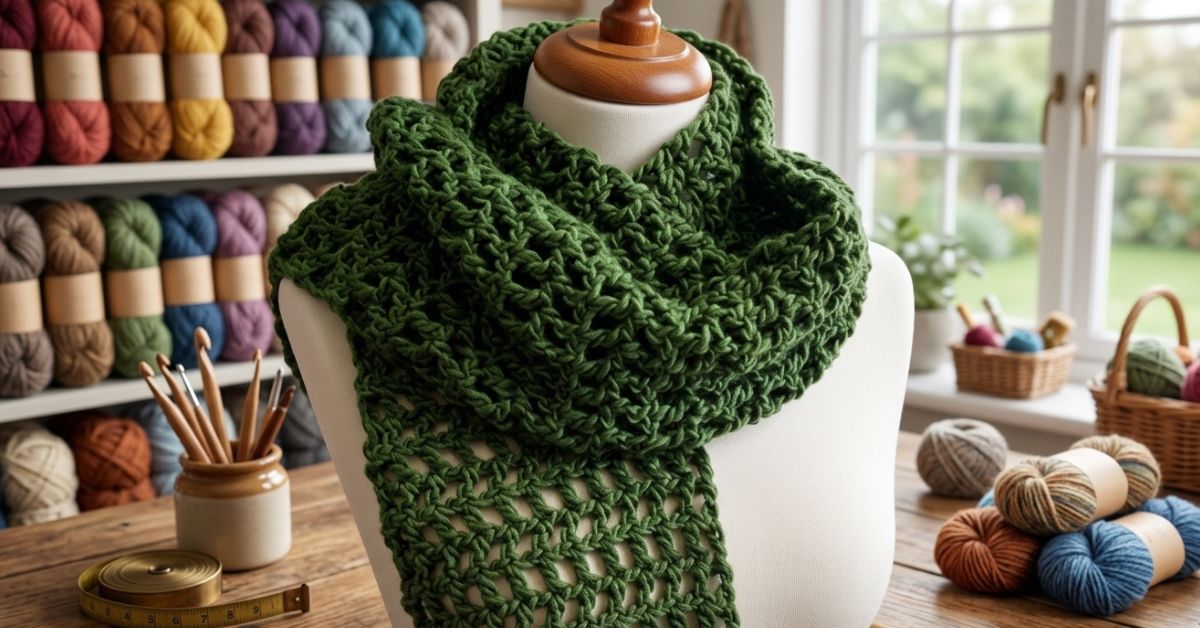
To crochet a standard scarf, you will typically need between 200 and 300 yards (180–275 meters) of yarn, though the record for a fast, chunky mesh scarf requires approximately 250 meters of chunky yarn (about 2.5 balls) to complete the project in under three hours.
Running out of yarn in the final rows of a project is a crocheter’s worst nightmare, but estimating your needs doesn’t have to be a guessing game. Whether you are using proper chunky yarn for a quick winter gift or a delicate lace weight for a summer wrap, understanding the relationship between yarn weight, hook size, and stitch pattern is the secret to a stress-free craft session.
Essential Materials for Your Scarf Project
Before you head to the yarn aisle, make sure you have these basics ready:
- Chunky Yarn (Look for “Super Bulky” or “Category 6” labels)
- 9 mm Crochet Hook (The large size helps create an airy, flexible mesh)
- Large Eye Darning Needle (Necessary for weaving in thick tails)
- Scissors
- Stitch Markers (Optional, but helpful for tracking row starts)
The Fast-Track Formula: Why Chunky Yarn Wins
When you are asking how much yarn you need, the answer depends heavily on the “loft” or thickness of the fiber. Using chunky yarn with a larger 9 mm hook allows you to cover more surface area with fewer stitches. This specific combination is what makes it possible to finish an entire scarf in roughly 2.5 hours.
For a classic mesh design, the pattern multiple is usually 2 + 6. This means you chain in multiples of two until you reach your desired width, then add six extra chains at the end for your turning space. For a standard-width scarf using bulky yarn, a foundation chain of 26 is the sweet spot for balance and warmth.
How to Calculate Yardage Based on Stitch Choice
The “thirstiness” of a stitch determines your yardage. A double crochet stitch is one of the most efficient choices for a scarf because it provides height without using the excessive yarn required by “yarn-eater” stitches like the puff or popcorn stitch.
- The Mesh Stitch Advantage: By using a chain one, skip a chain technique between your double crochets, you create a breathable grid. This “mesh” look isn’t just a style choice; it physically uses less yarn, allowing you to get a longer scarf out of fewer skeins.
- Back Bump Technique: For a professional edge, work your first row into the back bumps of the foundation chain. This creates a clean, braided look on the bottom that matches the top of your final row.
What to Do If You Run Out of Yarn Mid-Row
Even with the best estimates, you might find yourself needing to add a new ball of yarn. The “invisible join” method is the best way to keep your scarf looking seamless:
- Stop your double crochet when you have two loops left on the hook.
- Drop the old tail and pick up the new yarn.
- Draw the new yarn through the final two loops to finish the stitch.
- Tie a gentle knot with the two tails—not too tight, or you’ll distort the fabric—and weave them in later using a darning needle.
Sizing and Width: Making It Your Own
If you prefer a shorter “cowl” style scarf, you can easily finish the project in under two hours by using only two balls of yarn. However, for a full-length scarf that can wrap twice around the neck, aim for that 250-meter mark. If you choose to change the width, remember that every extra pair of chains in your foundation will increase your total yarn consumption by roughly 5-10%.
Finshing: The Art of the Weave
Because chunky yarn is often a roving type (lightly twisted), it has a tendency to untwist at the ends. To secure your project, use your large eye needle to weave the tails through the center of the stitches themselves. Instead of just going under the loops, pierce through the fiber. This creates friction that prevents the yarn from sliding out, ensuring your 3-hour masterpiece lasts for seasons to-come.