
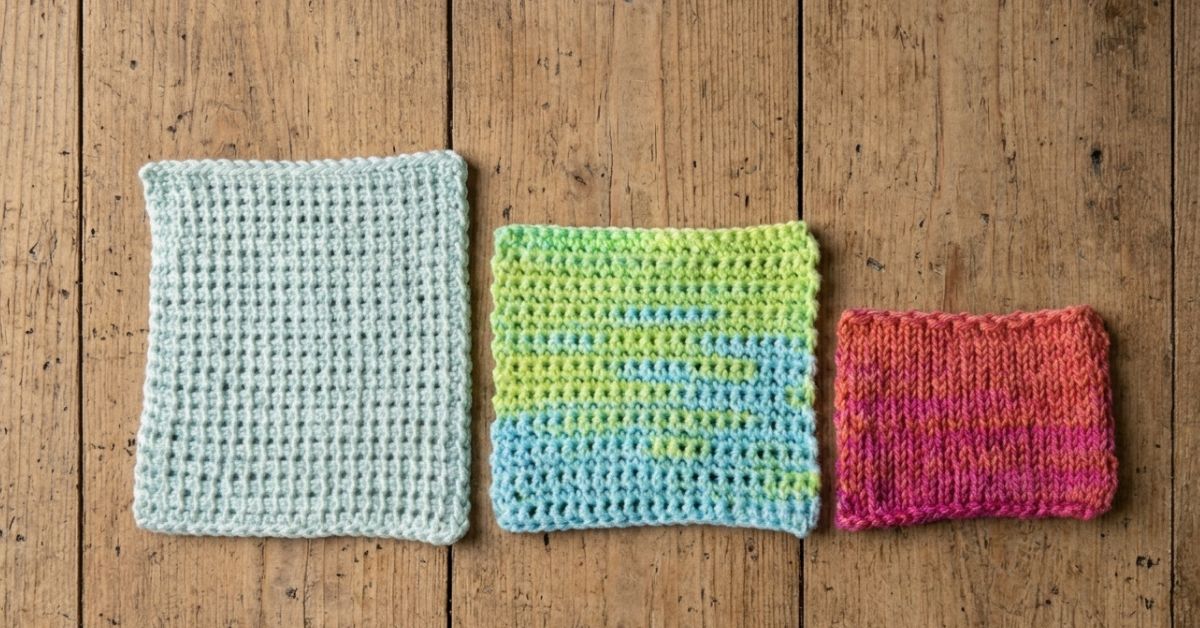
If you are planning your next project and wondering if your yarn stash will survive the switch to a new technique, you aren’t alone. Understanding the yarn consumption of your craft is the best way to avoid the dreaded “yarn chicken” and keep your hobby within budget.
The short answer and current record for this query is that Tunisian crochet typically uses significantly more yarn—often 20% to 30% more—than traditional knitting, and slightly more than standard crochet, because the fabric is created by a “forward” and “return” pass that effectively doubles the thickness of each row. Because the Tunisian Simple Stitch (TSS) creates a dense, woven texture that lacks the air pockets found in knit stitches, it consumes more yardage to cover the same surface area.
Materials Used in Tunisian Crochet Comparisons
To test these yardage claims yourself, you will typically need:
- Tunisian Crochet Hook (also known as an Afghan hook, featuring a long stoppered end)
- Standard Crochet Hook (for the control sample)
- Pair of Knitting Needles
- Precision Digital Scale (to weigh the yarn used in each 4×4 swatch)
- DK or Worsted Weight Yarn (consistent across all samples)
Why Tunisian Crochet is Known as a “Yarn Eater”
The mechanics of Tunisian crochet are unique. Unlike regular crochet, where you complete one stitch at a time, or knitting, where stitches are relatively “flat,” Tunisian crochet involves a two-part process. The forward pass picks up loops, and the return pass works them off. This creates a distinctive bipolar fabric that is essentially two layers of yarn intertwined.
When compared to knitting, which is the most efficient user of yarn due to its “v-shaped” loops that maximize surface area with minimal fiber, Tunisian crochet feels much heavier. If you are working on a blanket, a Tunisian Simple Stitch version will feel significantly weightier and warmer than a knit version of the same size.
The Comparison: Tunisian vs. Knitting vs. Standard Crochet
Data from veteran crafters and “swatch tests” suggest a clear hierarchy in yarn efficiency.
- Knitting: The gold standard for efficiency. It uses the least amount of yarn because the loops are open and the fabric is highly elastic.
- Standard Crochet: Generally uses about 25% more yarn than knitting. The “knots” created by crochet stitches use more fiber to create height.
- Tunisian Crochet: Often sits at the top of the consumption list. Depending on the stitch—such as the Tunisian Full Stitch or Tunisian Honeycomb—you may find yourself using nearly 30% more yarn than a knit project.
How to Reduce Yarn Consumption in Tunisian Crochet
If you love the look of the “Afghan stitch” but want to save money, there are strategic ways to lower the yarn consumption.
First, consider your hook size. Using a hook that is two sizes larger than what is recommended on the yarn label will open up the fabric. This creates more “drape” and uses less yarn to cover the same dimensions. A tighter tension in Tunisian crochet not only makes the fabric stiff enough to “stand up on its own,” but it also gobbles up yardage.
Second, choose your stitch patterns wisely. The Tunisian Knit Stitch is a notorious “yarn eater” because it mimics the look of knitting but requires the double-pass of crochet. In contrast, the Tunisian Mesh Stitch uses chains to create space, significantly reducing the amount of fiber required.
Texture vs. Economy: Is the Trade-off Worth It?
While the Money aspect of the trend suggests we should always look for the cheapest way to craft, Tunisian crochet offers benefits that knitting cannot match. The fabric is incredibly stable, making it perfect for home decor, heavy winter coats, and durable bags. It does not curl as much as knitting if blocked correctly, and the “woven” appearance provides a high-end, boutique feel to DIY projects.
When calculating your budget, always buy an extra skein if you are following a Tunisian pattern. It is better to have a leftover ball for a matching beanie than to run out three rows before the border.